Search This Blog

Showing posts with label Afghanistan. Show all posts

Tuesday, November 03, 2015

$43 Million Gas Station In A Remote Part Of Afghanistan-- Paid For With American Tax Dollars


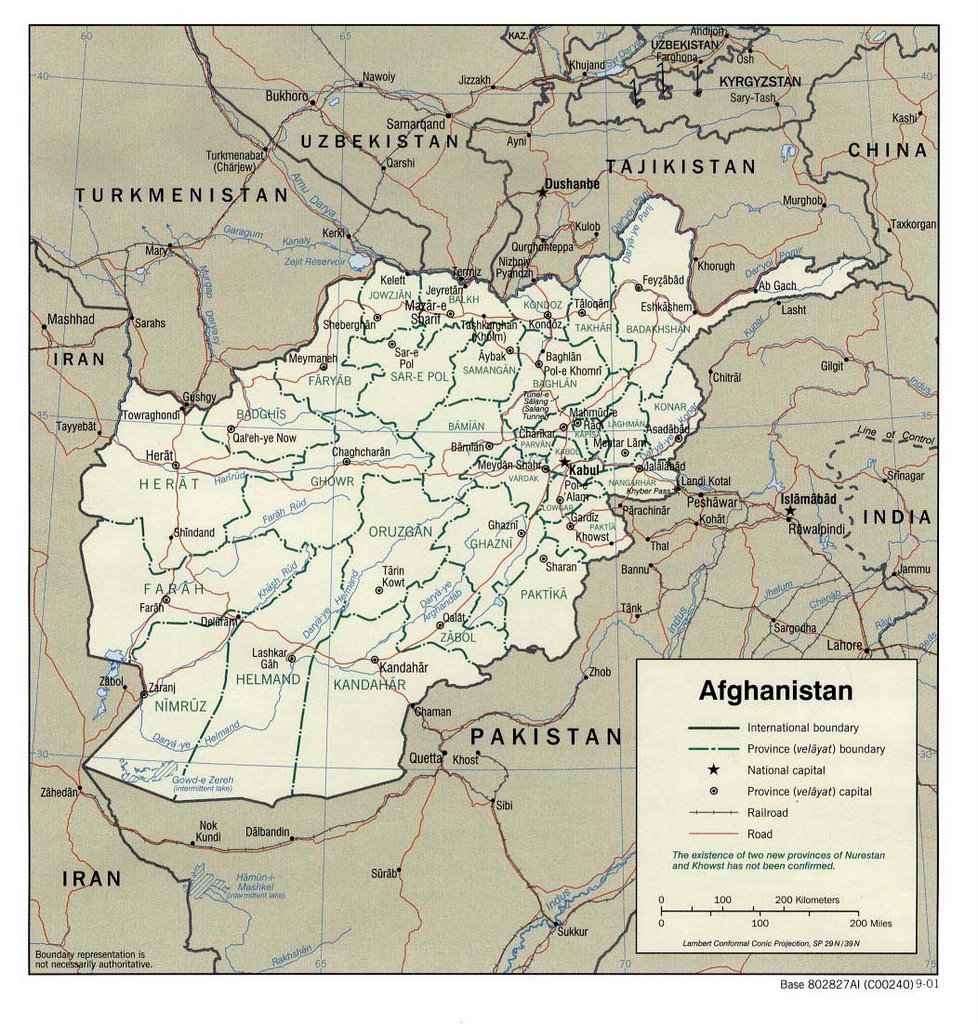
I'm not in the least bit mechanically inclined. I came to terms with it before I even went to high school. Not too many years after high school, though, I was driving a brand new VW van down the Hippie Trail from Istanbul to Katmandu. A few days ago I mentioned how when my friends checked into the Kabul InterContinental just outside town-- I slept in the van nearby-- they were among the very first guests at the largely empty, just-completed, first luxury hotel in Afghanistan. Before we got there, though, there was, basically, the whole country to cross. There are no railroads in Afghanistan, with the exception of about 10 miles built in the early 1980s, connecting Mazar-i-Sharif to the small Uzbek city of Termez, last heard from when it was conquered by Alexander the Great in 329 BC. Before the Russians built a 2 lane paved highway from Kabul to Mazar to Herat (the northern part of the "ring road") and the U.S. built a 2 lane paved highway from Herat to Kandahar to Kabul (the southern part of the "ring road"), the only way people went to Afghanistan was on horseback, usually as part of an army. I was driving my nice new VW van along that just-built highway.


I had befriended a U.S. consul in Tehran-- a relatively lonely outpost-- and he gave me all kinds of useful tips about the trip east to Afghanistan, the two most important being that all water had it be boiled twice if one hopes to survive and that under no circumstances could a motor vehicle be on the road at night if one hopes to survive. The water thing is probably clear enough; the night-driving had to do with bandits, a quaint term that would be called "terrorists" in modern parlance. The gas stations in Afghanistan at the time were few and far between-- how far? Basically they were spaced so that you were just about to run out of gas as you pulled into one. Long story short, I didn't run out of gas between the station in Herat and the station in Kandahar... but my van broke down. I'm the mechanically dis-inclined American, but none the European or Canadian passengers knew any more about fixing a car than I did. An hour went by and no other vehicle passed. I could tell it would be dark soon. Dark = bandits = car-stripping murderers. So I taught myself how to fix the car, at least fix it enough to get to the next gas station as we were running out of gas. (The 1969 VW engine was incredibly simple and trial and error worked incredibly well in this instance.)

Eventually the decades of war destroyed the roads and they were rebuilt a few times, the most recent by the U.S.... or the U.S. taxpayers to be more precise. And that includes gas stations, one of which has come to the attention of the public as a huge waste of money. Short version: this gas station in Sheberghan, capital of Jowzjan province way up north in the Russian sphere of influence, west of Mazar-i-Sharif and Balkh, cost $43 million to build. NBC reported that the The Special Inspector General for Afghanistan Reconstruction (SIGAR) is flipping out because the Department of Defense can't or won't explain why it cost that much.
"Even considering security costs associated with construction and operation in Afghanistan, this level of expenditure appears gratuitous and extreme," SIGAR said in a report issued Monday.

The agency's top official went further.

"It's an outrageous waste of money that raises suspicions that there is something more there than just stupidity," John Sopko, the special inspector general, told NBC News. "There may be fraud. There may be corruption. But I cannot currently find out more about this because of the lack of cooperation."

...[A] contract for just under $3 million was awarded to a company called Central Asian Engineering in 2011. According to SIGAR, an economic impact assessment found the task force spent well beyond that-- $42,718,730-- between 2011 and 2014 to fund the station's construction and supervise its initial operation.

A CNG filling station "would have cost no more than $500,000 in neighboring Pakistan," the report noted, calculating the "exorbitant cost to U.S. taxpayers" at 140 times higher than it should have been.

Sopko told NBC News it appeared that "nobody was minding the store."

"This is one of the worst examples of poor planning and just sheer stupidity," Sopko told NBC News. "It's outrageous."

He called the cost "indicative of a real serious mismanagement" but said perhaps the "more serious" issue was how the Department of Defense had failed to offer documentation or records on the project.

"I'm suspicious when I see something that cost 140 times more than it did and I find people trying to withhold or not cooperate with me," Sopko said. "It raises my suspicions."
Thank God someone is suspicious. This is certainly part of the so-called "fog of war" and it may be inevitable, another reason to pull all U.S. forces out of that hellhole and to completely oppose expanding the U.S. Middle East wars into Syria. I asked Alan Grayson what he thought about it today and he replied that he never knew Shelley meant that those “vast and trunkless legs of stone” actually were a gas station. You a Breaking Bad fan?


Monday, November 02, 2015

No... Still Not Safe To Travel To Mogadishu Or Anywhere Else In Somalia... Nor Afghanistan


I was surprised by this New York Times headline Sunday night: Popular Hotel In Somalia Is Bombed By Militants. How is it possible that Mogadishu has a popular hotel? I mean who goes to Somalia and stays in a hotel? Sunday terrorists blew up the front gate of the Sahafi Hotel and then started shooting guests and workers, at least 14 of them.
If there is one hotel everyone knows in Mogadishu, it is the Sahafi. Warlords and militants alike used to hang out and plot schemes in the lounge and courtyard while sipping grapefruit juice and pulling apart camel meat steaks.

Sahafi means journalist in Arabic, and for years the hotel has served as the gateway to one of the world’s most dangerous countries for foreign journalists, aid workers and the rare brave businessman. Even in the hardest times, the staff managed to provide clean rooms and good food. Lobster was one of the house specialties, served alongside mountains of French fries. Recently, the hotel was a popular rendezvous spot for officials from Somalia’s fledgling government.

Mogadishu may be safer than it used to be, but it is still not safe. The Shabab once controlled much of the city, bullwhipping women and terrorizing the population by enforcing a harsh version of Islamic law. But even after being pushed out by African Union troops, Shabab fighters have shown they can strike anywhere at any time.

Somalia’s government tried to play down some of the concerns stirred up by the attack. President Hassan Sheikh Mohamud of Somalia said on Sunday, “We want to confirm that such terrorist acts does not mean Shabab’s revival, but in the contrary shows clear signs that they are in desperate situation.”
This is the warning posted on the top of the Wikitravel site for Mogadishu: "There is a high threat from terrorism, including kidnapping, throughout Somalia, excluding Somaliland. Terrorist groups have made threats against Westerners and those working for Western organizations. It is known that there is a constant threat of terrorist attacks in Mogadishu. The city also remains in great danger of suicide bombings and other terrorist attacks carried out by extremists who manage to get past security checkpoints around the city. Walking the streets of Mogadishu remains very dangerous, even with armed guards. Tourists are emphatically discouraged from visiting Mogadishu for the time being, while business travelers should take extreme caution and make thorough plans for any trips. Travel outside Mogadishu remains extremely dangerous and should be avoided at all costs. Those working for aid agencies should consult the security plans or advice of your organization."

5 airlines fly into Aden Adde International Airport a few miles from Mogadishu: Somalia's own Jubba Airways, African Express Airways, which flies to Abu Dhabi, Dubai and Nairobi, Daallo Airlines, which flies to Hargeisa (with a stop in Djibouti), East African, which lies to Nairobi on Sundays and Turkish Air, which flies twice a week to Istanbul via Khartoum or Djibouti. What's to see? "Sightseeing is obviously extremely dangerous in Mogadishu, and is strongly discouraged. However, some interesting sites include the historic Mogadishu old town and the Mogadishu mosque." OK, what's to do? "Visitors are encouraged to stay inside for the duration of their stay. The chances of theft and/or assault are extremely high while walking around the city." And to buy? "The Bakaara Market (Suuqa Bakaaraha) is an open market and the largest of its kind in Somalia. Created in late 1972 during the reign of Siad Barre, its original purpose was to allow proprietors to sell daily essentials, but the civil war subsequently created demand for arms and ammunition. Everything from pistols to anti-aircraft weapons are being sold here. Falsified documents are also readily available, such as forged Somali, Ethiopian and Kenyan passports. This illicit submarket is known as Cabdalle Shideeye after one of its first proprietors. Most markets and are a focus of ongoing arms control efforts for the disarmament of Somalia. Marketplaces should be considered hazardous not only because of their content and the presence of unsavory characters, but also due to the fact that they have caught fire several times in the last few years." The food is rumored to be safe to eat at the Sahafi Hotel, the one that just got blown up.

Trip Advisor has no reviews but gives it a nice 4.5 stars and ranks it #2 in Mogadishu.

I remember when I first got to Afghanistan in 1969, 2 of my passengers, Canadians Nate and... I want to say Nate and Al, but that's a deli in Beverly Hills... maybe it was Nate and Kevin. 45 years a long time. Anyway, I slept in my VW van but they settled into the posh-- for Afghanistan-- Intercontinental Hotel just outside town. They went to local pharmacy near the royal palace, bough a huge bag of pharmaceutical cocaine and settled into the Intercontinental, which had just opened a month before we got there-- the first luxury hotel in the country-- and was pretty empty. 200 rooms but I never ran into anyone in the living quarter floors but Kevin and... let's say Kevin.

Eventually it was taken over by Russian military officers when they invaded. Then it was used for target practice by the Taliban, leaving only 85 habitable rooms. Once the U.S. invaded the country, Western Journalists started staying there. In 2011 there was a suicide bombing and a few dozen people were killed. Today there are 13 Trip Advisor reviews giving it an average rating of 3.5 stars (although just 2.5 stars for value).


Monday, September 21, 2015

A Dark Side Of "Gay Culture"-- In Traditional Afghanistan


How do you go into a relatively primitive traditional culture and demand it change because it doesn't meet our 21st Century standards? I can remember arguing with progressive congresswomen who wanted to keep U.S. troops in Afghanistan to help liberate Afghan women. We're talking about hundreds, if not thousands of years of ingrained behavior tied to religion, culture and the most intimate of social relations. Soldiers aren't going to make it happen; they're just going to kill people and be killed. My times in Afghanistan-- in 1969 and again in 1972-- were awesome... and a total culture shock. I mean TOTAL.

Over the weekend the NYTimes carried a story about bacha bazi, traditional Pashtun pedophilia that was supposedly banned under the Taliban but that is back in full swing now. It upsets American soldiers there.
“At night we can hear them screaming, but we’re not allowed to do anything about it,” the Marine’s father, Gregory Buckley Sr., recalled his son telling him before he was shot to death at the base in 2012. He urged his son to tell his superiors. “My son said that his officers told him to look the other way because it’s their culture.”

Rampant sexual abuse of children has long been a problem in Afghanistan, particularly among armed commanders who dominate much of the rural landscape and can bully the population. The practice is called bacha bazi, literally “boy play,” and American soldiers and Marines have been instructed not to intervene-- in some cases, not even when their Afghan allies have abused boys on military bases, according to interviews and court records.

The policy has endured as American forces have recruited and organized Afghan militias to help hold territory against the Taliban. But soldiers and Marines have been increasingly troubled that instead of weeding out pedophiles, the American military was arming them in some cases and placing them as the commanders of villages-- and doing little when they began abusing children.

“The reason we were here is because we heard the terrible things the Taliban were doing to people, how they were taking away human rights,” said Dan Quinn, a former Special Forces captain who beat up an American-backed militia commander for keeping a boy chained to his bed as a sex slave. “But we were putting people into power who would do things that were worse than the Taliban did-- that was something village elders voiced to me.”

The policy of instructing soldiers to ignore child sexual abuse by their Afghan allies is coming under new scrutiny, particularly as it emerges that service members like Captain Quinn have faced discipline, even career ruin, for disobeying it.

After the beating, the Army relieved Captain Quinn of his command and pulled him from Afghanistan. He has since left the military.

Four years later, the Army is also trying to forcibly retire Sgt. First Class Charles Martland, a Special Forces member who joined Captain Quinn in beating up the commander.

“The Army contends that Martland and others should have looked the other way (a contention that I believe is nonsense),” Representative Duncan Hunter, a California Republican who hopes to save Sergeant Martland’s career, wrote last week to the Pentagon’s inspector general.

In Sergeant Martland’s case, the Army said it could not comment because of the Privacy Act.

When asked about American military policy, the spokesman for the American command in Afghanistan, Col. Brian Tribus, wrote in an email: “Generally, allegations of child sexual abuse by Afghan military or police personnel would be a matter of domestic Afghan criminal law.” He added that “there would be no express requirement that U.S. military personnel in Afghanistan report it.” An exception, he said, is when rape is being used as a weapon of war.

The American policy of nonintervention is intended to maintain good relations with the Afghan police and militia units the United States has trained to fight the Taliban. It also reflects a reluctance to impose cultural values in a country where pederasty is rife, particularly among powerful men, for whom being surrounded by young teenagers can be a mark of social status.

Some soldiers believed that the policy made sense, even if they were personally distressed at the sexual predation they witnessed or heard about.

“The bigger picture was fighting the Taliban,” a former Marine lance corporal reflected. “It wasn’t to stop molestation.”
We looked at this 5 years ago on this blog when I wrote about my own experiences seeing it. When I first got to Afghanistan in 1969, having driven in my VW van from London, my strongest immediate thought-- other than how unbelievably strong the hash is-- was that no matter how far I had traveled in space I had traveled much further in time-- straight backward. I was thousands of miles from my parents' home in Brooklyn... and what felt like as many thousands of years back in time. I remember writing to a friend that I was feeling like I was living in the Bible (Old Testament).

Things have changed a little since then. I lived in a "village" (two family compounds off a barely demarcated dirt track) for a winter up in the Hindu Kush where no one had ever heard of the United States (and no one had ever experienced electricity). I'm not sure if they've experienced electricity some 4 decades later but I'd bet you they've heard of the United States.

When you travel to, let's say "exotic" places like Afghanistan, you're better off leaving your cultural judgments in check. There's no way to reasonably compare our cultural standards to the ones that govern their lives. I got used to the concept, for example, of two good cleanings a year-- one in the spring and one in the fall, something very different from the swim, jacuzzi, steam bath and shower I do in some combination everyday here in L.A. Better to just roll with the punches. However, there was something I experienced a couple times in Afghanistan that I just couldn't swing with. It was pretty horrifying. They call it Bacha Bazi and my experience of it came at two weddings, one in Ghazni southwest of Kabul, which I believe was the 4th biggest town in the country, and one up in the Hindu Kush, the land time forgot. Bachas are young dancing boys. We'll come back to this cultural artifact in a moment, but this is what Wikipedia says about it.

You don't ever see the womenfolk in Afghanistan. My closest friend got married while I was there and I lived in his house and spent virtually all of my time with him for several months. Everyone used to joke that we were brothers. I never saw the girl he married, not once. In the same house! Nor was she-- or his mother or sisters-- at the wedding. Well, that isn't exactly accurate. They had their own party in the women's part of the house. But it wasn't exactly separate-but-equal; just separate.


Big steaming platters of rice with meat and vegetables were brought out by male servants-- actually slaves but no one called them that-- and everyone dug in with their fingers, food rolling down everyone's beards back onto the platters. Yum, yum. When the men were done eating, the leftovers were fed to the servants and dogs, although I don't remember in what order, and then what was left from that was sent to the women. Meanwhile we had song and dance-- the young boys. There was a troupe of them from somewhere who are hired to entertain at parties. They looked like they were between 12 and 16 and they were wearing women's dancing clothes, more or less; they all had big heavy farmer boots on. And they all had their eyes smeared with kohl and some kind of rouge substitute. Everyone was hootin' and hollerin' when they were dancing, kind of alluringly, truth be told. No one was drunk but everyone-- every single person-- was high on hash. At one point the groom's grandfather suddenly jumped up-- apparently unable to restrain himself for another second-- grabbed the youngest, smallest bacha and dragged him behind a building and raped him.

It was gruesome to hear... but it didn't seem to put any kind of a damper on the party at all. The rest of the troupe kept dancing and everyone else just ignored the commotion and just enjoyed the festivities. It's part of their culture. Ten minutes later grandpa and the 12 year old came back from around the building, straightening their clothes. The bacha seemed to have felt his dignity was affronted but he jumped right back into the line and danced away the rest of the evening as though nothing had happened. I'm not sure what happened afterwards but from what I heard, all the boys were raped (more or less).

And although these people definitely have heard of America now, they still enjoy a little bacha bazi as part of their cultural heritage, especially the wealthy men, although wealth is a relative thing and whomever is exercising power gets himself a young bacha or two (or a half dozen) to keep as sex slaves. Frontline did a special on the phenomena by journalist Najibullah Qurasishi. You may find it difficult to watch but it will certainly give you an idea about a not uncommon aspect of Afghanistan, a country the U.S. military is occupying for no apparent purpose and with no apparent positive effect.


Sunday, September 29, 2013

Kabul's Very Historic Garden Of Fidelity

2 paintings of Babur laying out the gardens

I was lucky I got to travel through Afghanistan when I did, in 1969 and again 1971. After that the whole thing blew up and today when Westerners think of Afghanistan, they think of off an ugly, dusty, crumbling, violent landscape. When I think of the "best" countries I ever visited, Afghanistan is always high on the list. And countries get on that list because of the people more than anything else. The Afs were always incredibly friendly and hospitable, even when I got thrown into jail for trying to smuggle 50 kilos of hash out of the country in my van.

Unfortunately, in the last decades Afghanistan hasn't been a place for foreign visitors. A Taliban spokesman a few months ago: “It is part of our war strategy to target any foreign citizen whose country has a military presence in Afghanistan and enters our country without permission from the Islamic Emirate of Afghanistan." A few tourists go anyway, maybe 100 a year, fewer than when I was first there in 1969. A Canadian couple disappeared and haven't been heard of since. Another two were a wealthy Russian couple, who hired an armored car and bodyguards at $1,500 a day, stayed in the $356-a-night Kabul Serena Hotel, toured the Panjshir Valley, and went home on schedule.
Like tourism industries anywhere, Afghan tourism does have its boosters. “The security situation is fairly stable, and tourists who visit are fairly comfortable and they are pleased when they see a hotel of this standard,” said Shahryar T. Khan, the general manager of the Kabul Serena Hotel, which has five stars and “world-class security measures.”

The 177-room hotel runs at 64 percent occupancy, Mr. Khan said, and tourists make up an increasing share of the guests. “Of course, from zero it’s gone up to 1 percent.” The Serena has twice been attacked by terrorists, and in 2008 Taliban insurgents killed six guests in an attack aimed at the hotel’s health spa.
Ghulam Nabi Farahi, the deputy minister of tourism says “Afghanistan is a country very suitable for attracting tourists. It’s a place where tourists can have all their wishes come true.” And he insists that there have been no recent cases of tourists attacked or kidnapped. The WikiTravel site for Afghanistan has a bold warning on top telling would be visitors that travel there "is extremely dangerous, and independent travel/sightseeing is emphatically discouraged."

But this week, a friend turned me on to a blog by Barbara Wells Sarudy who expresses a beautiful historical appreciation for Afghanistan-- or at least for the Afghanistan of the 1500s-- and from a unique perspective.
The Bagh-e Vafa (Garden of Fidelity) was Babur's first garden in what is now Afghanistan. He wrote in his memoirs, "In 1508-09, I had constructed a charbagh garden called Bagh-i-Wafa on a rise to the south of the Adianapur fortress. It overlooks the river, which flows between the fortress and the garden. It yields many oranges, citroens and pomegranates."

What is known about its design also comes from Babur's memoirs, "There oranges, citrons and pomegranates grow in abundance...I had plantains brought and planted there; they did vedry well. The year before I had had sugar cane planted there; it also did well...The garden lies high, has running water close at hand, and a mild winter climate. In the middle of it, a one-mill stream flows constantly past the little hill on which are the four garden plots. In the southwest part of it there is a reservoir ten by ten, round which are orange-trees and a few pomegranates, the whole encircled by a trefoil meadow. This is the best part of the garden, a most beautiful sight when the oranges take color."

This type of garden, called a charbagh, was described earlier in an account from Sir John Mandeville’s travels into the East, c. 1370, “And this Paradise is enclosed all about with a wall…and in the most high place of Paradise, even in the middle place, is a well that casteth out the four floods that run by divers lands. Of the which, the first is clept Pison, or Ganges, that is all one; and it runneth throughout Ind or Emlak, in the which river be many precious stones, and much of lignum aloes and much gravel of gold. And that other river is clept Nilus or Gison, that goeth by Ethiopia and after by Egypt. And that other is clept Tigris, that runneth by Assyria and by Armenia the great. And that other is clept Euphrates, that runneth also by Media and Armenia and by Persia. And men there beyond say, that all the sweet waters of the world, above and beneath, take their beginning of the well of Paradise, and out of that well all waters come and go.”

Charbagh is a Persian-style garden layout. The quadrilateral garden is divided by walkways or flowing water into four smaller parts. In Persian, "Char" means "four" and "bagh" means "garden." Chahrbagh originated from the time of Achaemenid Persia. Greek historians, such as Herodotus and Xenophon, give extensive accounts of Cyrus the Great's palatial city of Pasargadae and his four-gardens.

The Gardens of Babur, also called Bagh-e Babur, is today a historic park in Kabul, Afghanistan, and also the last resting-place of the first Mughal emperor Babur. The gardens are thought to have been developed in the early 1500s, when Babur gave orders for the construction of an "avenue garden" in Kabul, described in some detail in his memoirs, the Baburnama.  Today, many species chosen for replanting are specifically mentioned in the Baburnama, including walnut, cherry, quince, mulberry and apricot trees.

The Baburnama was the first autobiography in the Muslim world. It is the memoir of Zahir ud-Din Muhammad Babur (1483-1530), founder of the Mughal Empire & a great-great-great-grandson of Timur. It is an autobiographical work, originally written in the Chagatai language, known to Babur as "Turki" (Turkic), the spoken language of the Andijan-Timurids. Because of Babur's cultural origin, his prose is highly Persianized & contains many phrases & smaller poems in Persian. By 1590, the autobiography was completely translated to Persian by a Mughal courtier, Abdul Rahim, in AH (Hijri) 998 (1589-90). Babur & his successors introduced a level of Persian sophistication into Northern India, founding the last dynasty of India, the Mughal Dynasty.

Babur begins his story at age 12. His father had died, & he had inherited & lost a kingdom in the lush Ferghana Valley north of Afghanistan. As a teenager, Babur captured Samarkand, only to lose it. In his early 20s, Babur seemed to strategize more. He took to the forests, where he lived for 3 years, slowly building & training an army. He had an Empire to establish.

When he was ready, he crossed the Hindu Kush mountain range, & captured Kabul, a city he grew to love. In his autobiography, he described Kabul, “It is a pretty little province, completely surrounded by mountains. This province is a mercantile center. From India, caravans of 10, 15, 20 thousand pack animals brings slaves, textiles, sugar, & spices. Many Kabul merchants would not be satisfied with 300 or 400% profit! Goods from Iraq, Antonia, China, [& beyond] can be found in Kabul.”

While in Kabul, he designed a garden. Gardens were part of his homeland, which he missed. There, they tended to be walled enclosures with water channels which ran at regular intervals, cross-sections. And that’s what he recreated, a garden with terraces & running water. The water adds background noise & the fragrance from blossoms, as it cools. When he brought water to the dry, dusty landscape, it became fertile. Water transforms the land into an image of paradise. The Garden of Eden, the Promised Land.

Despite his adoration of Kabul & his garden, Babur was not ready to retire. He conquered Kandahar, another wealthy city along prosperous trade routes. He crossed the Oxus River & conquered his ancestral lands of the Ferghana Valley. He then set his sights on India. He used the newest technologies; & his battalion of 12,000 was able to defeat an army of 100,000. He sacked what is today Northern India. He & his descendants ruled the subcontinent for 3 centuries, instilling a legacy of Persian culture & Islamic faith.

"If there is a paradise on earth, it is this, it is this, it is this!" reads the inscription on Babur’s tomb in his Kabul Garden. Babur died in Northern India, but was later brought back to Kabul & was laid to rest in his beloved garden.
I don't recall ever seeing it. Now I want to go back to check it out!


Thursday, September 12, 2013

The Taliban Seems To Have Captured A U.S. Base Near Herat And Is Attacking The Consulate In Town Now


I can't imagine that many tourists go to Herat in western Afghanistan anymore. I don't know if they ever had that many tourists there. The first time I was there was in 1969. It was my first real glimpse of legendary Afghanistan after months of slow trudging through Eastern Europe, Turkey and Iran. I recall a lot desert wasteland in eastern Iran and the same over the border in Afghanistan until we got to Herat. And Herat is-- or at least was-- a garden city. I remember it as a kind of urban oasis, although the gardens were pretty much exclusively behind high walls. I think it was the third biggest city then, after Kabul and Kandahar. Kandahar has been so decimated-- while Herat was relatively immune from the nightmare that Afghanistan has been in the last few decades-- that I think Herat is now the second biggest city.

After spending several months in Afghanistan, I realized Herat was one of the richest cities in the country. Later I had a business partner, the postmaster of Kabul, who was the son of Herat's governor, a relative of the king. When I was arrested with 50 kilos of incredible Mazari hash built into the panels of my van a year or so later up near the Russian border, the postmaster's father got me out of prison in a few hours-- and got me back my van (with the hash) the following day.

The first time I got to use the really strong hallucinogenic-- hallucinogenic like an acid trip-- Mazari hash was my first day in Herat. My sparkling new red VW van rolled into town and every rich merchant in the city was all over me. I soon found myself sitting alone-- where were my friends?-- in a huge airy room with a dozen Herati merchants... smoking. Hours later I was not just still high, I was still getting higher! I loved Herat and I loved Afghanistan. I stayed a long time and started losing rack of who I was-- other than this stoned guy in a strange, strange world unlike anything I had ever experienced. So what brought Herat back to my mind tonight? Taliban insurgents attacked the U.S. consulate. The video up top, from earlier today, purports to show a U.S. base near Herat overrun by the Taliban. The attack on the consulate came later although details are still sketchy.
The Taliban told the BBC a suicide bomber had detonated explosives outside the building before dawn on Friday.

Other fighters then opened fire on the consulate. Several Afghan police are reported to have been killed and injured in the gun battle.

It is the latest in a series of attacks ahead of the withdrawal of foreign combat troops from Afghanistan in 2014.

An Afghan army spokesman told the BBC that the initial explosion had damaged outer defences of the US consulate, allowing the attackers to breach the perimeter and shoot at the consulate buildings.

Sunday, July 14, 2013

The best thing showing lately on my TV has been Michael Palin's "Sahara" and "Himalaya"

I've just finished watching the 2004 film of Michael P's epic 2003 journey through the Himalaya and surrounding regions. The map above should be intelligible enough (you should be able to click to enlarge it) to suggest the scope of the journey, except that the copy of the book covers over the early segments in Pakistan and India.

by Ken

I've written about my excitement at rediscovering the early Michael Palin travel-trek series on British DVDs. (Even now that they're actually readily available in U.S. editions, the U.K. ones are still way cheaper.) Of course you have to have a multi system DVD player, but there's an advantage there as well: For HD, my Panasonics (I bought a second one during my recent medically induced hiatus) up-convert from the higher-lined PAL versions, and look pretty darned good on my first HD TV, another product of that hiatus.

And I had the new TV just in time to go back and rewatch the first episode or two of Michael's grand Himalaya series, where the scenery is so mind-boggling. I mean, the show starts in the Khyber Pass! I mean, I never dreamt I would ever see the Khyber pass, and now here it is (video below), with Michael P standing right there talking about it, on my own TV!

Confession: I got stalled with the Palin videos some time back, when I ran into Hemingway Adventure. Even if one doesn't share that "thing" for Hemingway that Michael is far from alone in possessing, you'd think that locales like Key West and late-revolutionary Cuba would be interesting enough in their own right to get me through. And maybe someday I'll go back and find them so, but as presented, as reflections of this or that part of Hemingway's journey through existence, they drove me crazy.

And in this case, the accompanying book didn't help, because it's still imbued with Michael's Hemingway "thing." I find that not many people, even Palin fans, know about or understand the books that have been written and published to supplement each of his travel series. The books, based on his obsessively detailed diaries, are his own re-creations of the making of the journeys. Naturally there's overlap with the edited TV series, but usually even when the same visit or interview is present in both film and book form, there's information or perspective from one that amplifies the other. And there's a great deal in the books that doesn't appear in the edited series.

When I finally restarted my Palin-viewing habit, with Sahara, I was surprised to find that I hadn't acquired the book -- I thought I had them all waiting for me. But I found a really gorgeous hard-cover copy dirt-cheap on Amazon, and had it in time to supplement my televiewings, still on my old 31-inch Panasonic CRT TV, of course. (And the hard-cover version is definitely a plus. I've got paperback versions of some of the others, but for Basil Pao's photos, you want the better reproduction of the hard-cover.)

And Sahara is a fabulous journey. I had seen parts of an episode or two of the series way back when on the Travel Channel, but not enough to make sense of it. The series encompasses a staggering range of terrains and cultures, starting north of the Sahara -- starting in Gibraltar, where happily for us Michael had never been, then proceeding by ferry from Algeciras across the Strait of Gibraltar to Morocco, then across the mountains and finally encountering the Sahara (it fascinated Michael that this vast little-known terrain existed so close to Europe), spending time with the exiled Polisario rebels from Western Sahara and on southward, then swinging east and finally heading north through Algeria and Libya before Michael revisited the once place he'd been before: Tunisia, where Life of Brian was filmed, then across the then-still-highly dangerous northern coastal region of Algeria and eventually back to Spain.

As always with a Palin journey, the primary focus is on the people encountered along the way. The locals hired or pressed into service as guides are almost always fascinating, and nearly always Michael's own cultural openness and curiosity leads to glimmerings of contact with and understanding of people who live lives that seem, and sometimes really are, so different from our own. The people, however, aren't so different. And one couldn't ask for a better travel companion (or surrogate) than Michael, with all that gentle humor to go along with the insatiable curiosity about people.

When I finished Sahara, I was all primed for Himalaya, but despite the shock and delight at finding myself transported straightaway to the legendary Khyber Pass, I wasn't initially enchanted by the first couple of episodes. I mean, a grand gathering of locals from two fairly distant villages in, as I recall, the Pakistani Karakoram, for a no-holds-barred polo match? (The play without rules.) And then there was cricket -- or was it rugby, or soccer? Whatever the hell it was, who cares?

I applied a double rescue strategy. First, as noted, I now had the new TV in place, a perfect excuse to double back. But also, since I indeed already had the accompanying book (also in hard-cover!), and now I had the idea of reading the book ahead of watching the film, and I have to say, it did seem to give me a more involving sense of who the people encountered were and why we might care about them and their ways of life. And with the book under my belt, I was also happy to encounter a number of the "Extended Scenes" that are offered for each of the six episodes.

Indeed, I came to think that Himalaya represents such an enormous journey, encompassing not just the mountains to the west of the stupendous Himalaya, the Hindu Kush and the Karakoram, but a significant chunk of lowland Pakistan and India, and the pretty much the whole of the Himalaya range (with significant coverage of Nepal, Tibet, and Bhutan), and the previously unknown-to-me far-eastern stretch of India bordering Myanmar (Burma), called Nagaland, leading naturally into the lowlands of Assam, and finally lowest-land Bangladesh, where such great waters of the Himalaya as the Ganges and Brahmaputra rivers wash not just the water but the rock and soil of the mountains into the plain and delta emptying into the Bay of Bengal.

(In Bangladesh, the former East Pakistan, by the way, we get a vivid sense of how different the Bengalis are in their Muslim identity from their various Pakistani coreligionists. I should add that differences of and conflicts in religion and politics, which were rife in this region in 2003, when the journey was made, and of course still are, are handled with breathtaking evenhandedness and sensitivity.)

Do I have to add that virtually all of these are places I never imagined seeing? Tibet! (Everest is actually seen, not from the familiar south side in Nepal but from the far less known northern face.) And not just the Tibet Autonomous Region, as the former country has been known since it was annexed by the People's Republic of China, but additional portions of the massive Tibetan plateau in the PRC itself. It's such an immense journey that boiling it down to six hours of TV must have been agony.

It may seem contradictory to suggest that at the same time an awful lot of the people and places visited aren't all that memorable, and yet have to be represented to fill out the picture of the travel path -- and again the combination of book, film, and DVD extended scenes proves immensely helpful. One common thread is that in countries that are heavily Muslim, heavily Hindu, and heavily Buddhist, there is an enormous amount of religion, about which Michael is magnificently tolerant and inquiring, but a viewer may be a lot less sympathetic. The thought of visiting one more temple or one more monastery becomes all but unbearable. Ditto the assortment of pointless festivals we partake in along the trek. It is, of course, what people do to fill out their lives, and I don't mean to suggest that their versions of these things are less meaningful than ours. Quite the contrary. But it does take its toll on one's armchair-travel stamina.

In the course of watching these six packed hours I did a lot of backtracking, but I suspect that the whole thing may look very different the next time through, and the next. There is, by the way, an extended interview added to the special features on the third DVD in which Michael talks about the whole journey, including the story (also told in the book) of how they managed the final shot of Michael sailing off in a tiny boat into the sunset on the Bay of Bengal.

Already in Himalaya, filmed in 2003, Michael displayed a keen awareness of having turned 60, and of the group aging of his entire little travel family -- after all, by then he had been traveling and working with largely the same production team for decades, and none of them were getting younger. I'm cheered by the thought that still ahead for me is one more Palin journey, New Europe.

Do I have to add that it's unimaginable that American TV would ever undertake anything remotely like these journeys? There is, after all, no obvious commercial payoff to any of them. The BBC, however, has garnered not only strong audience response to these series, but continued income from sales of the books and now the DVDs. It's not the kind of money that would impress a Hollywood mogul. Luckily that's not the standard at the BBC.

Saturday, June 30, 2012

The 3 Scariest Things I Ever Did On My Travels


For those who think hopping on a plane for a trip to London or Paris or Mexico City is adventurous and dangerous, this post may be hard to relate to. I started hitchhiking across America when I was 13. I hitched from Brooklyn to L.A. when I was 15 and stowed away on ship so I could make a new, simpler life for myself on Tonga. I celebrated my 21st birthday in my home-- a thatch-roofed bungalow steps from the Arabian Sea in Goa. But this morning, after reading about the latest deprecation in war-torn Mali, I tried to recall what the most dangerous stunts I had pulled on my travels.

Because I was swimming when I was thinking about it-- and because I get really scared of crocodiles and alligators-- one that popped into my mind was a trip to Esteros del Iberá a swampy section of northern Argentina where Argentina, Brazil and Paraguay all come together. They call it the Serengeti of Latin America because of the abundance of wildlife and, as I noted at the time, "the most important thing was to get the idea of "swamp" out of my head. This was easy because the place is not only gorgeous, it is fresh and even cooler than everyplace around it. The water is so beautiful that if it weren't for the alligators, pirhanas, capybaras and anacondas, you'd want to jump right in-- as many of the folks who live around there do anyway (and have the missing fingers and toes to prove it)."

Alligators-- they call them Yacare Caiman in the neighborhood, like the fella in the picture-- are something I usually go out of my way to avoid. So, for me, the scariest moment came when I agreed to go with a local in a dugout canoe for an afternoon of caiman, capybara (word's biggest rodent) and anaconda watching. And for hours that's all I saw... not anacondas, just a billion alligators and giant prehistoric rats.

Years earlier I had a run-in with an even scarier creature. I was bumming around Afghanistan in 1969 and found myself captured by a militia up in the mountains. I didn't understand a word of Pashtun at the time-- I learned a few months later when I got snowed in and stranded in a tiny Pashtun village for the winter-- but I sure understood the universal motions and grunts for "put your hands over your head or I'll unload this Kalashnikov into it." So I did. Maybe they wanted to go for a Ripley's Believe It Or Not Record, but they just had us keep our hands over our heads for hours. Eventually some Australian hippie who was with me-- and peaking on acid-- just started laughing and lowered his hands. At first the Afs all started screaming menacingly and made like they were about to shoot us. Then I started laughing and lowered my hands too. And then everyone else did-- and soon we were sitting around the campfire drinking tea with the militia all laughing away and smoking opiated hash like we were all best friends.

Most recently though, Roland and I went to Mali and wound up in Timbuktu on the outskirts of the Sahara Desert. It's not really the outskirts anymore; the desert is encroaching rapidly and the streets get covered in sand all the time. One night we decided to go with Mohammed, our Tuareg guide, into the Sahara itself. It's trackless; there's nothing but sand dunes and the light is the moon and stars and our flashlights. Our destination: a Tuareg encampment a few miles away where some nomads had come down from the desert to trade. We were leaving for America in a few days and there was plenty of stuff to trade-- from my high-end REI walking sticks to cans of sardines Roland had brought... and toilet paper, airline shaving kits, bits and pieces of clothes... all kinds of stuff we didn't want to schlepp back to L.A. It went pretty well. It might not have. As I've been writing in the last few months, a Tuareg rebellion was brewing and it's boiled over... big time. They've seized two-thirds of the country. And these are bad guys; they believe slavery is condoned by their religion, for example. And in the name of their primitive and ignorant concept of Islam, they are destroying Timbuktu, ironically a centuries-old center of Islamic learning.
Armed fighters of Mali's al-Qaida-linked Ansar Dine Islamist group on Saturday destroyed mausoleums in the ancient trading city of Timbuktu, classified as a UNESCO World Heritage site, witnesses said. 

The attack came just four days after UNESCO agreed to a request by the West African state to place Timbuktu on its list of heritage sites in danger following the seizure of its northern two-thirds in April by separatist and Islamist rebels. 

"They have already completely destroyed the mausoleum of Sidi Mahmoud (Ben Amar) and two others. They said they would continue all day and destroy all 16," local Malian journalist Yeya Tandina said by telephone of the 16 most prized resting grounds of local saints in the town. 

"They are armed and have surrounded the sites with pick-up trucks. The population is just looking on helplessly," he said, adding that the Islamists were currently taking pick-axes to the mausoleum of Sidi El Mokhtar, another cherished local saint.

Roland is protesting because I didn't include the time I was stranded on a coral reef in Sri Lanka and the time we almost drove over a cliff in the High Atlas Mountains of Morocco south of Marrakech.

Sunday, March 11, 2012

Choo-Choo Trains Finally Coming To Afghanistan?

That's the highway, dangerous and barely functional these days

I drove a shiny new red VW van that I bought in Germany across Europe and Asia to Afghanistan in 1969. What a trip! And Afghanistan was nothing like anything I had ever seen or experienced before. I fell in love with the country. But it wasn't easy to get around. Well, there was a nice, well kept-up paved highway that circumnavigated the perimeter of the roundish-shaped country. I sort of remember that the stretch from Herat in the northwest to Kandahar down south and on to Kabul in the east (and to the Khyber Pass further east into Pakistan) was built by the U.S. and that the other half, from Kabul to Mazar-i-Sharif and the poppy and hash fields up north and on to Herat were built by the Russians. It worked for me-- except for the entire middle of the country which could only be traversed on rutted, mostly dirt, roads... well, barely roads. My van wasn't going anywhere. So I left it in Kabul and went with some friends for a nice ride in the country up to the Hindu Kush. It was supposed to be a 10 day jaunt. I fell off the horse, broken an ankle and spent six months in a "village" with two family compounds. No one had ever experienced electricity or heard of the U.S. and no one could read-- or even speak Farsi, the Afghan language I could get along in. The adventure of a lifetime... but I sure was thinking how nice it would have been if Afghanistan had had a railroad system. (I wasn't the only one thinking along those lines.)

But Afghanistan didn't want a railroad system. From the time of Alexander the Great until a couple years before I drove in with my VW van, few people visited Afghanistan unless they were riding in on horseback with an army. It mostly worked out poorly for everyone. But now, we learn, Afghanistan, who's beautiful highway system has been turned to rubble, like most of the country, is finally building a railroad. China and India are building it-- so they can extract, respectively, copper and iron ore.
More than a century ago, fearing that his country might be swallowed up in the Great Game rivalry between the British empire to the east and the Russian army to the north, an Afghan king made a radical decision: He banned railroads.

That edict effectively kept out foreign troops for a number of years. But it also left the Afghan economy, once a wealthy crossroads of the ancient Silk Road trading routes, largely cut off from the world at a time when trains were the engines of development.

Now, Afghanistan has just opened its first major railroad and is planning a half dozen more. The government is also inviting other countries to build tracks, part of plans for a "New Silk Route" that the U.S. hopes will help stabilize the region by promoting trading links.

China, Iran, Pakistan and India all have government or corporate plans for separate railroad projects across Afghanistan. Turkmenistan is completing its own plans for another line. And Uzbekistan has already built the first major rail link, a 47-mile (75-kilometer) line from the border town of Hairatan to Mazar-i-Sharif in Afghanistan's north.

One reason so many countries are helping Afghanistan belatedly join the rail age: They need trains if their companies hope to export the country's vast, untapped mineral wealth, estimated by U.S. surveys at nearly $1 trillion.

Both the railway projects and the prospects for future mining wealth will depend largely on whether the country can keep violence from escalating once the international military force withdraws most of its troops by the end of 2014. For investors, it's a question of whether the increased commerce is worth the risk and effort.

"Now there is genuine trade and traffic going on, especially in the north of Afghanistan, so it makes sense," says Andrew Grantham, an editor for Railway Gazette who runs a website chronicling the history of Afghanistan's failed railroad projects. "It's not just people drawing lines on maps and saying, "Wouldn't this be nice?"

Competing for contracts to mine deposits of copper, gold, iron and lithium is Afghanistan's modern Great Game, and one of the prices the government is extracting from eager companies is a promise to develop the railroads necessary to carry the heavy cargo.

"This will be critical to get anything to markets," says Juan Miranda, head of Central and West Asia Department of the Asian Development Bank, which funded the $165 million Uzbek-built railroad. The bank is also pushing a plan to link landlocked Afghanistan into the rail networks of all five of its neighbors.

For now, plans for Afghanistan's railroads are progressing bit by bit. As part of its agreement to develop a massive copper mine in Aynak, the China Metallurgical Group Corporation (MCC) is being asked to build a 575-mile (920-kilometer) railway from the mine southeast of Kabul. One branch would head to the Pakistani border, another in the opposite direction through the capital and connecting with the new Hairatan line in the north.

The Afghan government is also negotiating with the Indian-led consortium that won the contract for the equally huge iron deposits at Tajigak in central Afghanistan for the companies to fund a 560-mile (900-kilometer) railroad-- likely through Iran-- to bring out the heavy ore.

The story of how Afghanistan never got a major railroad pivots around Abdur Rahman Khan, the emir who ruled Afghanistan from 1880 to 1901. During his reign, Afghanistan was sandwiched between the British colonial rulers of India, which then encompassed modern-day Pakistan, and the Russian empire that extended into Caucasus areas of Central Asia.

Both sides were engaged in what was known as the Great Game to control the region. They were racing to build railroads in areas under their control as a way of quickly moving troops. By the 1880s, both the British and the Russians had built tracks that went right up to Afghanistan's border.

Rahman Khan responded with a decree that no railroad would be allowed to enter Afghan territory, reasoning that without them, it would be difficult for invading troops to cross the mountainous frontier, according to Grantham.

Afghanistan is "almost unique worldwide" in its history of actively working to stop railroads, Grantham says. "Most countries wanted railways."

In fact, the emir's gambit may have worked: Afghanistan never was annexed by either great power.
"It is one of the factors that probably kept the country together, but the price was Afghanistan became a complete backwater economically," says Fred Starr, chairman of the Central Asia-Caucasus Institute at Johns Hopkins University in Washington.

In the 1920s, Rahman Khan's modern-minded grandson, King Amanullah, planned a modern rail network in Afghanistan and even built 5-mile (8-kilometer) track with steam locomotives running between Kabul and his European-style palace of Darulaman. But his plans for a wider network met with opposition, and the line fell into disrepair after he was overthrown in 1929. The locomotives are now in a Kabul museum, next to Amanullah's bombed-out palace.

...The plan is to build a series of short, cross-border tracks to Uzbekistan, Turkmenistan, Tajikistan, Pakistan and Iran. The tracks would connect to each other inside the country's north by railways built by Iran from the west and China from the east.

"We would be able to import and export to Russia, Turkey, and even European countries," says Noor Gul Mangal, Afghanistan's deputy public works minister. Opening new transport gateways would also reduce Afghanistan's dependance on neighboring Pakistan as its only link to sea ports.

Only one line is finished and several of the rest are delayed or face funding problems. But already, the prospect of restoring Afghanistan's status as the crossroads for goods traveling from India, China and Europe has kindled enthusiasm.

Instead of silk, spices and tea, the New Silk Route would carry washing machines from India, heavy machinery from Europe and T-shirts from Pakistan over interconnecting railroads that are faster than container ships and cheaper than air freight.

Prediction: not in your lifetime, at least not a passenger service-- not with this kind of stuff making foreigners less and less welcome there... and rightfully so.
Western forces shot dead 16 civilians including nine children in southern Kandahar province on Sunday, Afghan officials said, in a rampage that witnesses said was carried out by American soldiers who were laughing and appeared drunk.

One Afghan father who said his children were killed in the shooting spree accused soldiers of later burning the bodies.

Witnesses told Reuters they saw a group of U.S. soldiers arrive at their village in Kandahar's Panjwayi district at around 2 am, enter homes and open fire.

Monday, November 08, 2010

Bacha Bazi-- Tales Of Afghanistan


When I first got to Afghanistan in 1969, having driven in my VW van from London, my strongest immediate thought-- other than how unbelievably strong the hash is-- was that no matter how far I had traveled in space I had traveled much further in time-- straight backward. I was thousands of miles from my parents' home in Brooklyn... and what felt like as many thousands of years back in time. I remember writing to a friend that I was feeling like I was living in the Bible (Old Testament).

Things have changed a little since then. I lived in a "village" (two family compounds off a barely demarcated dirt track) for a winter up in the Hindu Kush where no one had ever heard of the United States (and no one had ever experienced electricity). I'm not sure if they've experienced electricity some 4 decades later but I'd bet you they've heard of the United States.

When you travel to, let's say "exotic" places like Afghanistan, you're better off leaving your cultural judgments in check. There's no way to reasonably compare our cultural standards to the ones that govern their lives. I got used to the concept, for example, of two good cleanings a year-- one in the spring and one in the fall, something very different from the swim, jacuzzi, steam bath and shower I do in some combination everyday here in L.A. Better to just roll with the punches. However, there was something I experienced a couple times in Afghanistan that I just couldn't swing with. It was pretty horrifying. They call it Bacha Bazi and my experience of it came at two weddings, one in Ghazni southwest of Kabul, which I believe was the 4th biggest town in the country, and one up in the Hindu Kush, the land time forgot. Bachas are young dancing boys. We'll come back to this cultural artifact in a moment, but this is what Wikipedia says about it.

You don't ever see the womenfolk in Afghanistan. My closest friend got married while I was there and I lived in his house and spent virtually all of my time with him for several months. Everyone used to joke that we were brothers. I never saw the girl he married, not once. In the same house! Nor was she-- or his mother or sisters-- at the wedding. Well, that isn't exactly accurate. They had their own party in the women's part of the house. But it wasn't exactly separate-but-equal; just separate.

Big steaming platters of rice with meat and vegetables were brought out by male servants-- actually slaves but no one called them that-- and everyone dug in with their fingers, food rolling down everyone's beards back onto the platters. Yum, yum. When the men were done eating, the leftovers were fed to the servants and dogs, although I don't remember in what order, and then what was left from that was sent to the women. Meanwhile we had song and dance-- the young boys. There was a troupe of them from somewhere who are hired to entertain at parties. They looked like they were between 12 and 16 and they were wearing women's dancing clothes, more or less; they all had big heavy farmer boots on. And they all had their eyes smeared with kohl and some kind of rouge substitute. Everyone was hootin' and hollerin' when they were dancing, kind of alluringly, truth be told. No one was drunk but everyone-- every single person-- was high on hash. At one point the groom's grandfather suddenly jumped up-- apparently unable to restrain himself for another second-- grabbed the youngest, smallest bacha and dragged him behind a building and raped him.

It was gruesome to hear... but it didn't seem to put any kind of a damper on the party at all. The rest of the troupe kept dancing and everyone else just ignored the commotion and just enjoyed the festivities. It's part of their culture. Ten minutes later grandpa and the 12 year old came back from around the building, straightening their clothes. The bacha seemed to have felt his dignity was affronted but he jumped right back into the line and danced away the rest of the evening as though nothing had happened. I'm not sure what happened afterwards but from what I heard, all the boys were raped (more or less).

And although these people definitely have heard of America now, they still enjoy a little bacha bazi as part of their cultural heritage, especially the wealthy men, although wealth is a relative thing and whomever is exercising power gets himself a young bacha or two (or a half dozen) to keep as sex slaves. Frontline did a special on the phenomena by journalist Najibullah Qurasishi. You may find it difficult to watch but it will certainly give you an idea about a not uncommon aspect of Afghanistan, a country the U.S. military is occupying for no apparent purpose and with no apparent positive effect.

Monday, June 15, 2009

I'm Certain I'll Never See Afghainstan Again

I left home when I was very young and started traveling. When I was 13 I hitchhiked from NYC to Miami, a practice run for my Great Escape, a couple years later, to California (by thumb) in order to stow away on a boat to Tonga. (I got caught on the ship in San Pedro Harbor.) Eventually I made it over to Europe, bought a VW van and drove to India. I had an awesome 6-7 years. When anyone would ask me what country I liked most I would always say I would have to take pieces of Sri Lanka, Nepal and Afghanistan to find my ideal country. (Afghanistan was because of the people.) But since I visited, all three have been torn apart in brutal civil wars. I've been back to Sri Lanka and Nepal but I'm certain I'll never see Afghanistan again. Although... Lonely Planet actually has a new travel guide to Afghanistan out now!

Robert Greenwald-- brave, dedicated soul-- visited Afghanistan last month. This film he shot gives you an idea why it's not a place Americans can go any longer. It should also give you an idea about why DWT has been so adamant about defeating the $97 billion War Supplemental. What we were doing to the Afghan people was unspeakable when it was Cheney and Bush. It's no better now that it's Obama and Rahm Emanuel. It has to stop.

Monday, December 29, 2008

How Safe Is Mali For American Tourists?


Roland at the Djenne market

After spending some time in Dakar and Bamako I posted about how I found both cities very safe for tourists. Now that I've traveled around Mali a bit I thought I'd expand the idea to assure tourists that the whole country-- or at least the places tourists go-- is, if not like Disneyland or Dollyland, a safe choice for an exciting adventure trip.

Roland and I were traipsing around Sanga last week-- a place so foreign to the American experience that one would have to be on another planet to find something more exotic-- when we ran into a gaggle of American Peace Corp volunteers on holiday. They're stationed around West Africa, mostly Mali and Burkina Faso I gathered, and the State Department and U.S. Embassy in Bamako have decreed that no Peace Corp volunteers are allowed to venture north of some imaginary line (like around Mopti, I think), which means no Timbuktou. They said it is too dangerous because of Tuareg bandits on the roads-- and that the local airlines, C.A.M. and M.A.E., are too dangerous (i.e., non-compliant with FAA guidelines) for Americans to fly on-- so that their employees could not go to the northern two-thirds of the country.

We spent a few days in Timbuktu, which gets bad-mouthed by most tourists as not worth the trip. They're wrong. Timbuktou is fascinating and exotic and if it doesn't live up to your dreams of the 13th century or to Paul Bowles' Sheltering Sky, get real and open up to what actually is being offered there. As for danger... there's nothing remotely dangerous, other than a difficult road getting there, the bad exhaust fumes from motorbikes in town and the fucking mosquitos (we've just given up on not being bitten; it's not possible. Just learn to love the Malarone.)

We were waiting for a couple hours for the ferry to take us across the Niger on the way to Timbuktou and the settlement there is a Bella one. Until 1973's epoch drought nearly wiped out the Tuareg's camels and herds, the Bella had been their slaves. In 1973, basically because the Tuareg couldn't feed them anymore, they emancipated them-- although I have heard that there are still some small services that many of them still render to their former masters (like when there is a wedding or something). Anyway, this Bella settlement was all festive and bustling like all the villages we visited in Mali, when a couple of pickup trucks filled with Tuaregs pulled up to the bank of the river. Suddenly things got much quieter. Many of the little children seemed to disappear. It reminded me of a scene from Star Wars when some alien warrior people dropped by a space cafe. Anyway, the Tuaregs were pretty well-armed with swords and daggers and God knows what else and they don't seem to smile much; no chatty bonjours and they certainly don't ask you for a Bic or an empty water bottle or candy. The Tuareg War ended in the mid-90's though and they seem to be peaceable enough (except around Kidal) and way in the northern Sahara where Mali, Algeria and Mauretania share vast trackless wastes. In Timbuktou, they were certainly easy enough to get along with.

In fact, one of our most memorable adventures was when our guide, Mohammed, took us out into the desert one night to meet some Tuaregs who had just come from Araouane to trade for millet. They were also open to trade for the stuff we no longer needed-- mostly stuff Roland had picked up at the 99 cent store before coming here-- like a pair of cheap extra sunglasses-- as well as my REI walking sticks, half a dozen cans of sardines, shaving kits from Air France, a t-shirt, a roll of toilet paper, organic mosquito repellent that seems to attract mosquitos, etc. We got some nice Tuareg "silver" bracelets, a pipe and an agate necklace-- and had a long Tuareg tea ceremony before this whole thing got started... all by the light of the moon and stars. The Tuareg basically live their lives by the light of the moon and the stars.

I mentioned the other day that Mali is a Muslim country in the context of how Muslim countries are normally safe places to travel. Like I've been saying, Mali certainly seems safe enough, but it doesn't actually seem all that Muslim. Women aren't covered up and are everywhere and seem to play leadership roles in society. I've seen more women covered head to toe in London than in Bamako. And the dancing... well, to say some of it is erotic doesn't even begin to suggest how a Muslim fundie cleric would react. The dour Tuaregs seem to take it more seriously than most.

A couple weeks ago I went to a wedding celebration out in the sticks. For some reason I had imagined it would be something like one I went to in a small village-- real small: two family compounds-- in Afghanistan in 1969. There were no women at that one-- no bride, no groom's mother... no, it wasn't a forerunner of a No On 8 reform in pre-Taliban Afghanistan. The women were kept in strictest purdah and although I was living in the house for months and the groom was my best friend, I never did meet his new wife. Instead of women, the entertainment at the Afghan wedding was dancing boys-- really, really young ones-- with some kohl and cheap jewlery. My friend's grandfather grabbed one, quite forcibly, and raped him behind a building while the festivities proceeded. Afterwards the disheveled boy straightened his outfit and got back into the dance, looking mighty pissed off.


Mah Kouyate in the middle with no headgear

The Malian festivities were nothing like that-- a fully integrated affair with raucous joy, lots of music and dancing, mostly led by women. Almost all the local celebrities who were made a big fuss over were women-- including celebrated singer Mah Kouyate, who now lives in Burkina Faso and made the trip all the way to Mali-- and the only male celebrity other than a famous drummer who was playing, was some local version of Liberace who fancied himself the m.c.

But below the surface, Malian women have some big problems to contend with-- even if you don't consider polygamy a problem in and of itself. In every Dogon village we visitted there is a "special" women's house where women are kept while they're menstruating. They're considered impure; it's very primitive but I gather it's just an animist Dogon thing and not prevelant in general Malian society. Everyone tells me that as soon as a Malian man marries he's out looking for as much side action as he can find and that the women are pretty pissed off. They're also pregnant a lot. Almost every woman we see has an infant strapped to he back as she goes about her arduous life. Men here hate condoms. One guy we met in Dogon country-- although he's from Segou and has been to NYC-- says he would never use a condom because it would make him unable to perform up to par. And, yes, AIDS is a gigantic problem here.

Anyway, if you're now forewarned about the dangers of sex here, consider the road travel-- or any travel. We didn't let the knowledge that a hippo can break apart a pinasse ruin our wonderful day of floating down the Niger and Bani rivers near Mopti visiting Bozo fishing villages. Some tourists took the 3 day boat trip-- two nights camping along the shore-- from Bamako to Timbuktu. We drove from Sanga in Dogon country after 3 days there. Simply put, the road from Sanga to Douentza, halfway from Dogon to Timbuktou, has to be the worst road on earth. People talk about how bad the Timbuktou road itself is-- and it's rutted washboard and uncomfortable and we broke down in the desert twice-- but it is nothing compared to the Sanga road, which is just various sized boulders that you drive over while praying.

Roland fears Tupolov planes the way I fear sharks and crocodiles but he was willing to pay anything to get on one to get out of Timbuktou without having to get back on the terrible road again. I might mention that the road from Bamako in the west to Gao in the east, which covers much of the populated parts of the country, is a decent 2 lane paved road. The airlines were a little lax and dicey but we made it fine and who cares if there was no security whatsoever and if the stewardess returned some guy's spear as soon as we took off?

UPDATE: Some Wassoulu music from Sali Sidibe

Saturday, April 14, 2007

THE PAKISTANI EQUIVALENT OF STONEWALL? PROBABLY NOT


The first time I went to an Afghani wedding something very much astounded me-- well, more than something, many things. It was 1969 and it was in a small city southwest of Kabul, Ghazni. I was staying with some college pals who were living and working there and we all got invited to a wedding. The first thing I noticed was a total separation of the sexes. The women-- including the bride, the groom's mother and sisters, etc.-- were in a different part of the house and we never saw them. So the wedding was kind of like a bachelor's party or maybe two bachelor's parties, one for men and another for women-- although not seperate-but-equal. The men were served a sumptuous feast. Servants and dogs were fed after we were done and then leftovers were sent to the women. That was all pretty shocking-- and I know that less than 30 years later our clueless commander in chief thinks he's building a pluralistic, democratic, secular society there (on the cheap... and fast) which is safe for women. That's called arrogance, cultural imperialism and hubris.

But what I saw as the inequality-- and even abuse-- for the women wasn't even the most shocking aspect of the wedding. After dinner the entertainment commenced. There was a small band that had been hired-- and a troupe of young drag queens. The band played traditional music and the drag queens danced. They were pretty bawdy. And many of them were pretty young. Everyone was smoking some powerful opium-laced hashish from Mazar-i-Sharif but many of the guests seemed genuinely disturbed when the groom's grandfather grabbed one of the young boys and dragged him behind a building and had his way with him. Later the boy, straightening his disheveled garb, came back and danced some more.

When I first saw this headline online-- After Drag Queens Are Beaten Up... Villagers Attack Taliban-- my immediate thought was some kind of incident between transvestites and Muslim fundamentalists in NY's Greenwich Village. But it turns out to be a report on an incident in a small town near the village of Adbulkhel, Pakistan, not far from Afghanistan.

The culture of the Pathan tribes on either side of the Afghan-Pakistan border are identical. The border is a colonial construct that has no relevance to their lives except as a sometimes annoyance. When Taliban religionist zealots beat up the local drag queens, shaved their heads and took away their instruments-- they react to nonconformity and music the same way, albeit usually more violently, western religionist zealots do-- the villagers got into a pitched battle, using heavy weapons and rockets, with the Taliban extremists.

The Afghan-Pakistan tribal regions seem like an utterly different world-- or millennium-- from Pakistan's big cities. And, in fact, the central government is engaged in a fierce and probably unwinnable war-- a very bloody one-- against the tribal areas right now. Karachi has different tribes, different cultures, different mores than the traditional-- and very primitive-- northwest. Small town, traditional hijras are very different from drag queens in the westernized big cities.

Sunday, January 21, 2007

JESUS! PEOPLE ARE GOING TO KABUL AGAIN!


Sunday's New York Times did a story on "the next great adventure-travel destination": Kabul. "Even though much of Afghanistan remains dangerous, tourists are beginning to trickle back in, some lured by the thrill of the unknown, others by the pleasures offered by such new tourist spots as the Kabul Serena, an elegant $36.5-million hotel that claims a 'five-star ambiance' in the heart of the city. As many as 5,000 Western tourists visited Kabul last year, Jonathan Bean told me, most of them affluent Europeans and Americans who have traveled to '30 or 40' countries, including developing ones. 'Most our clients are experienced travelers,' Jonathan said. 'They’ve trekked in Nepal, gone on safari in East Africa. Some have returned after coming here in the 1960s and 1970s. They see Afghanistan as the next great adventure-travel destination.'"

I'd love to go back to Afghanistan some time. I'm sure I won't; too dangerous. I first went close to 40 years ago, right out of college. It was a major way station on the "hippie trail" from Istanbul to New Delhi. I was driving a 1969 red VW camper I had bought in Weisbaden and Afghanistan was far more than just a way station to me. Driving across Asia, by the time you get to Afghanistan you know for sure you're not in Kansas anymore, nor in Europe. It was the most foreign place I had ever been. So different from anything I had ever experienced. It felt as much as like traveling in time (backwards) as traveling in space.


There never were any railroads to Afghanistan so the only way to get there before the late 50s was as part of an army. Then the U.S. and the Soviet Union built a road around the country. The U.S. built one from Herat on the Iranian border south and east to Khandahar and up to Kabul and the Soviets built one from Kabul up to Mazar-i-Sharif and then on to Herat. Basically it was the only paved road in the country and now, from what I understand, it is mostly unpaved... destroyed by decades of war and civil neglect.

I drove my van from Meshed in Iran to Herat. It was love at first sight-- mostly with the cheap, powerful hash and the Afghan people who were all stoned all the time. It always boggles my mind now how the mainstream media reports on the wars in Afghanistan but never mentions that every Afghan is stoned-- really stoned-- all the time. It probably has a significant effect on their way of fighting. Herat was like this magical medieval city, completely outside my realm of experience. And the next stop, Khandahar was even more bizarre, most strange, more mysterious and foreign. I felt like I was in Biblical times. Before going up to Kabul I visited some college friends who were in the Peace Corps, stationed in Ghazni. So primitive! But wonderful, warm, friendly generous people. They shared whatever they had.

I spent a lot of time in Kabul. Two Canadians who I had driven across Asia settled in to the one western hotel in the city, the brand new Intercontinental. It was a luxury high-rise in the middle of a basically mud city that looked like it would take a week of strong rain to just wash away. I'll never forget the Kabul River, more like a series of trickles and puddles in the middle of town. I recall standing near the royal palace, one of the few substantial buildings in the city, and looking down at the river. Men were on the bank brushing their teeth, washing their clothes, bathing, going to the bathroom, washing a donkey...


The other new thing in this ancient city that year was the Kabul Zoo. It was a wonder for the Afs... a little rinky-dink for the foreigners. But everyone was stoned and everyone was enjoying everything. Except the Kabul Runs. No one enjoys that-- much worse than Montezuma's Revenge. Up and down Chicken Street there were European and Australian hippies staying in cheap flop houses and sick with the Kabul Runs. The music was great and the hash was the best and the food was fine and everything was so cheap. And you'd sit around and talk with people who had come back from Bamyan and the Hindu Kush and Mazar and the Khyber Pass and figure out where you wanted to go next. The king was still in charge and the Russians hadn't invaded yet. I remember seeing some mullahs, straight from the countryside, outraged that 2 young women got out of a car unaccompanied-- albeit covered head to toe (with just a little grill for the eyes) in a chadris (what they call a burqa everywhere else). They spat all over them. The scene has stuck with me for all these decades.


UPDATE: NOT SO FAST

I slept in my van the whole time I was in Kabul in 1969 and in 1972. But friends of mine stayed at the Intercontinental, the only western style hotel in the city country. Various rebel groups over the past 30 years have used it for target practice and blown it up pretty badly. Now foreigners stay at the Serena-- or at least they did 'til today. The NY Times just reported that some Taliban insurgents blew that up too. Yeah, probably a little early (or late) for Afghan tourism just now.

A thunderous explosion struck a 2-year-old Kabul luxury hotel frequented by foreigners on Monday, and the Taliban took responsibility, calling it a coordinated assault by four men armed with guns and suicide belts.

The Interior Ministry said at least six people were killed and at least six were wounded in the explosion at the Serena Hotel, including two foreign officials it did not identify... The Associated Press quoted an American who was exercising in the hotel gym as saying that she heard gunfire after the explosion, and saw a body and pools of blood in the lobby area and bullet marks in the gym area. She asked not to be identified for her safety. Ambulances and American troops in Humvees rushed to the hotel after attack, the A.P. reported.

Things are obviously deteriorating? You think so?

One Year On And Nothing's Any Better

This is a post from a western woman, a filmmaker, working in Kabul. It very much captures the Kabul I recall, only it's much worse. Is it a place you'd be interested in visiting? I recommend reading the whole thing at the link. Here are some excerpts:
Going out to dinner is always an interesting experience. Fully covered from head to toe and always paranoid about forgetting a headscarf (or having it slip off your head in the car) generally make the experience more worrisome than enjoyable. Add checkpoints and Afghan police to the mix, along with bone-shaking car rides (no paved roads) and you get the picture.

In New York and New Delhi, I savored going out; dressing up, wearing new jewelry, getting to try new restaurants before meeting friends at a local bar for a drink. I don’t miss these things in Afghanistan – I came here knowing full well that my social life would change drastically (after all, I could’ve just stayed in NYC or Delhi if that’s all I wanted). But what I didn’t expect to change was the very vocabulary of my behavior.

In other cities, I have never thought twice about the fact that I couldn’t enter places without ensuring that I wouldn’t mistakenly brush past a man, that I had to give all men the right of way, and that I wasn’t allowed to speak to strangers or look at other men in the face. In Kabul, I do.

My first weeks here were the most painful-- having to unlearn everything I had picked up in rambunctious, loud Delhi. In Kabul, I felt like as if I was a captive-- wrapped around the head with a scarf that acted as a leash that instructed me to behave in a certain way. My first week was a string of commands from my male, Afghan co-workers and crew, who for my sake taught me how to behave on the streets – “don’t laugh too loud,” “keep your hands hidden,” “don’t say things too loud,” “try and keep your chin down,” “stop walking like you own the street!” And the ever familiar, “wear your headscarf tighter, Anita-jaan, it is falling off!”

...Like all local women in the neighborhood, I can’t leave the house alone. People outside of Afghanistan are shocked to hear this – “but the Taliban have left, no?” Yes indeed, but the Taliban did not make these rules. Many of these rules were actually enforced and created during the time before the Taliban by warlords who, bloated with arms and cash from Pakistan and the US (in order to defeat the Russians), fractured the country.

After the Taliban were defeated, those same warlords were brought back into power by the US. The Karzai government resumes must read like a list charges at an international tribunal. The human rights’ violations are endless. And it is thanks to them (and not the Taliban) that I have to live in a capital city shuttered by extreme conservatism.

A male partner must accompany me at all times outside the house. This ranges from the chowkidor to my husband to friends. Sometimes my husband’s translator comes along, humming as he walks ahead expecting me to follow blindly. When I want to stop, I ask the shopkeeper a question-- usually the price of something – making sure I’m extra loud to ensure he has heard me, and will stop humming and hurry over to where I am.

He carries everything after I’m done shopping. Per his instructions, I shouldn’t carry anything since I’m a woman. By month three, I have learned to walk behind him, lift nothing and simply head home as quickly as I can. He is a Pashtun from the south and older than I am.

The same translator is puzzled when my husband asks me what I want for dinner or lunch. He looks at our exchanges quizzically. We look Indian to him, and yet behave so differently from the Indians he sees in the soap operas he and his family watch at home. In that world men and women are often just as conservative as the Afghans, with each gender culturally filling very different roles. The women are meant to be docile, devoted wives, while the female evildoers are the ones who break the mould and wreak havoc among the orderly. My husband and I don’t seem to even understand that we’re different genders. We speak as equals. This is clearly confusing.

In the end, we finish dinner and make our way home through the dark and quiet streets. We paid the bill in dollars. Price-wise it would amount to the same if I had dined out in New York City. “Restaurants for expats charge expat prices,” explained a friend when I first arrived, “make sure you always have enough cash.” On the way home, my housemate reminds me that we are paying for more than just plates of pasta – we pay for the experience of normalcy. Or the closest thing to normal at least. We both agree it wasn’t for the food at any rate. It wouldn’t survive a New Yorker or New Delhi-ite’s expectations of a good meal (for the price we paid). But tastes change once you’re living in Kabul.

The only meals I have coveted here have been home-cooked Afghan vegetarian dishes prepared by a friend’s mother. Seated on their living room floor, with huge slabs of naan to catch the oil and juices dripping from our fingers, I have devoured bowls of red kidney beans steamed with onions and tomatoes and spices with plates of eggplant slices sautéed with tomatoes and topped with a tangy yoghurt sauce.