Search This Blog

Friday, December 22, 2006

WHY NOT STAY AT THE BEST? I'LL TELL YOU-- AT LEAST IN REGARD TO BUENOS AIRES' PARK HYATT HOTEL


A lot has changed in my life. When I first started my travels I was hitchhiking and sleeping wherever I could find a free spot to curl up. I remember as a teenager having a step (on a steep staircase) in a Haight Ashbury crashpad I could call my own for a week. I never even imagined there might be something better. Come to think of it, there probably wasn't-- not for this person at that time in that place. But as Fate bumped me along in life, many things did change substantially and one was my ability to afford to stay anyplace I want. Especially as the president of a large corporate record label I started getting used to my corporate expense account and what it could get me in terms of amenities. It became easy enough to justify staying in the most expensive hotels and eating in the very best restaurants in order to make an impression on business associates. (That worked out well, except healthwise, where all that rich food doesn't do anyone any good.)

Anyway, long story short, I long ago went from sleeping in a crashpad to sleeping at a 4 Seasons or Ritz. My old Warner Bros corporate travel agent still helps me with reservations-- bless her heart-- and she has a tendency to push me into old habits... not that I'm all that resistant. When I was planning out my Argentina trip, she kept telling me that the best hotel in this town and that town was below my comfort level. Actually, all of them were just fine. And some of them were superb, like the Posada de la Laguna in that wetlands I visited.

When I first got to Buenos Aires I rented an apartment-- and I'll write about that experience next week when I'm back home-- but the minimum for an apartment rental is a week so when I flew back to Buenos Aires for a few days here and a few days there in the middle of my stay in South America, I stayed in hotels. First up was the hotel of preference for the music industry, the Caesar Park in Recoleta, a block from the apartment I had rented. It was luxurious without being over the top. And the staff was down to earth and friendly. It's owned by a Mexican chain and I found it a very simpático place.

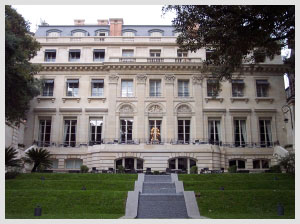
My wonderful travel agent had convinced me, however, to spend my last few days-- after returning from the rigors of Tierra del Fuego and before returning to L.A.-- in the "best hotel in Buenos Aires," the Park Hyatt. This was a big mistake for me. It's a temple of conspicuous consumption. I checked in... and checked out. Let me tell you why.

First let me say that the rooms and public spaces are absolutely gorgeous and top notch, as good as any Park Hyatt anywhere (and don't mix up the Park Hyatts with any other kind of Hyatt-- night and day. The Park Hyatt in Tokyo was my favorite there and the Park Hyatt in Hamburg has been tied for my favorite there, though both, I might add, were paid for by my company.) The price, including tax, even after a corporate discount rate, is $460/night, about the same as a week for the apartment down the street and almost double the price of the Caesar Park. Now, granted, the rooms are way fancier at the Park Hyatt-- but not double fancier. But that isn't why I checked out so fast.

The Park Hyatt is primarily one thing: America in Buenos Aires. They have done everything they could to make the hotel as comfortable as possible for people who aren't particularly capable of cultural emersion. This is like Buenos Aires on pablum. And those were the kinds of people it attracted. I've been in Argentina for over a month and this is the first hotel where I heard more English-- American accented English-- than Spanish. And the place positively reeks uptightness in every way. I hated it. I actually hated everything about it (except for the giant monitors on the computers in the business center).

On top of that, the rush to make it a technological wonder has left it difficult in terms of functionality. It took me an hour to figure out how to operate things like the lights and I never did get the phone system down! (Which is just as well, since the one call I managed to make-- a local call that would have cost me 30 cents anywhere else, cost me $2.00 there, nice and American: lookin' for profit centers everywhere. No one in their right mind other than an American with money to burn would stay at this place.) Nice gigantic big screen TV that came on to CNN no matter what you were watching when you turned it off though. But simple little things that turned me off to the hotel were the fact that it was noisy as hell and that I couldn't get to sleep 'til after 2 AM, even though I was on the 9th floor. (I think some Argentine team had won a soccer match and it was another excuse for noisy parties in the streets. And Argentine teams win soccer matches every day or two, believe me.) Even worse was the exquisitely appointed baño. Yes, the bathroom is gorgeous; unfortunately everytime the upstairs neighbor used his, you were treated to a symphony of plumbing-related noises in my room.

And at check in I was informed no late check out (my plane leaves at 10:30 PM so that's a real inconvenience), no breakfast included-- probably the only hotel in South America with this policy-- and, of course, no upgrade, something I can always live with. Fortunately, my pals at the Caesar Park, approximately 40 steps down the street, had offered me an upgrade to a suite and the far more important late check out (not to mention their lavish breakfasts). So here I sit, in the Caesar Park business center where my old pal Diego, the business center manager, makes a great research assistant for my Down With Tyranny blog. And at half the price. And with no corporate expense account... well, everyone loves a good deal.


UPDATE: WHEN IT COMES TO RESTAURANTS, ON THE OTHER HAND, BUENOS AIRES' BEST DO NOT DISAPPOINT

Argentina is blessed with a very high quality of food-- lots of delicious fruits and vegetables, the best meat in the world, great seafood. Whenever I go to a grocery store and ask if they have organic stuff I'm usually told most of the fruits and vegetables are raised without chemical fertilizers. I don't know if it's true or not, but it sure gets repeated all the time. As for the restaurants, the level is generally pretty high. Every European tourist I talk to mentions that the food is way better than what you get back home.

I'll do a report on the health food restaurants of Buenos Aires in a few days. But I did want to mention a couple of haute cuisine places I've discovered in Buenos Aires that everyone should try out. Because they are all catering primarily to middle class Argentines-- rather than tourists-- the quality is superb and the prices relatively low (think of a peso as a dollar in terms of buying power-- and we get three pesos for a dollar). Portions in Argentina always seem huge. These people enjoy their chow and they serve lots of it. So we're talking about high quality, low cost, big portions.

Now when we get to the best restaurants in town, we're in the realm of stuff worth writing home about. Started-- and still run, 30 years later-- by 2 sisters, Tomo 1 is generally considered the best restaurant in Buenos Aires. It's in the Panamericano Hotel near the Obelisque (a kind of town center in some ways). The philosophy of the restaurant is really simple: buy the best and freshest ingredients, prepare them with loving care and skill (one sister does lunch and the other does dinner), make sure everyone concerned is thoroughly professional. I ate there last night. The philosophy works. Everything was mouthwateringly delicious, including a sample of the absolute best tomato soup I had ever tasted, an endive and pear salad I would like to eat again right now and a fish I had never heard of, a "lemon fish." The waiter told me it's in the tuna family and the quality is that of sashimi. Completely scrumptuous!

click so you can read the menu

Just as good-- some say better-- is a less "establishment" restaurant in Palermo, Casa Cruz, where I ate a couple weeks ago. This one was more about combining ingredients into artful ways, artful, unique and delightful. I tried getting another reservation for my last dinner in Buenos Aires and, as usual, it's booked solid. My suggestion is that anyone coming to Buenos Aires make a reservation asap for Casa Cruz. I think I tucked away a menu in my luggage and when I get home I'll photograph it and append it to this report.


UPDATE: I NEVER WENT OUT CLUBBING IN BUENOS AIRES, BUT THERE WAS ALWAYS SOMETHING GOING ON

Sunday's NY Times gets right down into it, at least from an ex-pat point of view.
“There are expats everywhere tapping into the city’s thriving cultural and arts scene,” said Grant C. Dull, Zizek’s founder, who also runs the popular bilingual Web guide WhatsUpBuenosAires.com. “And it’s not backpacker types, but people with money and contacts.”

Drawn by the city’s cheap prices and Paris-like elegance, legions of foreign artists are colonizing Buenos Aires and transforming this sprawling metropolis into a throbbing hothouse of cool. Musicians, designers, artists, writers and filmmakers are sinking their teeth into the city’s transcontinental mix of Latin élan and European polish, and are helping shake the Argentine capital out of its cultural malaise after a humbling economic crisis earlier this decade.

...Comparisons with other bohemian capitals are almost unavoidable. “It’s like Prague in the 1990s,” said Mr. Lampson, who is perhaps best known for winning a Bravo TV reality show, “Situation: Comedy,” in 2005, about sitcom writers. Despite his minor celebrity, he decided to forgo the Los Angeles rat race and moved to Buenos Aires, where he is writing an NBC pilot, along with his Web novela, www.historyandtheuniverse.com. “Buenos Aires is a more interesting place to live than Los Angeles, and it’s much, much cheaper. You can’t believe a city this nice is so cheap.”

Monday, December 18, 2006

WHY TIERRA DEL FUEGO?


I usually like to travel to places with interesting and developed cultures. Places like India and Egypt, not to mention France and Italy, have drawn me ever since I was a kid. And my travels have always been in this direction. I've lost count of the number of times I've been to Istanbul, Morocco, Paris, Bangkok... I picked Tierra del Fuego as a destination for a very different reason. I guess I was looking for a complete dearth of culture. I was craving emptiness and desolation. The end of the world. And that's what they call this place... El Fin del Mundo. Next stop: Antarctica. It was settled by Argentina only 100 years ago-- a desolate and barren place, as a penal colony for the worst, die-hard criminals. I just wanted to unwind after the 2006 midterm elections.

It's summer now but it's mostly chilly and rainy. The sun goes down at 11:30 at night and rises around 3 AM. In the winter it's pretty much dark all the time and covered in snow. In the last 10 years, as the Argentine government has encouraged the development of the thriving tourist industry, the population of the town has doubled to 35,000.

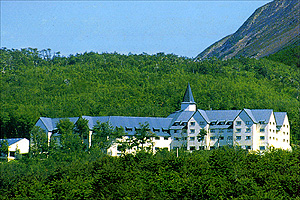
Around a third of the tourists who come here-- 50% at the upscale hotels-- are just stopping for a day or two on the way to Antarctica. There are 600 dockings a year (obviously just in the summer season), mostly Chilean and Russian ships. 95% of the tourists are foreigners, mostly Europeans. It's too expensive for Argentines who would rather go to Europe or Miami for the same money. The average guests at Las Hayas stay for 2 nights (which means many stay for one night). I'm, as usual, an anomoly: I'm here for a week. The manager asked me why.

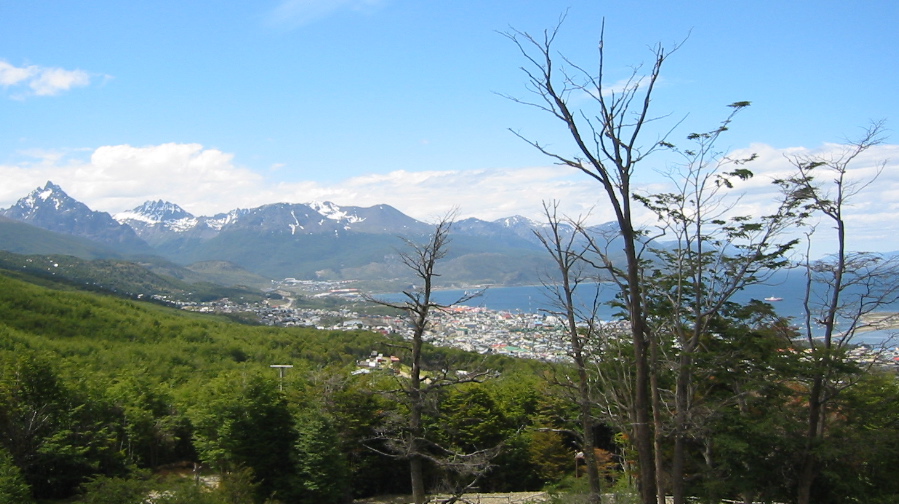
I'm here for the solitude, the stark beauty, the remoteness. It's what I thought it would be, albeit uber-exploitive. The town exists for tourists and everything is very expensive, above and beyond the fact that everything has to be air freighted in. Yesterday I took a ride on the old prisoners' train, the train of the end of the world. The prisoners built it into the forest so they could cut down trees to build the place and to use the wood for fuel. The train ride, into the spectacular Tierra Del Fuego Andes National Park, is one of the many tourist attractions. The train ride is kind of rinky-dink but it's actually worth the time because when the train dumps you out there's an alternative to having a car pick you up and take you home. You can trek. That's what I did. I figured I'd race off the train and beat the masses of tourists walking the pristine forest paths. I won the race-- by default. No one else was walking down any forest paths. The train emptied out and everyone piled into cars and buses and drove back to Ushuaia. I was very, very alone very, very fast. The train ride gets a B; the rest of the afternoon an A. When I get back home I'll insert some photos I took, mostly of the snow-capped Andes and of beautiful fjords.

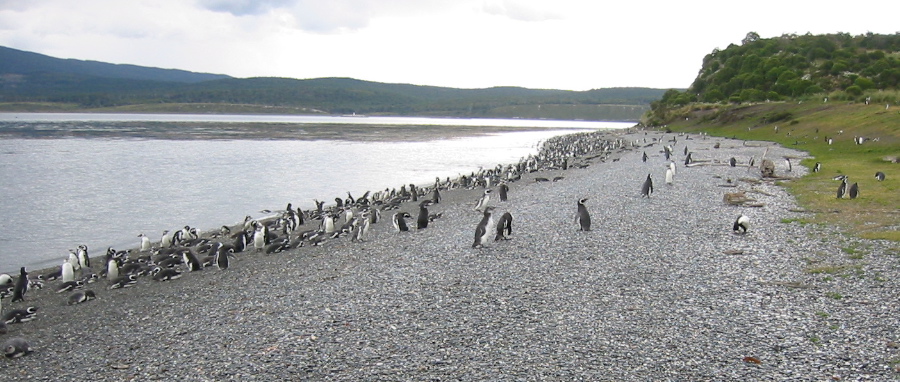
By the way, there is also a newly developing winter season here-- which is when some Argentines do come to Ushuaia-- and that's all about skiing. In what they call summer, people kyak and canoe and golf and horseback ride and trek and even go camping. There are lots of boat trips. If it isn't raining tomorrow I'm going to go for a boat trip to the one island in the Beagle Channel that has penguins. Might as well, right? If you like outdoor activities and have lots of energy, this place is a paradise. Otherwise... well, you better be happy with solitude and silence.

Most of Ushuaia's streets are paved. The town basically has a main street, San Martin. One down is the street that fronts the harbor, Maipú. The rest of the streets parallel to San Martin are a pretty steep climb up. It's not something you'll want to do every day. It's steeper than San Francisco streets. One night I had dinner at Kaupé, purportedly the best restaurant in town. I had to climb 4 blocks from San Martin. It was... exhilerating. And the food was excellent, if over-priced and simple. The Chilean sea bass (they hate Chile so they call it something else) was the best I ever tasted. Vegetables are relatively rare here. The culinary features of Ushuaia are king crab, made every way imaginable, and black hake. The portions are huge and the fish is incredibly fresh. It's far from inexpensive, probably another reason Argentines don't come here. And the restaurants are far from sophisticated in their preparartions, the way they are in Buenos Aires. I remember when I first went to Las Vegas the restaurants were abysmal beyond belief. Now Las Vegas actually has a first rate restaurant scene. Maybe Ushuaia will some day too, though I wouldn't hold my breath.


A FEW WORDS ABOUT THE CHOW

It's hard to find a bad meal in Italy. But if you really want to, just go to Venice. The food scene is wretched. Venitian cuisine, of course, is completely fantastic. But Venice has sacrificed itself on the alter of lowest common denominator mass tourism. The restaurants are positively ghastly-- feeding stations for hordes of tourists, not any different from mass tourism traps anywhere in the world. Most tourists in Ushuaia eat in pretty dismal all-you-can-eat buffets. They're cheap and I suppose for some people the quantity is a good tradeoff for the quality. Afterall, we are in Argentina and the quality of the food is never really that bad anyway.

But with the exception of Kaupé and the Las Hayas dining room there was nothing I found worthy of writing home about (although modest La Casa de Mariscos is decent enough too, especially for all their wonderful crab meat dishes). Eventually I discovered a truly incredible place to eat in Venice-- the Cipriani Hotel's restaurants are absolutely sublime, as good as anything anywhere in Italy (even the snack bar serves only amazing meals). Well, good news if you're heading to Ushuaia: they have one of those too!

No, not a branch of the Cipriani; a restaurant that is remarkable for its impeccable standards: Chez Manu. About 7 or 8 years ago Las Hayas brought chef Emanuelle Hebert over from France to head their kitchen. The relationship didn't last long and Emanuelle opened his own restaurant about a kilometer up the hill. Forget that it commands the absolute best views in all of Ushuaia (no mean feat). The food is superb. Hebert is a chef who isn't just feeding some tourist horde he will never see again. He's competing for a position as one of the great chefs. Every dish is an artistic achievement. The other restaurants in town may have a decent cook here and there. Hebert is a chef, the real deal. It's not substantially more expensive than all the other places in town; they're all expensive. At least at Chez Manu the value is unquestionable.

Saturday, December 16, 2006

ONE OF THE THINGS ABOUT TRAVEL... YOU MEET ALL KINDS, EVEN BUSH SUPPORTERS

I started the AroundTheWorldBlog because readers of Down With Tyranny would grumble whenever I'd write about my travel experiences. On the other hand, I always get nasty comments whenever I mention politics on this one. So I was trying to figure out which blog to put this one on. I have to admit I'm not certain where it's going to end up as I sit down to write it. It's almost a truism to say that you meet interesting and worthwhile people when you travel, people with diverse opinions and points of view. Yesterday I actually met two people, unconnected to each other in any way whatsoever, who both admire George Bush. Although I once made friends with a Vietnamese kid in Ho Chi Minh City who was too polite to admit he detested Bush without a good deal of prodding, these two are the first I ever met overseas who really and truly thought Bush is a good president.

The first one, an Australian marine engineer (he works on a boat), was so appallingly stupid that he was unable to figure out how to get into Brazil. I met him at the Buenos Aires airport, both of our planes having been delayed for hours and each of us passing the time in the airport locutorio. I don't remember his name; it might have been Pete. He told me that he had flown to Sao Paulo from Madrid, part of those long, zig-zaggy trips round the world Ozzie's are always in the middle of. Because Australia has as big an oafish and pig-headed national leader in John Howard as we have in the U.S., Australians are the other nationality who have to jump through hoops to get into Brazil. Pete wound up in a detention center and was nearly thrown back onto a plane for Madrid. Someone took pity on him and sent him off to Buenos Aires. His plane back to Cairns leaves from Sao Paulo. I explained how he could get a Brazilian visa in Buenos Aires but he had already decided to try to sneak across the border in Iguazu, something which many people do and which usually works. But not always.

Anyway, I just happened to mention that the Brazilians don't allow Americans and Australians in easily, the way they let Europeans and Argentines in, because our two national leaders have made it so hard for Brazilian tourists to come to our countries. I used an adjective or two to describe Bush and Howard. Oy! Did that set off a firestorm! Pete is like a posterboy for racism and within a second he was on automatic, spewing every bit of stereotypical nonsense you ever heard about "spear chucking cannibals with bones in their noses" (exact words) flooding into Australia and changing the place. Imagine that! He worships Howard for his strength-- and because Labor would give everything away to the spear chucking cannibals (including advance fighter jets). I was finally able to calm him down and get him to talk about man-eating seawater crocodiles, something Australians like talking about even more than John Howard, although he eventually got into a rant about how the spear chucking cannibals and Chinese flood into northern Australia by boat and are all eaten by the seawater crocodiles.


The manager of the hotel I'm staying at in Ushuaia, Las Hayas, is far more genteel and sophisticated. I couldn't imagine Alec ever getting thrown into a detention cell and deported somewhere. While I was writing about the seawater crocs eating Chinese immigrants he introduced me to Prue Leith, founder of Leith's, one of my favorite London eateries. She was just checking out of Las Hayas to take a Russian icebreaker to Antarctica.

Alec is a veritable fount of conventional wisdom. This morning he told me how Ushuaia experiences all four seasons each day (although it's nearly 5PM and today we only had what I think of as winter, cold, rainy grey winter). When it comes to politics, though, he's like one of those founts of conventional wisdom who listens to Rush all day and when you press the right button... out it comes. Our first conversation started with him telling me how Bush fights hard for America and how he's really a good president for the U.S. Of course I calmly disabused him of that notion and explained that Bush is the absolute worst president America has ever had and that he has done nothing whatsoever for the U.S. except bring it down. Alec had a lot to say about Argentine politics as well, of course, and he introduced me to a delightful new word, "rabanito." It's the word for radish and when an Argentine applies it to a person, he's refering to someone red on the outside and white on the inside. The genesis of the word was a Cuba-loving soccer coach, César Luis Menotti (1978 World Cup winner) who loved rolexes and fancy cars as much as he loved Castro and Che.

Meanwhile, by the way, I'm taking notes about Tierra del Fuego and I'll do a piece on the hotel, the restaurants and all that. It's a pretty classic tourist trap, well on it's way-- though not there yet-- to being spoiled by commercialism. You can see how Ushuaia is turning almost Disneyland-like in its headlong rush to cater to more and more tourists who come for the one real attraction-- it's remoteness, something which, of course, is disappearing. The vistas are undeniably spectacular. Everywhere you look is just breathtaking, except when you look at the expanding town itself.


UPDATE: UGGHH... MORE RIGHT WINGERS

The kinds of people who travel abroad tend to be relatively open-minded. Mostly you meet liberals, not conservatives. Conservatives are, by nature, distrustful and afraid to travel to foreign places, afraid of strange food, strange cultures, incomprehensible languages, afraid of the uncertainties of traveling outside of the U.S. (I always notice that Americans, unlike any other people, seem to be greatly put off when people speak something other than English. Americans seem to assume people are talking about them-- or plotting to blow something up-- if they hear a "foreign" language.) Anyway, a good 75% of the Americans I meet on the road are non-conservatives. It's nice, you can almost bond with anyone by denouncing Bush.


Yesterday's trip to penguin island was an 8 hour expedition with 12 people, half of whom spoke English and half Spanish. The English speakers were yours truly, a British guy in his late 20s finishing up a 6-month sojourn through Latin America and a family of 4 Coloradans just back from Antarctica. The husband was outgoing and friendly, if a bit loud and pushy, but within 5 minutes of meeting him he seems to have taken offense that I referred to Tancredo as a cretin and a fascist. His wife's vibe was 100% right wing dragon lady. My attempts at non-partisan friendliness were not returned. Instead, they insisted on opening the bus' windows to let in the "fresh air," which never got above 40 degrees. After the 8 hour trip they tried to pressure the guide and driver into extending it by several hours by going to a forbidden area, regardless of the fact that no one else on the bus wanted to go anywhere but home (not the least of which, to escape all the fresh, near freezing air they made sure the bus was filled with).

The English guy told me he is a Conservative but we got along fine and I was eager to figure out why someone in England in the 21st Century would ascribe to conservatism. He was unable to enlighten me, knew very little about where the Conservative Party stood on any issue ("I've been out of the country for 6 months," was his excuse) and, other than his loathing for Tony Blair and his worship of Dame Thatcher, he seemed to ascribe to reasonable positions on all the issues he described as being important to the British electorate: immigration and integration into Greater Europe.

Everyone else I've met down here from the U.S. seems to be a Democrat or, at least, anti-Bush. This even though it's pretty expensive to travel in this part of the world unless you want to backpack and stay in hostels.

Thursday, December 14, 2006

BUENOS AIRES IS HUMONGOUS-- PLUS AN UNRELATED TIP ABOUT AIR TRAVEL IN ARGENTINA


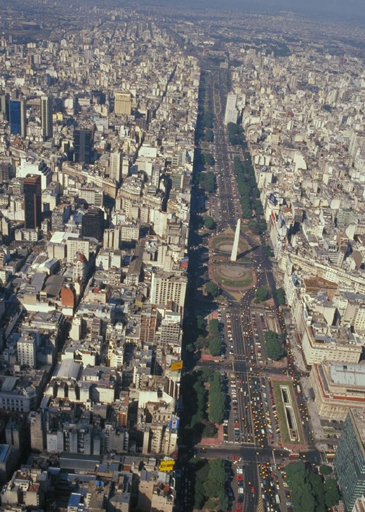
When I flew into Buenos Aires from the U.S., the plane didn't fly over the city and I never got to see a bird's eye view. I walk a lot. Porteños I talk to are amazed that I walk as far as I do-- like from San Telmo to the outer reaches of Palermo. Buses, taxis and the subway are cheap and efficient but I love to walk and always find it a good way to get to know something of a city. My guess is that a walk from Bio, my favorite veggie restaurant, way out on Humboldt in Palermo to San Telmo is at least 4 or 5 miles. Flying over Buenos Aires after my trip to Corrientes and Misiones provinces I was stunned by the staggering giganticness of the city. It just goes on and one and on. There are 36 million people in Argentina, with lots of wide open spaces. 11 and a half million of them live in the Buenos Aires metropolitan area.

In Manhattan all my friends think I'm crazy because I love walking from the 50's down to, say, Little Italy. I get to see a lot of Manhattan. But not all of it-- and none of Brooklyn, the Bronx, Queens or Staten Island. Buenos Aires is much bigger; much, much bigger. And remember what I said about how Buenos Aires is such a vertical city with everyone living in apartment buildings? That would be in the city center areas. There's plenty of horizonal living in Greater B.A.

Argentina is also a very large country. It's not like any of the European countries, where you can drive anywhere in a day. Not by a long shot. The nonstop flight from Buenos Aires to Tierra del Fuego is around 4 hours, about the same as Los Angeles to Atlanta. And from Jujuy in the northwest down to Tierra del Fuego... my guess is that it's further than from Maine to San Diego. Unless you have a lot of time and love long distance driving-- and I've met quite a few travelers who do and who are revelling in their Argentine vacations-- you have to fly. The problem with flying around Argentina is that it's expensive, for many people prohibitively expensive.

Every Porteño I tell I'm going to Tierra del Fuego lights up and tells me how wonderful it is. When I ask them if they've ever been, they all say no. I still haven't met a single Argentine who's ever been there. As one of my friends mentioned "It costs less to go to Miami or London. So..."

For foreigners there is a way around this. In Latin America there are a lot of things stacked against tourists, even to the point of hotels-- not to mention national parks and things like that-- which charge more to foreigners than to natives. In a few cases, they even charge more to certain foreigners (i.e.- like those who live above the equator) than to others. But there is one little, or not so little, instance where the situation works in reverse. You know what a Eurail Pass is, right? Aerolinas Argentinas, the national airline, offers something like that-- a mindblowingly low rate for internal travel. The catch: you have to fly into the country on that airline. And that isn't always convenient or even cost-effective (especially since Aerolinas Argentinas isn't hooked up with any of the big airline networks that share mileage plans).

I stumbled upon a way around that little catch. Uruguay is right across the La Plata and if you're in Buenos Aires why not visit Uruguay anyway-- Colonia, Montevideo and Punta del Este? I took a pleasant one hour ferry trip over to Colonia and then a bus to Montevideo. There are also ferries direct to Montevideo. After seeing a bit of Uruguay I took the quick, cheap flight back to Buenos Aires. And that meant I flew into Argentina from a foreign country, making me eligible to fly anywhere inside the country for next to nothing.

My next travel tip will be how to trick the nasty Brazilians into letting you into their over-priced country.


UPDATE: AND THE COUNTRY AND CITY AREN'T THE ONLY THINGS THAT ARE BIG AROUND HERE!

To answer an e-mail from a friend, it isn't just Buenos Aires, the metro area, and Argentina, the nation, that are big. The portions in restaurants also seem to be very large. Aside from the all-you-can eat buffets, even the chic restaurants serve hefty courses. Food is plentiful and the folks down here like to eat and they like to party. Like I mentioned earlier though, you don't see the kind of obesity in the people that you see all over America or, more and more, in Europe.

Saturday, December 09, 2006

BYE-BYE PARAGUAY-- RUTA 1 IS WAY DIFFERENT FROM RUTA 2


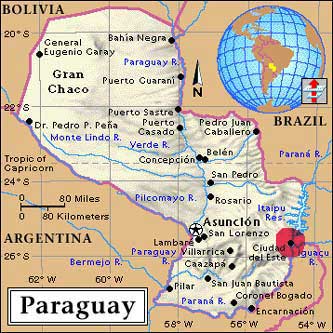
A few days ago I was marvelling at the squalor and backwardness of the road from Iguazu/Ciudad del Este to Asunción. It reminded me of India-- a jumble of shanties up against an ill-maintained highway with sorry looking people and their animals wandering around randomly and with garbage and filth everywhere. That was Ruta 2. There's another way into Paraguay: Ruta 1, from Posadas, Argentina, another port of the mighty Paraná River. I took a bus from Asunción to Encarnacion, the Paraguayan city across from Posadas. Once the bus had left behind the slums that ring Asunción-- I was just reading that even in the U.S. there are more people living in poverty in the suburbs than in the cities and the slums of Paris and most European cities are well away from the centers and this seems to be the case in this part of Latin America too-- Paraguay took on a decidedly different look. The communities seem well looked-after, even prosperous. The tropical savannah mixed with jungle gave way to rich grasslands and the hodgepodge habitations along Ruta 2 were replaced by well-planned little towns along Ruta 1.


The people looked better. And so did their animals! It smelled better too and I didn't see any garbage strewn along the road in the whole 5 hour trip. It was like night and day. And Encarnacion also has the air of a propserous and decent little port/border town, rather than the threatening bandit refuge Ciudad Del Este appeared to be. (It's also filled with Arabs, more so than any other town in the area, and I hear the FBI has been there in force looking into "terrorist" connections.)

I took a city bus from Encarnacion to Posadas. I paid 2 pesos (.65) and the short trip included a stop at Paraguayan customs on one side of the Paraná bridge and at Argentine customs on the other side. It was smooth and relaxed and no one asked for an exit fee, although I guess that's just at the airports. Nor did the Argentines make me fill out all the pesky paperwork you have to fill in when you enter by air.

Posadas is the capital of Missiones Province. I think there are a 250-300,000 people in the city. After Paraguay, it feels like I'm back in the 21st Century. It's 100 degrees though. And humid. I'm not a huge fan of this kind of weather but there's something I like even less-- freezing airconditioning which always strikes me as supremely unhealthy. The buses in tropical places are bonechillingly cold and dry-- and filled with sick people sneezing and coughing. No one ever told anyone to cover their mouths. (This especially bothers me at buffets.)

I'm staying in Posadas' only 4-star hotel, Julio Cèsar. It costs $35/night-- no corporate discount-- and the gap between 5 stars and 4 stars is considerably greater than the gap between 4 stars and 3 stars. But the sheets are crisp and clean and there is a ceiling fan (as well as the airconditioning I would never use). It's a decent enough place and, in fact, the swimming pool looks a lot better than the one of the roof of the Sheraton in Asunción (which was so filthy that it was unimaginable that anyone would ever use it). Breakfast buffet is always included in the hotels and the one today was more modest than the ones in the 5 stars, but there was fruit, which is all I eat anyway. I was a little put off when some slovenly young woman with her 7 or 8 year old on her hip walked up to the buffet, the child coughing deeply and the woman sneezing heartily right into the basket of bread.

Last night I made a deal with Roberto, a Swiss-born Argentine, to get me to Iberá in a 4 wheel drive and pick me up in a few days and drive me back. Roberto is a personable dude who speaks great colloquial English-- "American films," he told me-- and has a travel agency catering to tourists who want to make the circuit of ancient Jesuit monasteries in this area and who want to get to Iberá (to which there are no paved roads or public transportation). I expect to be away from computer access for a few days but I'll write about Iberá when I get back to Posadas next week.

In case you ever wind up in Posadas, il Diletto is the best restaurant in town. The mixed salad was totally killer and HUGE (and only $3) and I also had some baked river fish (surubí) with potatoes and a whole lot of melted cheese. I'm looking forward to another one of those salads when I get back here next week.

Friday, December 08, 2006

US EMBASSY DENIES THE EXISTENCE OF BUSH LANDHOLDINGS IN PARAGUAY

The Chaco takes up about 60% of Paraguay and has less than 3% of the population. It is desolate and beyond what we think of as backward or "civilized." It is in this vast and remote region-- no towns, no roads, people don't even speak Spanish here-- that Bush is rumored to have bought his gigantic estate. When rumors first started surfacing about it people assumed he would be using it as a backup in case he had to escape the war crimes charges that could well come after he is out of office. In Latin America the suspicion is that he was making a play for the area's huge acquifer which is said to be more valuable than an oil field, at least for those who think in terms of generations when doing their financial planning. That the two Bush daughters have been down here a few times has added fuel to the fire. I reported the rumors at Down With Tyranny but I wasn't certain it was actually true, even after reading quotes from the governor of the province and other Paraguayan public officials.

Since I got to Paraguay I've been trying to track down the ranch-- with no luck. Some people swear it is true--as did the Paraguayan consul in the U.S. I had spoken to-- and some say it is just a fake rumor. In any case, everyone agrees it would be virtually impossible to find out for sure because the region is so vast and remote. The desk clerk at the Sheraton suggested I hire a private plane to find it since there aren't even roads, let alone buses.

Yesterday I called the U.S. Embassy and had a long, friendly chat with a diplomat. He doesn't seem too enamoured of Paraguay, although he reckons it's better than Pakistan. He complained that Asuncion is remote and cut off from the rest of the world. He also said that they checked and that there is no Bush ranch and no secret U.S. military base. Of course if it were secret, he would hardly be advertising its existence. He suggested I read a State Department statement about both. The official U.S. line is that the Bush ranch is some Cuban disinformation propogated by Prensa Latina.

People tend not to believe anything diplomats say that serve the national interests they represent. Under Bush the credibility of the U.S. State Department has fallen to new lows. Their claims are utterly worthless. That doesn't prove that there is a Bush ranch, however. Is it possible that the daughters were here because one of them works for UNICEF? I doubt it. And even the diplomat admitted to me that she was up in the Chaco visiting backward Menonite communities. It doesn't add up.

I spoke to the wife of a Brazilian general who told me that the base is real and that the ranch has been "100% confirmed" by the Brazilian military intelligence. Is she a good source? She has less reason to lie than the U.S. State Department.

I don't think there's much more I can find out about this whole thing from here. I keep reminding myself I'm on vacation and that I need to get to Tierra del Fuego. I'm going to take a bus to Encarnacion on the Argentine border, cross over to Posadas, the capital of Missiones Province and sniff out the possibilities of going down to Esterios de Iberrà in Corrientes. This is supposed to be the Western Hemisphere's version of the Serengeti. It is a vast, sparcely populated swamp. I don't know what's wrong with me.

Wednesday, December 06, 2006

PARAGUAY FIRST IMPRESSIONS-- A STEP BACK FROM THE GLOBAL VILLAGE


When I made my big VW van trip to India in 1969-71 I remember this bizarre sensation I got sometimes, especially in Afghanistan and Nepal, that I wasn't merely traveling in space but also in time-- backwards in time. Like that first day in Herat, especially after smoking hash stronger than acid with some tribal elders, I started thinking I was back in Biblical times. Nothing to do with anything about the Bible, just it was a long time ago.

Well, it's almost 2007 and... today I was feeling like I was in pre-call center India circa 1970. Ever since I left Buenos Aires I've been feeling more and more like Joseph Conrad... descending... or a Paul Bowles character. Here are some notes I jotted down on the bus today after I had somehow managed to get out of Brazil and into a more-chaotic-than-normal Paraguay:

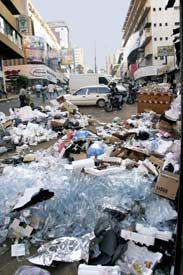
Ciudad del Este is one of Paraguay's two portals to the modern world, a border town on the bank of the Parana River across from Foz Iguassu in Brazil. You'd think it would be more... um... cosmopolitan than the rest of the country. If it is, I'll be pre-Biblical in no time at all. This is a foresaken hellhole with garbage-strewn streets and the air of decay, really seedy decay. All the strides Brazil and Argentina have made to become thoroughly integral parts of the 21st Century global economy... well, I'm not even seeing a baby step over on this side of the Parana.

This morning I woke up in the Tropical Hotel Cataratas inside the ecological Iguazu Falls National Park that spans chunks or Brazil and Argentina and which I plan to write about at great length when I get home and can show you my wonderful photos. But now I'm on the other side of the Friendship Bridge, after great exertions. It feels like I put enough time and energy in to have gone hundreds of miles instead of a dozen. But in many ways it feels not like a dozen or like hundreds but like thousands of miles. It sure ain't Kansas... nor even the most extreme and distant corners of Brazil or Argentina. And no one has ever mentioned "ecological" to the folks hereabouts, believe me. The sky darkened ominously as we crossed the border and it started to rain-- the first rain I've seen since arriving in South America.

Early this morning CNN informed me that there is rioting in Asuncion, the capital. It wasn't anti-American or even anti-Bush and I figured it didn't look threatening enough on tv for me to change my plans. When I eventually got to the bus station in Foz I was soaked in sweat and disgruntled. It was then that the bus company agent informed me that the Brazilian buses were refusing to cross the border because of strikes and demonstrations in Paraguay. (A little aside: I could have saved myself a lot of hassles. First off I should have taken a plane. It costs $45 from Ciudad del Este to Asuncion on TAM. I had called TAM, a Brazilian airline, and asked if I could fly from Foz to Asuncion. They said they had no direct flights but I could fly from Foz to Sao Paulo to Asuncion for $900. They neglected to mention they fly direct from the airport 10 miles from Foz, just over the Brazil-Paraguay border. Second, I should have taken a taxi from the hotel to the bus terminal instead of 3 buses, but the taxis-- and all other services--have special prices for foreigners. A Brazilian would pay around $15. For a foreigner it's $75. I'll get more into this when I write about Iguazu after I'm back in the U.S.)

Anyway, before I interupted myself, I was saying how the bus agent explained there would be no bus to Asuncion. However, he offered to take me in a couple of private cars to Ciudad del Este where there is a bus going to Asuncion. Okey-dokey. He didn't even charge me and I wound up in some kind of a parking lot in this filthy squalid dump on the border and then on a small, uncomfortable, freezing bus with a boisterous Brazilian couple. It only went in second gear. Eventually he stopped at an actual bus terminal and the bus filled up with people going to their capital city. Maybe the extra weight allowed him to get into the higher gears. It was a 5 hour trip.

I felt like I was back in India: scrawny chickens, scrawny cattle, scrawny dogs, scrawny children all over the roads. Verdent green everywhere, tropical vegetation, smoke from fires permeating everything... hovels lining the 2 lane highway (Paraguay's best road). This is the developed part of the country. Up north, where Bush's ranch is, it's supposed to be backward, really backward. Anyway, down here in developed Paraguay there were virtually no cars, just trucks and buses. India has come a long way; Paraguay hasn't.

Asuncion is quite a step up from what I just described-- but hardly a modern city; hadly a city at all, in fact. There are open sewers where sidewalks should be. I'm in the tropics. It could be Africa. It sure couldn't be Buenos Aires or Montevideo.

I did manage to find a haute cuisine restaurant and it was completely delicious-- Mburicaò. I had a grilled local river fish on a bed of lightly curried vegetables and it was fantastic and there was lots of it. It was like $12. No one spoke English and there was no menu in English. No one speaks English anywhere in Paraguay so far. Oh, the guys at the desk of the hotel speak English-- a bit. I have a feeling that's the only qualification needed to get the job-- a little English. I mean it is a Sheraton.


UPDATE: ASUNCION LOOKS BETTER IN THE LIGHT OF DAY

It's still very much a third world city, but the nice bright sunshine helps highlight some charms. And this Sheraton I'm at isn't really in the center (where the open sewers have been paved over). I can see that my hopes to actually visit the Bush ranch are unrealistic. There are no roads and the few people in the lightly inhabited area don't speak Spanish, just Guarani. There are no buses or anything like that that get anywhere near the region and I was told that the only way to get close to it is to rent a private plane-- or hike... for a couple of weeks. Every single person who I discussed it with have told me I would be killed if I tried to go there. I think I'll try the downtown siteseeing instead.


UPDATE: AH... THERE'S A REASON SO FEW TOURISTS COME TO PARAGUAY

India is more interesting. I did manage to see all the mains sights in Asuncion. I probably inhaled enough toxic fumes to have taken 5 years of eating raw food and taking 30 supplements a day off my lifespan. The heat and humidity are staggering. The traffic congestion is beyond anything conceivable in L.A.


There is apparently no such thing as zoning in Asuncion. It's kind of interesting; it's the most mixed used place I've ever been to. Everywhere you look you see a meticulously kept colonial mansion--and that's not a style; it's a house built when Asuncion was the capital of the southern part of the Spanish Empire-- delicately painted sky blue or rose pink, sitting next to a greasy car repair shop/junk yard with rusting hulks of trucks in front of it. And next to that an optomitrist, a clinic, a mall and 20 kiosks. Speaking of optomitry, it is apparently the primary profession hereabouts. Remember how I mentioned that Buenos Aires has more hairdressers per square inch than any other place on earth? Asuncion has more optomitrists than any other place on earth. I will insert a photo here when I get home. I took it from the Plaza de Heroes and it shows 8 optomitrists' shops in a row. And every block seems to have one or two. If I had time I would investigate.

I took a city bus downtown. It costs 2,100 guaranis. There are 5,360 guaranis to the dollar. The buses, belching heavy black exhaust, crawl along and never bother closing their doors. People jump on and off at will-- including vendors selling food and drink and whatever else you can imagine. Everyone seems to agree I couldn't get within 100 miles of the Bush estate and that if I did I would never be heard from again. Apparently there's a "low level" rebellion going on in the region and the U.S. has a base up there "training" Paraguayans to exterminate the locals fight the terrorists. Maybe we can ask Jane Harman to look into that.

I am leaning toward heading off to Iberà, a swamp near (relatively near) Posadas in Agentina. It's supposed to be the Serengeti of South America with more species of animals than anywhere else in the hemisphere. The drawback is that there's no easy way to get there-- from anywhere. Next week I'm going to Tierra del Fuego. I met some Brits in Iguazu who had just come from there and they said it was zero degrees. I'm not sure if that is centigrade or fahrenheit-- but does it matter?

Saturday, December 02, 2006

AND NOW A FEW WORDS FROM YOUR URUGUAY EXPERT

You don't think being in the country for like 8 hours makes me an expert yet? Me neither; but until today I don't think I recall ever meeting anyone who had been here longer. It sure is different from Buenos Aires! Montevideo is a kicked back town, almost rustic compared to sophisticated Buenos Aires, just down the Plata (and on the other side of that wide river).

This morning I took a fast ferry-- there's also a slow ferry-- to Colonia de Sacramento (bka- Colonia). It took an hour and it was comfy and pleasant. I met a really nice woman in the lounge before boarding, Ana, who works for HSBC. It's a whole other story but I can't emphasize enough that traveling solo affords opportunities that are rarely available to people who travel with someone. I like it both ways but I always talk with Americans who can't seem to fathom the idea of traveling alone. While I was waiting at the bus station I ran into a guy from Milwaukee named Tom who had ridden his motorcycle all the way down here. What a trip he's having!

Anyway, Colonia, which was founded by the Portuguese and chose to stay with Brazil instead of joining Uruguay-- although it doesn't share a contiguous border with Brazil-- is always raved about by everyone as a picturesque jewel of colonial architecture and so on. It's nice and it took me about an hour to see it all. I could have seen it in 30 minutes if I were in a hurry.

The bus to Montevideo took two and a half hours through the gently rolling Uruguayan countryside. It's a small rural country with 3 million people, half of whom live in Montevideo (which boasts a tree for every person, something I am willing to attest to from what I've seen so far).

Uruguay is far less cosmopolitan than Buenos Aires. Everyone looks like they came from Spain (whereas Argentina looks like a real hodgepodge-- a good one-- of Europe). Buenos Aires is a vertical city, tall buildings and stunning architecture everywhere. Montevideo's people seem less inclined to live in apartment buildings and the city is more horizontal. The public spaces are less ship-shape, although the private houses and their gardens look ver well-kept-up.

Uruguay is a social welfare state and everyone is kind of middle class. There are no great disparities in wealth apparent, the way there are in the U.S. and Argentina. I mentioned a few days ago that Argentines dress up and are ultra fashion-conscious. Here in Montevideo people are casual and even a little slovenly-- tee shirts, shorts and flip-flops everywhere.

I'm staying at the new Sheraton Hotel, which is supposed to be the best in town. The staff is friendly-- and very young. Sometimes in a new city I ask a concierge to recommend the best eating experience in town. Some concierges know; others don't. I should have been more thoughtful about this one when I realized he was the busboy and the concierge. He suggested a seafood restaurant called Francis. It's run by a bunch of kids and it isn't bad by any means but I know there are better restaurants in town. There have to be! This chef seemed to be having a good time experimenting with combining whatever came to mind. Some of it worked well, some of it worked less well. I have to admit that I was distracted from my meal by the manager furiously picking his nose the entire time I was there. No one else seemed to notice.

I've gathered that what people do here in laid-back city on a Saturday night is go for a walk along the shore (the Ramblas). The weather is beautiful and I think I'm going to do that now. After that I'm going to turn in early and soak up the Sheratoness of my new living situation. And tomorrow... they have an indoor rooftop swimming pool. I'm so glad I brought a pair of trunks!

Friday, December 01, 2006

EATING OUT IN BUENOS AIRES-- CHILA, A GREAT NEW ARGENTINE RESTAURANT

I rented an apartment in Buenos Aires so I could get the feel for living here. Every morning I prepare breakfast, pretty much the same stuff I have in L.A. I go shopping at a supermarket, Disco, and at small vegetable stores. Today I had half a white melon, very much like a honeydew, stuffed with blueberries, strawberries, pecans, lemon juice. I also prepare my own lunches. Dinners find me going out to try Argentine restaurants. When I get home I'll do a whole story on the health food scene and on the vegetarian restaurants I found-- and I´m pretty sure I've found 'em all. But today I want to write up a review of a haute cuisine restaurant my favorite concierge suggested. It's new and not in any of the guide books yet.

In fact, the whole area isn't in any of the guide books yet. The restaurant is called Chila and the area is Puerta Madera. It is the newly gentrified docks region and, man is it ever gentrified! No old word charm here, except there were two three-mast naval schooners docked along the bank and a full navy band playing a concert. The area looks real snazzy and upscale and with a grotesque combination of TGI Friday and Hooters on one side of the river and glistening highrises, complements of ABN-AMRO, Hilton, Nextel, LG, and lots of construction cranes dominating the other side, it's just the kind of area I'd steer clear of. But then I would have missed Chila.

The concierge had helped me trick the rotten Brazilians out of a visa and I wanted to celebrate with a wonderful dining experience. She said she had just eaten at Chila and that it was brand new and a secret that no one knew about yet. She said it would be empty. It was. Lucky me.

The Argentine dining scene, beyound the empañadas and parrillas is pretty sophisticated. And there are nouvelle Argentine restaurants everywhere. Chila's chef is preparing bold and exciting meals, combining delcious and unique, if not traditional, flavors. The waiter suggested a cold avocado cream with shrimps sauted in cayenne pepper. It was completely delicious and I would have liked three of them. So much for the old canard that you can't get any spicy food in Buenos Aires. As a main course I had a Sole farcí. It was stuffed with mushrooms and shrimps and in a lime juice and coconut milk sauce; served with a simple green salad. I'm glad it was a couple of miles from my apartment because I needed the nice long walk to help digest such rich food.

The restaurant is impeccably designed and would get highest grades from Zagat in the decor and service categories, two things I never care about. (I'm just in it for the food.) I do care about prices though, and here they are great-- at least for Americans. The meal cost me 75 pesos ($25) and it would have been a $75 meal in NY or L.A. Exchange rates used to work that way for Americans in Europe too. Now they work against us in the same way in Europe. Here, as long as you go to places specifically catering to locals, your dollar stretches triple.

THEY HATE BUSH MORE HERE THAN WE DO IN AMERICA. BELIEVE IT OR NOT

All through the nightmare of Bush's illegitimate regime I have continued to travel. I have written about how uncomfortable people I've met have felt about Bush in Spain, in Turkey, in Indonesia, VietNam, Morocco, Thailand, Canada, Mexico, England, Holland... And every year, the discomfiture has grown. After he re-stole the White House in 2004, the hatred started getting less subtle.

Today the big news in Argentina is how Bush's puppet in Mexico, Felipe Calderón, inaugurated himself as president of Mexico at a slap-dash secret midnight ceremony in the wee hours of the night/morning with the connivance of the outgoing PAN (Partido Acción Nacional) president, Vicente Fox. Calderón stole the Mexican election from the rightful president, Andrés López Obrador, much the same way Bush was able to steal the 2000 election from Al Gore and the 2004 election from John Kerry-- and with the help of some of the very same crooked companies and treasonous methods of vote tampering.

I spent last night with some young Argentines who I met through my friend Tómas, a guy I've been in touch with via the Internet. Although Tómas' interest in politics is minimal, his friends are extremely interested. One, Maria, told me that American democracy, through thick and thin, has been a beacon of democracy for generations of Latin Americans. "Now tyrants all over the world are learning something else than democracy from Bush. They learn to steal elections and undermine democracy."

Did Tony Blair use Bush's methods in the last U.K. election? Does anyone doubt Putin will in the next Russian election? The very legitimacy of democracy itself has been undermined by Bush, not just in our country, but around the world.

Meanwhile in Mexico, Obrador has also declared himself the legitimate, elected President of Mexico. His supporters seem very determined to defend the democracy so many of their forefathers have given their lives for. Maybe Americans have something to learn from passionate democrats in Latin America. Al Gore and John Kerry certainly do.

I ate in a great new restaurant last night and I actually took notes and will do a review soon. Right now I'm too pissed off about Bush and democracy.