Search This Blog

Showing posts with label drugs. Show all posts

Saturday, June 18, 2016

Guest Post From Sally Fensome: Drugs Tourism-- Is It Worth It?

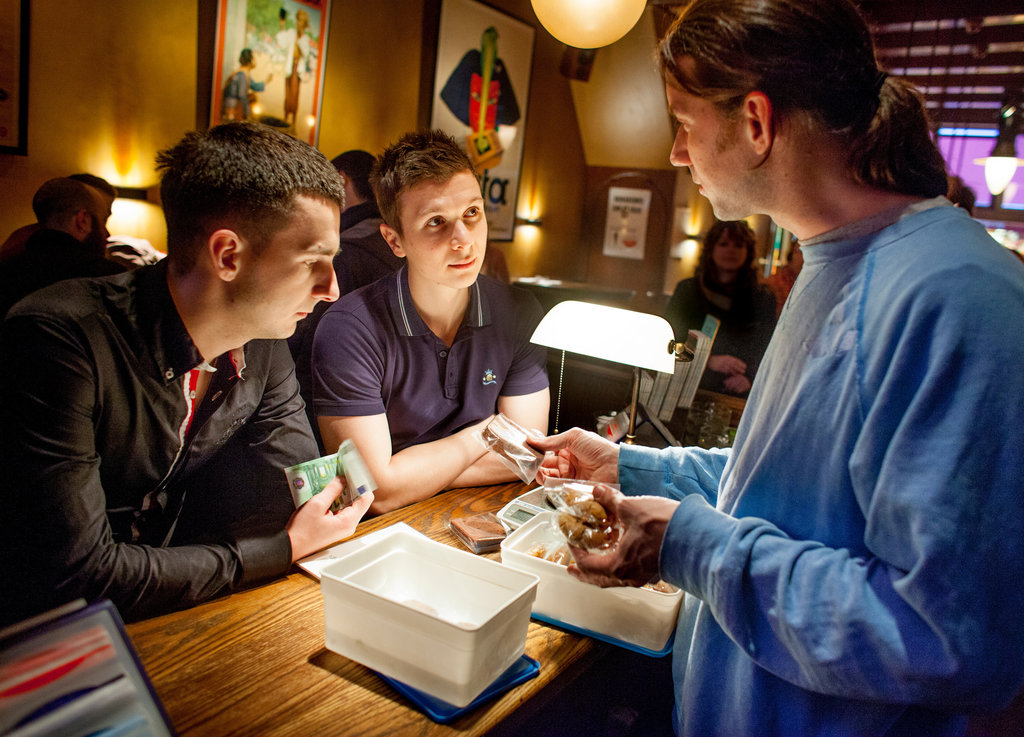
Amsterdam-- not as unique as it once was in one way

Vacations are times of hedonism, when we aim to expand our minds and to enjoy ourselves. If we’re heading to somewhere where drugs are more readily available and/or legal than here, then we may decide to push our boundaries a bit by experimenting with some of the local substances. Some people even travel expressly for this purpose. But is it a good idea? Is drugs tourism just harmless fun, or can it take a nasty, dark turn? As with everything, it all depends on what you do, what you do it for, and how deep you go.

Different Rules

If you want to experiment with substances, the USA is not the best place to do so. Our notorious ‘war on drugs’ means that you could face hefty sentences for even minor misdemeanors. The legalization of cannabis in certain states does, in all fairness, mean that you can take a road trip or an internal flight to get stoned without having to get a visa, but in general we’re still pretty strict. Far easier to head somewhere where certain drugs laws are not as tight, or where substance use is less policed. In many European nations, the use of recreational marijuana is either completely legal or barely policed, and attitudes towards it are far different to those we might find here. The same applies to many other ‘soft’ drugs in many parts of the world. If you spend a lot of time in these places, and make friends with the locals, you will almost inevitably find yourself adopting their way of thinking about what back home would be considered deviant drugs. It can be surprising when you head home and speak of your experiences to find your American friends bringing all of their homegrown prejudices to bear upon your drug use while abroad. However, in some cases, they may be justified. While there’s probably little risk from the free and easy use of things like marijuana, experimenting too deeply with harder drugs could leave you with some serious problems. Just because it’s legal (or easy to get away with) doesn’t mean that it’s safe.

Benefits Of Drug Tourism

We know what we’re meant to say-- ‘DRUGS ARE BAD, KIDS!’ And they are. But let’s not pretend that there aren’t some silver linings to the (blue) cloud. Heading out on a vacation and doing some relatively harmless drugs can be a great way for kids to learn that drugs aren’t really that great. It’s a good way to get experimental urges out of one’s system without landing oneself with a criminal record. It’s also a great way to make those crucial mistakes you need to make in order to learn. When you’re on a vacation, you’re typically in a reasonably safe social environment, surrounded by friends and family who’ll look after you. What’s more, if you’re somewhere where the drugs you want to try are legal, you’re likely to be sold them in a controlled location which will have absolutely no desire to see you in danger (or they could lose their licence). So it’s a safe way in which to learn by experience the joys and the downfalls of recreational drug use. However, this assumes that you’re sensible about it, don’t purchase from dodgy vendors, and don’t go near the really hard stuff. There are other reasons why people may benefit from drugs tourism. People with medical conditions may travel to experience the therapeutic effects of medical marijuana, and those with mental health problems are increasingly travelling to South America for the purportedly curative (but controversial) powers of ayahuasca.

Dangers Of Drug Tourism

Let’s start with the obvious: travelling abroad to do drugs could get you killed. Anything which messes with your mind and body as much as some of the substances out there is really, really dangerous. Particularly if you don’t know what you’re doing, and don’t understand enough of the local language to listen to instructions. If you’re not killed, you could end up with a nasty habit. So stay away from anything which is known to have addictive or life-threatening qualities! No matter how ‘normal’ it seems to use these substances in the area you’re travelling to! Oh, and speaking of ‘life threatening’, it’s worth noting that you can be executed in many nations for drugs offences. Moving down the scale, drugs tourism could see you arrested, and subjected to some pretty nasty penal regimes. While illegal drugs may be relatively easy to come by in certain parts of the world, their usage is deeply frowned upon. Some governments try to discourage drugs tourism by imposing harsh penalties upon foreigners caught using or smuggling drugs on their shores. We already mentioned execution. If you’re found ‘trafficking’ (which can mean anything from ‘smuggling through the airport’ to ‘holding in your hand’) drugs in Malaysia, the authorities will have no hesitation in sentencing you to death. And, yes, they really can do that to a foreign citizen. It’s not just Malaysia that you need to watch out for, either. Plenty of nations will drop on you like a ton of bricks for drugs tourism. If you’re lucky, you might just end up in prison for 30 odd years.

Think Of The Locals

If you’re considering a spot of drugs tourism, it pays to be considerate of the locals. Places like Amsterdam have been forced to consider putting restrictions on foreigners consuming marijuana there, as drugs tourists often a) can’t really handle it properly, and b) don’t have any respect for the locals. Drugs tourists all too often make the mistake of treating the nation they’re in as their own personal playground, and forgetting that real humans live, work, and belong to this place. The idea that any location is a ‘party town’ for you to go wild in risks you putting some local backs up in a serious manner. Not to mention the fact that drugs tourism can be exploitative and damaging to fragile local cultures. So, if you’re going to go off an experiment with substances in a foreign land, be as respectful as you can possibly manage!

Thursday, January 31, 2013

Bored With Mali? There's Always Guinea-Bissau... Unless You Worry About Safety

Guinea Bissau is bigger than The Gambia

That the Tuaregs of Mali (as well as Niger and Mauritania) hold hundreds of thousands of Bella and other black Africans in slavery is certainly not enough to motivate any kind of intervention from France, Britain, NATO or anyone else. Even when the Tuaregs have captured, in quick succession, Kidal, Gao and Timbuktu-- and two-thirds of Mali-- it wasn't until Islamist groups with a jihadi agenda and murky ties to al-Qaeda, that the West intervened. Mali has no oil but it isn't that far from oil-rich, Muslim-roiled Nigeria. Oil and Islamic jihadis... that gets the West's attention-- and fast. Slavers taking over a country-- who cares? Same with international drug barons... it might be inconvenient and yucky-- but if there's no oil or jihad involved, you're on your own.

I know people are just starting to figure out what Mali is; so I feel bad having to introduce a whole new country and it's problems onto the blog. AroundTheWorldBlog, meet Guinea-Bissau. This small (slightly bigger than Maryland) West African state tucked between Senegal and Guinea, was once part of the Empire of Mali. Portugal began colonizing it in the 1500s and kidnapping it's people to sell as slaves. Coincidentally, it used to be identified on maps as the Slave Coast. A rebellion began against fascist-led Portugal in the 1950s and they finally drove the Portuguese out in 1973. The first elections, though, weren't held until 1994 and since then every government has been violently overthrown. Not one president has finished his term. It's one of the poorest countries in the world-- on a level with Nepal, Burundi, Niger, Congo, Mali, Ethiopia, Afghanistan, Somalia, Haiti, Liberia and Malawi.

The country has no embassies in the U.S. or Britain and little tourism. If you want to visit, you have to stop in Lisbon and get a tourist visa there-- just like in the old colonial days! (It only takes a couple hours though... not counting the flight to Portugal.) Virtually no one will accept credit cards anywhere in the country but everyone love Euros and dollars. International phone service is, at best, sporadic. The country is considered one of the most violent in Africa and much too dangerous for tourists and the U.S. State Department warns American citizens to not travel there. From the State Department website:
The United States established diplomatic relations with Guinea-Bissau in 1975, following its independence from Portugal. Post-independence, the country has seen a mix of coups, attempted coups, civil war, assassinations, and democratic elections. The United States strongly condemned the April 2012 attempt by elements of the military to forcibly seize power, called for maximum restraint on all sides and the restoration of legitimate civilian leadership, and continues to work with its partners in the region and beyond as it monitors developments on the ground. Now that the Economic Community of West African States (ECOWAS) has returned Bissau-Guinean military factions to their barracks and a civilian government is in power, the United States is working with its partners and the Transitional Government of Guinea-Bissau to facilitate free and fair elections by Spring 2013, and to promote basic reforms on governance, justice, and economic development.

There is no U.S. Embassy in Guinea-Bissau. All official U.S. contact with Guinea-Bissau is handled by the U.S. Embassy in Senegal. Local employees staff the U.S. Office in Bissau, and U.S. diplomats from the Embassy in Dakar travel frequently to Bissau.

Given the April 12, 2012 coup, the United States was obliged to terminate foreign assistance to the Government of Guinea-Bissau consistent with the requirements of section 7008 of the Department of State, Foreign Operations and Related Programs Appropriations Act for 2012. Previous limited non-humanitarian assistance focused primarily on the justice sector as well as demining and proper weapons storage programs.
It gets worse. If you happened to read a report by Adam Nossiter in the NY Times last November, you're probably aware that Guinea-Bissau has been taken over by an international drug syndicate and is the major hub for cocaine traffic-- 30 tons a year-- between Latin America and Europe. The country is addicted to coke and crack and it defines the term "narco-state."
When the army ousted the president here just months before his term was to expire, a thirst for power by the officer corps did not fully explain the offensive. But a sizable increase in drug trafficking in this troubled country since the military took over has raised suspicions that the president’s sudden removal was what amounted to a cocaine coup.

The military brass here has long been associated with drug trafficking, but the coup last spring means soldiers now control the drug racket and the country itself, turning Guinea-Bissau in the eyes of some international counternarcotics experts into a nation where illegal drugs are sanctioned at the top.

“They are probably the worst narco-state that’s out there on the continent,” said a senior Drug Enforcement Administration official in Washington, who spoke on the condition of anonymity so as not to jeopardize his work in the region. “They are a major problem.”

Since the April 12 coup, more small twin-engine planes than ever are making the 1,600-mile Atlantic crossing from Latin America to the edge of Africa’s western bulge, landing in Guinea-Bissau’s fields, uninhabited islands and remote estuaries. There they unload their cargos of cocaine for transshipment north, experts say.

The fact that the army has put in place a figurehead government and that military officers continue to call the shots behind the scenes only intensifies the problem.

...Was the military coup itself a diversion for drug trafficking? Some experts point to signs that as the armed forces were seizing the presidency, taking over radio stations and arresting government officials, there was a flurry of drug activity on one of the islands of the Bijagós Archipelago, what amounted to a three-day offloading of suspicious sacks.

That surreptitious activity appears to have been simply a prelude.

“There has clearly been an increase in Guinea-Bissau in the last several months,” said Pierre Lapaque, head of the regional United Nations Office on Drugs and Crime for West and Central Africa. “We are seeing more and more drugs regularly arriving in this country.”

Mr. Lapaque called the trafficking in Guinea-Bissau “a major worry” and an “open sore,” and, like others, suggested that it was no coincidence that trafficking had spiked since the coup.

Joaquin Gonzalez-Ducay, the European Union ambassador in Bissau, said: “As a country it is controlled by those who formed the coup d’état. They can do what they want to do. Now they have free rein.”

The senior D.E.A. official said, “People at the highest levels of the military are involved in the facilitation” of trafficking, and added: “In other African countries government officials are part of the problem. In Guinea-Bissau, it is the government itself that is the problem.”

United Nations officials agree. “The coup was perpetrated by people totally embedded in the drugs business,” said one official, who spoke on the condition of anonymity because of the delicacy of the political environment here.

The country’s former prosecutor general, Octávio Inocêncio Alves, said, “A lot of the traffickers have direct relationships with the military.”

...Officials point to several indicators, besides the increase in plane flights, to show that Guinea-Bissau has become a major drug transit hub.

They cite photographs of a recently well-cleared stretch of road in a remote rural area near the Senegal border, complete with turning space for small planes. The clearing was created under the supervision of military authorities, officials say. They also note mysterious absences of fuel at the tiny international airport in the capital, presumed stolen by traffickers.

Four months before the coup, a plane, with the aid of uniformed soldiers, landed in a rural area in the center of the country, which is the size of Belgium, said João Biague, head of the judicial police. The landing took place not far from General Injai’s farm.

Mr. Biague heads what is nominally the country’s antidrug agency, though he made it clear that he and his staff are largely powerless to practice any form of drug interdiction despite receiving frequent tips about small planes landing from abroad. “The traffickers know we can’t do much,” he said.

The agency is so starved of funds that he does not have money to put gas in its few vehicles, Mr. Biague said. Paint is peeling on the outside of the judicial police’s two-story colonial building downtown, and mold blackens the ground-floor pilasters. It is allocated $85 a week from the country’s Justice Ministry.

“The agents we have in the field want to give up because they have nothing to eat,” Mr. Biague said.

In the last three years, there have been more than a half-dozen unsolved political assassinations here, including of the longtime president and the former army chief of staff, as well as at least two coup attempts, besides the successful coup. Nobody has been successfully prosecuted, though drugs were linked to many of them.

Last month, the justice minister of the transitional government warned opposition politicians not to speak publicly of “cases that don’t concern them,” under threat of criminal penalty.

This week, the repression appeared to tighten. General Injai threatened journalists with death if they asked questions about the assassination of the former president, and he warned that there would be many arrests as a result of the countercoup attempt.

There is remarkably little public talk of the unsolved political killings or of the country’s relations with the drug business. There have been no demonstrations; no discussion in the Parliament, shut down since July; no news conferences.

“A country that’s not capable of discussing its own problems-- it’s not a country, it’s not a state,” said Mr. Alves, the former prosecutor general.
The Obama administration, while encouraged France and then Britain, to intervene in Mali and is offering material support for the endeavor, has a very different attitude towards Guinea-Bissau. After explicitly linking the country’s military to the drug trade in 2010 and freezing the U.S. assets of drug kingpins ex-chief of the navy, Rear Adm. Bubo Na Tchuto, and the air force chief of staff, Ibraima Papa Camara, the Obama administration has backed off considerably. The top U.S. diplomat at the Guinea-Bissau desk in Dakar, Russel Hanks: "You will only have an impact on this transition by engagement, not by isolation. These are the people who came in to pick up the pieces after the coup.”

And, no, neither Ted Cruz, Lindsey Graham nor Kelly Ayotte brought up Guinea-Bissau in the Senate confirmation hearings for Chuck Hagel today. Awesome tunes though:

Friday, April 27, 2012

No More Drugs For Tourists In Holland?


I never got into the 12-step thing. I was severely addicted to drugs a couple times while I was a teenager and I went for the one step thing: stop. It wasn't easy and there was some spiritual intervention that was helpful but it worked, eventually. By the time I was 21, the drug demon was over... and I moved to Amsterdam. I lived there for almost 4 years and even worked in a licensed hash distribution center-- the Kosmos, which was actually a meditation center-- but never participated in the free and easy drug life. But it was certainly all around me, all the time. In fact, I didn't know that many people who weren't smoking hash. That's all changing now... at least for foreigners. Pressured by E.U. conservatives, the right-wingers who won the last Dutch elections passed a law preventing foreign tourists from using drugs... and this week a judge upheld it. That reversed 36 years of a very easy-going policy towards soft drugs in the country.
While soft drugs are tolerated, there is growing concern at tourists visiting just for drugs, and foreign dealers selling illegally at home.

The ban is due to start in three southern provinces next month, and go nationwide by the end of the year.

A group of cafe owners argued at The Hague district court that the ban was discriminatory against foreigners.

Under the new law, Dutch residents will still be allowed into the cafes, as long as they have valid identification, or possibly hold a new "weed pass," which is also being debated.

There are about 700 coffee shops, as they are called, in the Netherlands. The cultivation and sale of soft drugs through them is decriminalised, although not legal; police generally tolerate possession of up to five grams of cannabis.

A lawyer for the coffee shop owners said he would immediately lodge an appeal.

Michael Veling, a spokesman for the Dutch Cannabis Retailers Association, is among those challenging the government plan.

"It is going to cost me 90% of my turnover," he told the BBC World Service. "That is a very good reason for anyone to oppose any plan. Second it puts our customers in a very difficult spot, because why do you have to register to buy a substance that is still illegal?"

The BBC's Anna Holligan in The Hague says the nationwide ban is being strongly opposed by the Mayor of Amsterdam, Eberhard van der Laan, because around a third of the city's tourists visit to smoke cannabis in the cafes.

If the coffee shop owners lose their case they say they will take it to the European Court of Human Rights, on the grounds that the Dutch should not be allowed to discriminate against people on the basis of where they live.

The moves are part of a tougher approach to drugs introduced by the coalition conservative-led government, elected 18 months ago.

In October strong cannabis was reclassified as a hard drug, amid concerns that it has a psychotic effect on some users.

The move forced cannabis coffee shops to remove the more popular stronger varieties from their shelves.

In November the city of Maastricht brought in a coffee shop ban for foreign tourists from all countries, except Belgium and Germany, from where the majority of foreign customers come.

Now I guess there's going to be a big black market springing up for the wietpas or weed pass that permits coffee shops to sell drugs. Or will a big portion of the tourist trade dry up starting January first when the ban goes into effect? When I was there in the early '70s, there were always kids from England, Germany, Italy, Spain, France, Japan visiting Amsterdam and I had the feeling it wasn't just to see the Rembrandt pictures. Funny thing is, the only social problems I ever saw related to intoxication in Holland was from drunks, not from people smoking weed. The pilot program launched on October 1 in Maastricht confined cannabis sales to Dutch, German and Belgian customers. This reportedly led to the loss of over 345 jobs and will cost the city approximately $41 million dollars per year in pot tourism. But, on the other hand... I had a perfectly delightful 4 years there-- without drugs.

Saturday, November 27, 2010

Is It Dangerous To Use Drugs In Morocco?


The first time I visited Morocco, in 1969, it was my first trip to the Third World... or anyplace really exotic. It made me realize that Europe was not all that different from America, at least by comparison. I fell in love with the country, the food, the sights, the sounds, the smells, the way of life. And I stopped counting the number of times I've been back once I hit the dozen mark.

That first time I went, I had a bit on an ulterior motive: drugs. I wanted to buy a kilo of cheap kif (their version of hash) in the Rif Mountains around Ketama, smuggle the stuff back to London where I could pack it up well and send it to America, where an accomplice could sell it and help me finance a trip I was about to take to India. That worked out fine-- not just because the deal was smooth all around but also because Ketama and the Rif were pretty different from the rest of Morocco and really interesting. But I've never been back in the 40 years since. I'm more attracted to the urban experiences in Fez, Marrakech, Tangier, even Taroundant and Essaouira. And I don't use drugs any longer; my drug karma is all over now. Inshallah!

Kif is widely available in Morocco-- and one of the country's biggest sources of income-- and sometimes it seems that everyone is smoking it. But it's illegal, if, more or less, tolerated. Although less so than even a decade ago, it's hard to take a walk around without someone offering you some kif. And there are cafes in most places I've been where Moroccans are sitting around smoking kif in hookahs while sipping sugar with some mint tea in it. But if a tourist flaunts it-- like by smoking a joint while walking around a city-- it could be real trouble. The police don't come looking for tourists to bust but they do react when you wave it in their faces. (It's like homosexuality. It's illegal but no one is trying to bust any tourists for it.) However, if you do wind up being arrested, the best thing is to pay a bribe (baksheesh) fine on the spot. Otherwise, you could wind up in jail for ten years.

People ask me all the time if Morocco is a safe place to visit. I certainly think it is-- and I've written about the subject-- but when it comes to drugs, is any place "safe?" Today an American icon, 77 year old country singer Willie Nelson, was arrested in his home state, Texas, because officers at a police check point smelled pot, searched his tour bus and found 6 ounces.
"It's kind of surprising, but I mean we treat him like anybody else," [Sheriff Arvin] West said.

"He could get 180 days in county jail, which if he does, I'm going to make him cook and clean," West said.

"He can wear the stripy uniforms just like the other ones do."

Probably less likely to happen in Morocco-- a far more interesting place to visit in any case. And is this stoner music, or what?