Search This Blog

Wednesday, May 22, 2019

Exploring The Surreal Skeleton Coast

Photo courtesy of Edward Bohen

-by Skip Kaltenheuser

The Skeleton Coast is one of the most appropriately named stretches of land in the world, a place where many hapless sailors of centuries past have mingled their bones with whale ribs and shipwrecks.

There was at one time no margin for error for sailors rounding the Horn of Africa and heading north through rough seas past this vast expanse, which stretches along the northern third of Namibia’s coast. The region borders more vast expanses, among them the world’s oldest desert, the Namib. One wonders whether whalers and sailors who somehow made it ashore after reefs had thrashed their ships found a moment to appreciate landscapes that would have challenged even the surreal imagination of Salvador Dali.


Along the coastline are immense flat plains, broken in places by lines of small cones denoting abandoned diamond mines. The plains yield to giant, orange-yellow sand dunes. The wind etches geometric patterns on their long curves and slopes.

Photos courtesy of Skip Kaltenheuser


Walking across a flat plain from our vehicle-- a Land Rover with old airplane chairs strapped to the roof-- my companions and I step in each other’s footprints to minimize the impact on the tiny blades of vegetation that suck moisture from the ocean fog.

After hiking up a dune’s long backside, we slide down its steep interior slope. Suddenly, the sound of the wind is drowned out by the eerie monotone crescendo of a double bass. But there are no double bass players in sight.

Photos courtesy of Skip Kaltenheuser


The musicians, in fact, are us. The dunes’ uniquely shaped sand grains emit a deep roar as they grind together. Delighted, some of us take long leaps down the slope, adding staccato notes.

Struggling back up the huge half-bowl slope, the solitude of the coast hits home. Despite a huge concession set aside for the Skeleton Coast Camp-- which is where we are staying-- it is limited to 12 visitors at a time.

Photos courtesy of Ship Kaltenheuser


I keep imagining the challenges shipwrecked sailors would have faced. If I were in their shoes, would I have been able to overcome fear and march up the coast, giving my skeleton a run for its money?

Photos courtesy of Skip Kaltenheuser


Yet there are those that survive in this environment. The wildlife is fascinating in how it has adapted to the desert conditions. Up on a ridge facing the ocean breeze are several gemsbok, or oryx, weighing nearly 230 kilograms each. A type of antelope, they hyperventilate in the ocean air in order to cool their body temperatures. Their horns are like scimitars, forcing the region’s desert-adapted lions to think twice. Fresh lion tracks in a river bed make me think twice when, separated from the only other vehicle, I collect flat rocks to jam under tires bogged down in dry sand. A bit inland, amid arid canyons and valleys, are ostriches, jackals, mountain zebras, baboons and foxes.

Even the bugs are amazing. I saw a beetle that satiates its thirst by using grooves in its back to build up a drop of water from condensed fog.

Photo courtesy of Namibia Ministry of Environment


Desert elephants sometimes venture to the coast and surf the dunes, creating their own symphonies. We track the elephants on foot-- they’re always just around the bend, judging by the fresh elephant dung-- but the sun reflecting off the walls of a clay canyon beat us back. Our vehicles cause us to throw in the towel as well, as an unexplored river bed that might leave a vehicle stuck becomes too forbidding near sunset. There are no tow trucks here.

Photo courtesy of face2faceafrika.com


But the greatest survivors are the members of the Himba tribe, some of whom reside just outside the park. Scattered across northern Namibia, they make up less than 1 per cent of the population. They haven’t changed their nomadic lifestyle in centuries, raising cattle and living in huts of dung and sand.

The women are particularly striking, wearing only goat skin aprons and jewellery that glows red from a mixture of ochre and rancid butter, rubbed daily over every square inch.

Photos courtesy of Only Tribal


With their braided hair coated with mud and hardened like a helmet, these women work hard while the men count their cattle. The women’s true beauty is rooted in their physical strength and a meticulously tended traditional appearance that, according to anthropologists, maintains their cultural identity and protects them against the vagaries of modern life. Their refined beauty is framed by the harsher beauty around them.

Horrors such as the diamond wars farther north in Angola, the heartbreak of AIDS orphans, tribal conflicts and deprivation magnified by an envy of wealth have missed the Himba in this neck of Namibia. The elements of their neighbourhood are so tough no one hungers for their land-- it’s safety in lack of numbers.

A couple of decades ago, a drought – the term is relative here-- killed enough cattle to drive some Himba into the towns. They didn’t fare well-- alcoholism and prostitution were often the byproducts of poverty and culture shock. Much farther east, a proposed dam threatens the Himba way of life. But on the Skeleton Coast, it’s likely that in 50 years, the headman’s progeny will still be tending the holy fire, a smoldering log that is said to help departed paternal ancestors bring good fortune to the tribe.

Photos courtesy of Skip Kaltenheuser


At night, I stand watching the sky, stealing glances at the silhouette of a jackal slipping around my tent, which by Himba standards is as luxurious as the Taj Mahal. Before the morning fog, the night is moonless but bright. The stars are the brightest and most numerous I’ve seen, and shooting stars abound.

None of the hemisphere’s constellations are familiar. It’s an alien world, beautiful as long as I know a prop-driven aircraft will eventually alight on our desert runway with ample provisions.


GETTING THERE: Tour operators such as Wilderness Safaris, which operates the Skeleton Coast Camp, offer flights into the park in small bush planes from various points in Zimbabwe, Botswana, Malawi, Namibia and South Africa, and Skeleton Coast Camp for a four-day, three-night safari package.

For more visitor information, visit the Namibia Ministry of Environment.

Note: Skip wrote this piece some time ago, so be sure to check up before making your travel plans.

Thursday, May 16, 2019

Trepangs In China-- Yummy, Yummy


Yum?

-by Reese Erlich

[Reese Erlich is on assignment in Moscow. He offers this humorous memory about a long ago visit to that famed city. His current reporting from Russia will appear in two weeks.]

I was only 19 when I visited the USSR with my parents and sister in 1966. It was quite exotic for Americans to visit Moscow in those days and nothing was more exotic than eating at the Peking Restaurant at the Peking Hotel. It was an enormous dining hall with high ceilings, representing the best of Stalinesque architecture.

We perused the menu, which was written in four languages. One item stumped us: trepangs. My father suggested I consult the French version as I was the resident expert, having recently completed two years of high school French. The French menu had the same item, trepangs, although it sounded better pronounced with a French accent.

We asked our waiter, who consulted the Russian menu, and declared that the dish was called trepanskis, or some such Russian transliteration of the mysterious dish.

We never did order trepangs, but the word took on an almost mythic character in our family lore. For years it was synonymous with any profoundly unknowable concept. For example, Swedish film director Ingmar Bergman created gripping dramas full of deep trepang.

In 1980 I made my first of many reporting trips to the People's Republic of China. In those days, workers road to work every day on bicycles, wearing unisex Mao jackets. Bicycles outnumbered cars on the streets by about 100-1. And government officials held elaborate, 15-course meals for special guests. And I was one such special guest.

"Mr. Erlich," intoned our host, who was dressed in a Mao jacket just a bit too tight around the middle. "We have a specialty dish for tonight's dinner, trepangs."

My throat went dry. My hands began to shake. Could it be that after all these years, I was about to learn the secret of the trepang?

I calmed myself and with a steady voice I replied, "Ah yes, trepangs, a dish often discussed by my family."

"I would like one or two of them," I said cautiously.

Our host brimmed with great delight. "Most westerners aren't fond of trepangs," he said. But since they are your family's favorite, you cannot order one or two. We'll have an extra plate."

I nodded reluctantly, not knowing what I was getting into. I knew enough about Chinese customs not to refuse a host's offer and feared an international incident if the food was inedible.

This far into the story, you might be expecting some culturally inappropriate description of a disgusting food eaten by the Chinese, something like the apocryphal stories about monkey brains served from live monkeys in Hong Kong.

It's worse.

The trepangs arrived. They are sea slugs, marine animals with a slippery, gelatinous texture. Trepangs are also translated as sea cucumbers, a name that gives them a certain panache. Wikileaks notes, "In some cultural contexts the sea cucumber is thought to have medicinal value. Most cultures in East and Southeast Asia regard sea cucumbers as a delicacy."

And to tell you the truth, after 14 years of mystery, they weren't so bad. The best that can be said is that trepangs have no flavor of their own. They absorb the sauce in which they are immersed. And my Beijing hosts ordered hot, spicy trepangs. I actually enjoyed them, although I had some trouble eating the second plate.

So what did I learn from all these foreign adventures? If you want to know the name of a particular Chinese dish, ask someone who speaks Chinese.


Sunday, April 14, 2019

Are The Airlines Spying On Us Yet?


At one point, a couple decades ago, some of the high-end airlines introduced a privacy feature for first class travelers: enclosed cabins. A flight attendant could stand oh his or her toes and took over the wall, but otherwise you could do whatever you wanted in privacy. Apparently, too many people did and they seem to have abolished them. Now it looks like they're introducing the opposite: tiny cameras that can watch you during the flight. Do you think that's a little intrusive? You're watching a move and "someone" is watching you-- an airline employee? a government entity?

Last month, CNN reported that Singapore admits they have embedded cameras in their newer inflight entertainment systems but claim they're deactivated. "Deactivated?" Why are they there then-- in order to be activated next week or the week after?
The fact that some aircraft seats have built-in cameras is not new knowledge. Singapore Airlines' inflight entertainment system is manufactured by Panasonic Avionics, a US-based company that supplies IFE for many of the major airlines and French company Thales. Panasonic announced a while back that it's added cameras onto seat backs.

And in 2017, Panasonic Avionics announced a partnership with Tascent-- a biometrics and identity innovation company.

"The companies will combine Tascent's biometric identity devices, software and services with Panasonic Avionic Corporation's in-flight entertainment and communications systems to provide streamlined, easy-to-use identity recognition before departure, during flight and upon arrival," read the corresponding press release.

The idea was seat-back cameras could facilitate onboard immigration, skipping lines when you land. It was also suggested that a seat-back camera could aid payment processing for onboard shopping.

At the 2017 Dubai Airshow, Panasonic Avionics announced the latest incarnation of Emirates' IFE in First Class and Economy-- specifying it featured a camera, plus a microphone and speaker.

In the age of the smartphone, everyone holds a tiny cinema in their hand, so there's certainly an expectation that airlines will have exciting entertainment options-- a screen simply showing movies won't cut it anymore.

But has Emirates ever done anything with its on-board cameras?

"Some of our 777 aircraft have cameras that came pre-installed with the inflight entertainment hardware that we had purchased from the manufacturer (Panasonic)," a spokeperson for the Dubai-based airline told CNN Travel. "It was originally meant for seat-to-seat video calls, however Emirates has never activated it."

This echoes Singapore Airlines' comment on the issue.

"These cameras have been intended by the manufacturers for future developments," the airline says. "These cameras are permanently disabled on our aircraft and cannot be activated on board. We have no plans to enable or develop any features using the cameras."

Meanwhile, American Airlines told CNN Travel that cameras are "a standard feature," but are not activated and the carrier has no plans to use them.

A spokesperson for Aussie carrier Qantas also told CNN Travel that IFE manufacturers include inbuilt cameras as standard-- and said the airline couldn't activate the cameras, even if they wanted to.

"The feature would require software in order to be activated, which Qantas doesn't have and doesn't plan to install."

Air New Zealand and British Airways told CNN Travel there were no cameras on board any of their aircraft.

Two images obtained by CNN Travel of an IFE system on a British Airways airplane depict what looks like a lens of some kind. BA describes it as an infrared environmental sensor rather than a camera.

But are airplane seat cameras a bad idea? Some aviation experts think they could improve the onboard, inflight experience.

Joe Leader, CEO of aviation trade body Airline Passenger Experience Association (APEX) think there's several handy usages for these cameras.

As well as facilitating video chat between passengers, the cameras could look out for passengers becoming unwell or monitor cabins for suspicious behavior.

The cameras could also be used to spot human trafficking or assault-- acting as an extension of the air steward's eyes.

As for the privacy concern, APEX points out the ubiquity of cameras in 21st century society.

"Today, airline passengers are typically tracked outside the aircraft dozens of times on a typical journey through stores, security, roadways, and airports by cameras without any permission," APEX says in a statement.

"In contrast, airlines only want to use cameras in the future with permission when technology has advanced to offer personalized service improvements that passengers desire."

Hacking fears, suggests APEX, are "misplaced."

"The greatest risk to airline passenger privacy breaches come from their own smartphones, tablets, cameras, computers, and smart devices used in private settings, " says APEX.

The concern for some fliers is that even if the existence of these seat-back cameras aren't a secret-- and even if they could facilitate some cool features-- it feels disingenuous that their presence isn't advertised.

When contacted by CNN Travel, Panasonic Avionics stressed that it was committed to the privacy of passengers.

"Panasonic Avionics will never activate any feature or functionality within an IFE system without explicit direction from an airline customer," the company said in a statement to CNN.

"Prior to the use of any camera on a Panasonic Avionics' system that would affect passenger privacy, Panasonic Avionics would work closely with its airline customer to educate passengers about how the system works and to certify compliance with all appropriate privacy laws and regulations, such as [The EU's data privacy regulation] GDPR."

But although Panasonic Avionics and the airlines say the cameras are currently deactivated-- they're not physically covered up and passengers remain worried about hacking.
These systems are expensive and they're not just there so they could be not used. The airlines should stop bullshitting their customers for a change. One consumer advocacy group pointed out that "Air travel is already fraught with ineffective and invasive breaches of our personal privacy. But now the airlines themselves have gone even further with cameras and microphones pointed at passengers as they watch movies, eat snacks, or just sleep. And the implications of in-flight cameras are even bigger than the discomfort of the airline watching you sleep on a red-eye. It’s still unknown to what extent the federal government could be able to acquire that data, without a warrant or probable cause, or process the camera footage through faulty facial recognition programs that misidentify women and people of color."

I'm old enough to remember when flying was a treat. That was a long, long, long time ago. Are you thinking I'm being too alarmist here? If so, take a look at this. "German Chancellor Angela Merkel has introduced a bill that would allow German spy agencies to hack into nearly any computer and conduct espionage on a wide swath of citizens and foreigners. Drawn up by Interior Minister Horst Seehofer, the bill greatly expands the espionage powers of Germany’s intelligence service, the bnd. Although Seehofer has been notorious for opposing the chancellor on many occasions, he seems to have persuaded her to support this latest bill. This time, opposition is coming from Merkel’s coalition ally, the Social Democratic Party (spd). The spd justice minister has expressed outrage at one clause in particular, which would allow spies to collect information on children under 14 years old. The justification for this clause rests on the 2016 case of a 12-year-old who was involved in a plot to bomb a Christmas market.
Many Germans are critical of the bill. “This amounts to a massive extension of intrusive surveillance,” said Sven Herpig, a researcher from the New Responsibility Foundation. Germany’s Left Party also condemned the bill, calling it a “catalogue of Orwellian fantasies.”

In the recent past, however, many similar “fantasies” have become reality.

In 2017, Germany proposed an “unprecedented spate of new surveillance and security laws.” Most of these were passed and are in force today, yet they are rarely discussed.

The biggest concern is currently the government’s State Trojan spyware law. This allows government spyware to be covertly installed on a target’s mobile phone. The spyware can lie dormant for a set period of time, remaining undetected for years, before being activated to collect data on the user’s calls, chats and Internet activity. And this isn’t limited to phones; the spyware can also be used to spy on people through smart devices, like speakers or fridges that can connect to the Internet, greatly infringing upon privacy rights.

Before the State Trojan law was passed, only the federal Criminal Office had the power to employ this method of espionage. Now this power is in the hands of the state itself.

The new law also grants permission for the bnd to use this spyware against foreigners. Both the Criminal Office and bnd have expressed a desire to “cooperate more effectively against ‘transnational’ threats, such as terrorism and organized crime.”

Airlines in Germany are bound to collect and retain the contact details of their passengers, means of booking, payment, and even seat choice, for up to five years. Although presented as an EU requirement, critics have said that this law goes well beyond what is required by Brussels.

Other laws passed in 2017 regulate increased video surveillance of public areas and more detailed research into the background of migrants, both of which came in the aftermath of the 2016 Christmas market terrorist attacks.
Last month, Senators Jeff Merkley (D-OR) and John Kennedy (R-LA) sent a joint letter to Delta, Southwest, Frontier, United, Spirit, American, JetBlue, and Alaska, noting their concern about a possible "serious breach of privacy."
While Americans have an expectation that they are monitored in airports as a necessary security measure, the notion that in-flight cameras may monitor passengers while they sleep, eat, or have private conversations is troubling. Further, in light of data breaches that have impacted many major airlines, we have misgivings that cameras or sensors may not employ the necessary security measures to prevent them from being targeted by cybercriminals.

For these reasons, we respectfully request that the following information be provided regarding the cameras on in-flight entertainment systems:
1- Does your airline currently use, or has ever used, cameras or sensors to monitor passengers;
2- If yes, what purpose do the cameras serve and in what circumstances may the cameras be activated;
3- If you have or currently do utilize cameras or sensors to monitor passengers, please provide details on how passengers are informed of this practice;
4- Please provide comprehensive data on the number of cameras and sensors used by your fleet, and the type of information that is collected or recorded, how it is stored, and who within your airline is responsible for the review and safekeeping of this information;
5- Further to the above, please confirm what security measures you have in place to prevent data breaches of this information, or hacking of the cameras themselves; and
6- Are the cameras used in any biometric identity capacity, and if so, under what authority?
We look forward to learning more about these practices and request a response within 30 days.

Monday, August 06, 2018

Trump And The American Tourist Industry-- A Match Made In Hell


Tourism is up all over the world-- up 8% to quantify it. But not in Trumpland. My pal Roland and I travel a lot and he wants to go to exciting, adventurous places, and that often happens to mean places with unstable and even fascist governments. He's always trying to drag me back to Israel, Egypt and Turkey, places we've enjoyed but that I don't want to go to until their political situations are in better shape. He just went to Hungary and Poland without me because I want to avoid countries with fascist governments. Looking at the growth rates of tourism this year, it appears that I'm not alone. Whilethe setoff the world's tourism has been growing-- Britain's by 17.9% for example, and Canada's by 21.2%, both the U.S. under Trump and Turkey under ErdoÄŸan, have seen tourism drop off, Turkey by 6.7% and the U.S. by 6%. Writing yesterday for the Daily Beast, Elizabeth Drew noted that once Trump was inserted into the White House tourism to the United States from foreign countries has steadily dropped.

The U.S. Travel Association has just provided her with figures "projecting a further drop in 2018 from a share of worldwide tourism of 12.0 percent in 2017 to 11.7 percent this year. And this is after a drop in Trump’s first year in office from 12.9 percent. Though the numbers and differentials look small in percentages, they are large in terms of dollars not spent here by foreign tourists and they have serious negative implications for jobs not created... Trump’s rhetoric and new policies and rules and regulations regarding travel have combined to blot America’s long-standing image as a welcoming nation."
[Trump's] travel ban, a barely disguised version of the total ban on Muslims being allowed into this country he announced during his presidential campaign, inflamed worldwide opinion and in practical terms it barred visits by citizens of seven entire countries in the name of preventing terrorist attacks (though none have come from the countries the ban singled out).

The administration’s treatment of people attempting to flee here from violence-wracked Central American countries and Trump’s rhetoric about Mexico from the moment he entered the presidential race hasn’t encouraged Hispanics to come see our wondrous sights and enjoy our beautiful beaches. Trump’s withdrawal of the U.S. from the Paris Climate Accord hasn’t helped, nor have his rows with the leaders of friendly nations, which began almost from when he took office.  Neither has Trump’s launching of a trade war. New visa-vetting policies have also caused delays and denials that didn’t used to occur. The invasive new tightening of airport security has put off numerous travelers to this country.

Maybe all these changes have prevented would-be terrorists from entering the U.S., but they for sure have also discouraged or denied many visitors with benign intentions.


The drop in tourism in 2017 was precipitous, and its velocity can be mainly attributed to one factor, what’s come to be called in the tourism industry the Trump slump. Earlier this year, Reuters quoted the head of a German company that specializes in trips to the United States as saying, “Politics is not helping us.”  He added that since the price of the dollar was falling at that time, “we should have seen a much bigger increase in demand.” The Pew Research Center Reserve found earlier this year that a survey of ten nations showed that a favorable opinion of the US occurred in only one country: Russia. The inescapable fact is that Trump’s presidency has coincided with an unprecedented drop in travel to the United States. The US’s share in worldwide travel increased steadily until 2015. While some attribute the recent drop in tourism to the U.S. to a strong dollar, in fact, the dollar was strong in 2015, when our tourism growth was at its apex, and it was strong in 2016. Yet when it declined in 2017, which should have helped tourism, foreign tourism to the U.S. dropped steeply that year. (After starting off weak earlier this year, the dollar’s been gaining in strength robustly, and the recent tightening of credit by the Federal Reserve will likely send the dollar even higher-- which isn’t good for U.S. exports, which includes tourism.)
These are the growth rates she got from the U.S. Travel Association:
Spain +32.7%
Australia +22%
Canada +21.2%
Saudi Arabia +20.3%
U.K. +17.9%
UAE +16.5%
Thailand +13.9%
China +9.3%
Germany +8%
France +4%
Italy +2.2%
U.S. -6%
Turkey -6.7%
I wish they had included Egypt and Israel. I bet the tourism rates in Syria are way down. I wonder if it's picking up in Iraq and Afghanistan. I doubt it. The most popular U.S. travel destinations-- so the ones being hurt the most by Trump's policies in this area are New York City, Hawaii, Las Vegas, Orlando, Chicago, California (San Diego, San Francisco, Los Angeles, Napa), Key West, New Orleans, Washington, DC, Arizona (Sedona and the Grand Canyon), Charleston, SC, Savannah, GA, Branson, MO, Nashville, Jackson, WY, Moab, UT, Asheville, NC, Maine, Boston, and Aspen.
Our pathetic drop in tourism at the same time that it’s growing almost everywhere else in the developed world has had a striking negative impact on our economy. The USTA (which is more careful about tourism statistics than the Commerce Department) estimates that if this country had merely maintained its share of the travel market it had in 2015 it would have received 7.4 million more visitors from abroad and $32.2 billion more in spending by tourists, which would have created 100,000 more jobs. After all, since tourism is counted as an export, for a president who rants about imbalance of trade numbers and has promised to bring more jobs to the United States, his record in attracting foreign tourists—if he’s aware of it; and if he is, if he cares about it—isn’t impressive. (Just about no respectable economist expects the excellent 4.1 percent economic growth in the second quarter, often the best quarter of a year, to last very long.)

To add to this inauspicious picture of our standing in the world, fewer foreign students have been applying for graduate degrees in what have long been considered our world-class universities. As has long been well understood, the education here of foreign students helps us as well as the countries of origin, by leading to scientific discoveries that might otherwise not have been made, by spreading the idea of America and of democracy, and by raising the education level of countries we hope won’t succumb to malign forces. We can help groom future foreign leaders.)  In the academic year 2017-2018, there occurred the first drop in enrollment by foreign students in the U.S. in ten years, by 4 percent, or roughly 32,000 fewer of them. The Trump administration has taken some actions that make it more difficult for foreign students to remain here if they drop some classes, transfer schools, or accidentally overstay their visas; and it’s considering such proposals as forcing students to have to reapply for a visa each year rather than just once, at the time of their enrollment.

What does all this say about the United States? Among other things it says that a great many others do not separate our country from our president, however unpopular he may be. The cartoonish balloon of Trump in a diaper that floated over the Parliament building in London during his visit to Great Britain in July was an insult not just to Trump but to the United States. It turns out that our having elected someone whose campaign and presidential rhetoric has at the least been unfriendly to other countries-- that is, other than Russia and North Korea—turns out to have been quite expensive financially and culturally. Trump’s “America first” talk has in more ways than we may have realized limited our potential as an influential nation, not to mention as a world leader. It’s to be remembered that the abysmal drops in both foreign tourists and students all occurred before the president further isolated us by his tariffs and his increased belligerence toward countries that have been our traditional allies, not to mention his groveling to Vladimir Putin before the entire world. It doesn’t require leaps of imagination to understand why visits to the U.S. from the Middle East and Mexico dropped last year. Some Canadian columnists have urged citizens of their country to stop vacationing in the United States—in retaliation for Trump’s new tariffs and his rudeness to their leader Justin Trudeau and as a moral position against his thinly cloaked Muslim ban. As it happens, the number of people seeking asylum in Canada from below its southern border, has increased dramatically of late.

Unfortunately, at the rate our president is going, his policies and his becoming increasingly lathered up as some of his past political and personal activities are catching up with him, we probably have nowhere to go but down in important and potentially lucrative international travel. The boom in international tourism is continuing, but we’re not benefiting from it-- and it’s not to be expected that in the foreseeable future we’ll see a great many tourists from the president’s best foreign friends, North Koreans or Russians, shopping along Fifth Avenue or hiking in the Grand Tetons. Like it or not, Trump’s face to the world is our face and his voice is ours. The costly-- in several ways-- drop in tourism and the decrease in curious foreign minds at our universities are not to be taken lightly, though they’re being ignored by the Trump administration.
If you have traveled to Europe-- or almost anywhere in the world these days-- tourist sights are overrun with busloads of tourists from China. And they spend a lot. In recent years I've been to old haunts where Chinese tourists were rare and where Chinese tourists are now dominant: Paris, London, Rome, Florence, Kathmandu, Delhi... And, according to the U.S. Commerce Department, in 2016 there were nearly 3 million Chinese tourists to the U.S., generating-- wait for it-- $33 billion in tourist spending. That's a lot of money, not just for hotels, airlines, tourist attractions... but also for retail businesses. Just go to Fifth Avenue in New York and Rodeo Drive in Beverly Hills and see who's walking out of shops with lots of bags from high end stores.

And the Chinese government, furious at Trump's foolish trade war, is starting to look at tourism as a way to strike at Trump. The Chinese government is starting gently-- warning potential Chinese tourists that the U.S. is dangerous to visit because of shootings, violence and criminal activities. The government owned Global Times warned potential tourists "If you are Chinese, take your embassy’s travel warnings very seriously before planning your next holiday or deciding where to send your kids to college, because by coming to America you risk being shot, robbed, raped, or beaten." They have specifically urged Chinese travelers to avoid Trump hotels and resorts.


Perhaps Hollywood will become an ever more popular tourist attraction when the City Council removes the Trumpanzee star on the Hollywood Walk Of Fame. The vote is tonight. There is always feces and urine on it and it gets vandalized all the time and has been completely destroyed twice. Their resolution (in part):


Monday, May 21, 2018

New Report Finds Risks Associated With Maintaining Airlines Outside The U.S.


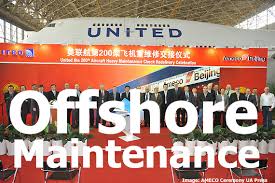
Roland and I travel a lot overseas, and sometimes we wind up on funky internal airlines in places like Mali, India, Vietnam, Morocco, Hungary, Argentina, Thailand... We pray to the maintenance gods that everything was done competently and tell ourselves that it was all done under U.S. or U.K. supervision, knowing full well that it wasn't and wondering about how many corners were cut. Today I got a memo from the Transport Workers Union of America (AFL-CIO) in DC. The title is above, The subtitle is no less assuring: Ridge Global Report Says Safety and Security Concerns of Commercial Aviation Better Addressed When Repair and Maintenance is Performed in the U.S. The report itself is called Risks Associated With Foreign Repair Stations.
Airline passengers may be less safe when the plane they are flying on has been repaired or maintained in a foreign country. That is among the conclusions of a risk-based report by Ridge Global, a firm founded by former Department of Homeland Security Secretary Tom Ridge on risks associated with the use of foreign repair stations by the U.S. airline industry.

The Transport Workers of America contracted with Gov. Ridge’s firm, Ridge Global, LLC, to assess the safety and security risks associated with foreign-based repair and overhaul facilities. The Transport Workers Union represents more than 140,000 workers in the airline, rail, subway, bus, utility and service industries.

Nearly 50-percent of maintenance work done by air carriers registered in the United States, including the major airlines, is conducted outside the United States. The facilities in foreign countries where commercial aircraft are repaired and maintained, however, are not as secure as those in the United States, the report states. Protections against unauthorized access are not as strong, and employee background checks are not as thorough, as those in the United States.

“Both conditions increase risks related to situations that could be more easily exploited by terrorists or individuals with harmful intent,” the Ridge Global report states.

“The Ridge Global Report exposes significant flaws in the mechanical maintenance practices of the United States airline industry,” TWU International President John Samuelsen, said. “Major air carriers’ lust for profits has driven them to fix planes on foreign soil, which has compromised the safety and security of America’s air travelers. It’s the dangerous dirty secret of America’s airlines, and the U.S. government must act to end this danger.”

“There are obvious disparities between domestic and foreign oversight and repair of commercial airlines,” said Gov. Ridge. “While there have thankfully been few U.S. aviation incidents in recent years, even one is too many, and so it is important travelers are aware how airplanes they fly on each day are maintained. Given the absence of direct oversight by the FAA and the differences described in our report, the qualifications of those responsible for oversight and those maintaining and repairing the aircraft in foreign countries cannot be viewed as meeting the same rigorous standards of inspection and repair as required in the U.S.”

The mechanics that do this critically important work at facilities located overseas, are not subject to the same intense scrutiny by government regulators, or held to the same high standards as mechanics in America, the report states.

One of the most significant disparities in terms of regulatory oversight deals with drug and alcohol testing requirements. Testing is mandated in the U.S. Employment and privacy laws in many foreign countries prevent such testing. Another contrast involves the inspection process itself. FAA domestic inspections can be random and without notice. That approach is prohibited in foreign countries.

“Foreign repair stations present risks that domestic ones do not,” the report further states. “These risks are due in part, to how laws and regulations are applied. We concluded that the safety and security concerns of commercial aviation are better addressed when the repair and maintenance is done in the United States.”
"Republican outsourcing in the Age of Trump" would have been another possible title, I guess. A tad too provocative, maybe?

Wednesday, January 24, 2018

The Trump Slump Is Costing The U.S. Thousands Of Jobs And Billions Of Dollars In The Tourism Industry


I started traveling out of the U.S. while I was still a kid. I was just a teenager when my girlfriend and I decided to hitchhike from Long Island to the North Pole. We only got as far as Montreal... but we loved it. The following summer my pal Bob and I hitchhiked to Mexico City. Fantastic. And when I graduated from college, it was only $100 to fly to Luxembourg if you stopped for at least a night in Iceland. My girlfriend and I met a couple of teachers on the plane who were planning a week-long excursion, driving around the island and we joined them. Then we went to Luxembourg, Germany, Denmark, Holland, Belgium, France, Spain, Portugal, Morocco and England. The travel bug was not sated. When Margin went back to the U.S. to finish school, I set off in my VW van across Europe, adding Austria, Hungary what was then Yugoslavia, Bulgaria, Turkey, Iran, Afghanistan, Pakistan, India, Sri Lanka, Nepal to the list of countries I had been through-- before settling down in Holland for a few years-- and taking vacations in Sweden, Finland, Greece, France and Morocco. Since then I'vebeen to over 100 countries. I still love travel. Roland and I just got back from Thailand and we brought our friend David-- his first trip there-- who got attacked by a monkey who broke his shoulder and fractured a bunch of toes. Here's the culprit:


The Thai monkey that got David


The Thais are way too polite to bring up Trump. Even the ones we revery friendly with never mentioned Señor Trumpanzee. But, Thailand is crawling with Europeans who aren't polite in that way at all. Everywhere we went Europeans asked us, "How could you?" We explained to a Danish woman on a Chao Phraya water "bus" that California's results were 8,753,788 (61.73%) to 4,483,810 (31.62%) and she couldn't stop talking about how almost 4 and a half million Californians could vote for Trump. (David, who hadn't been attacked by the monkey yet, wanted to throw her into the Chao Phraya. But, generally speaking, everyone we met who wasn't a Thai, had something negative to say about Trump. It wasn't unlike-- just more intense-- than it was when Nixon and Bush were presidents. I just read that the the negative feelings in Haiti were so intense that the U.S. was U.S. had to shut down the embassy in Port-au-Prince. Trump is in Davos-- and Swiss people are protesting and letting him know he isn't welcome. "[D]emonstrators marched through the Swiss city chanting 'Trump not welcome,' with some carrying banners and placards reading 'dump the Trump' and 'Switzerland is hosting Nazis,' an AFP reporter said, putting the turnout at over 1,000." Thousand more people marched in Zurich and Lausanne... 'Trump is the incarnation of sexism, racism, exploitation and corruption,'" said one demonstrator. So what? Trump doesn't care.

But the U.S. tourism does. Travel + Leisure reported that "The United Nations World Tourism Organization announced last week that Spain overtook the United States as the second-most visited destination in the world (France remains number one) in 2017. The U.S. welcomed 72.9 million foreign visitors last year-- down about four percent from the previous year’s 75.9 million." Katherine Lugar, CEO of American Hotel & Lodging Association, pointed out that "Fewer visitors means fewer hotel stays, fewer meals eaten in our restaurants, fewer goods purchased in our retail stores, and fewer visits to our national attractions. It also means fewer American jobs and a loss to our economy."
The Pew Research Center found that unfavorable views of the U.S. in 37 countries increased 13 percent in the six months that Trump was in office. In response to a New York Times post, Europeans “overwhelmingly cited the Trump administration and its policies as reasons for avoiding or canceling trips to the United States,” according to the paper.
The Trump Slump in American tourism has cost our country 40,000 jobs and $4.6 billion. The U.S. News and World Review reported on Tuesday that on their list of best countries the U.S. has slipped to the #8 spot and they attribute it to Trump. His first year in the White House rattled the world confidence. Ian Bremmer, president of the political risk consulting firm Eurasia Group explained recently that the most prominent causes for global insecurity stem from Trumpanzee's move away from global leadership, and China's eagerness to fill the perceived vacuum.
The United States slips in this year's U.S. News Best Countries ranking, dropping to the No. 8 spot after falling one position from its 2017 ranking. Switzerland, an island of stable prosperity in a world of turmoil, remains the Best Country, according to a global survey of more than 21,000 persons.

The reasons for America's drop-- the second straight year its ranking dipped-- are fueled by the world's perceptions of the country becoming less progressive and trustworthy, more politically unstable and a president who after just a year in office is far more unpopular than any other head of state or company CEO.

As in 2017, Canada remains the No. 2 in the survey. Germany, as it was in 2016, is perceived as the most powerful country in Europe-- surpassing the U.K. to place at No. 3 overall, while the U.K. drops to No. 4. Japan rounds out the top five, the highest finish for a nation in Asia, a region which survey respondents increasingly believe holds many of the keys to the world's future. At No. 6 is Sweden and Australia moves up to the No. 7 position, surpassing the U.S.

...The Best Countries rankings come just days after Trump celebrates his first year as U.S. president. The U.S. is still seen as the most powerful nation. In many ways, however, the results reflect 12 months of ongoing signs of the decline of America's standing in the world. In this sense, a noticeable "Trump Effect" is taking hold of the U.S.
Here's the 2018 ranked list of 20 best countries:

1- Switzerland
2- Canada
3- Germany
4- U.K.
5- Japan
6- Sweden
7- Australia
8- Trumpland
9- France

10- Netherlands
11- Denmark
12- Norway
13- New Zealand
14- Finland
15- Italy
16- Singapore
17- Austria
18- Luxembourg
19- Spain
20- China

Trump's favorite country, Russia, is #26 and at the very bottom of the list, at #80, is Algeria. By the way, I've been to every country on the list and I don't agree with the evaluation at all. I hate Switzerland and the U.S., despite Trump is still the best.

Friday, January 12, 2018

Finally Found It... The Huts Of Mali


After Trumpanzee's comments about "shithole countries" and "African huts," I searched and searched through my Mali and Senegal pictures looking for huts. I finally found one (above, in remote Dogon country where not many people have ever heard of the U.S.) but most of these photos-- of Roland, primarily in Timbuktu and Djenne-- had no huts. There were fishing huts on an island near Mopti in the Delta that the Bozos used, but I can't find any photos. And there are no huts in Dakar in Senegal or in Bamako in Mali. Sorry, Señor Trumpanzee.


Sunday, April 16, 2017

United Airlines' Woes Predate Oscar Munoz-- And You Can, At Least In Part, Blames Jimmy Carter


By the end of the week United was begging passengers not to abandon the much-hated airline. They promised, for example that they will no longer allow staff to take seats of boarded passengers and that they will no longer call law enforcement officials to remove passengers who do not pose immediate security threats. Still, I get the impression that Americans have had it with the Not So Friendly Skies and would like to see United go down hard. The company's stocked plummeted 2.5% last week and the damage to the brand is probably far greater than that. The tone-deaf company just announced that CEO Oscar Munoz’s annual bonus is around $13 million.
United Airlines CEO Oscar Munoz woke up Monday morning to a massive leadership test.

And he flunked-- big time.

Munoz had to respond to the shocking video footage of a passenger being violently ejected from one of his flights Sunday night. The video, shot by two passengers on their cellphones and shared on Twitter, went viral. The passenger was thrown off the plane simply because United had overbooked.

Munoz’s public response was a piece of pusillanimous lawyer-crafted claptrap that was pitiful, inadequate and insulting.

The incident was “upsetting to all of us here at United,” he said. He apologized “for having to re-accommodate these customers.” His “team” was conducting a “detailed review” to “further address and resolve this situation.”

Memo to Munoz: Are you kidding me?

Nobody cares if this was upsetting to the people at United. How about the upset to the paying customer-- apparently a middle-aged doctor-- who was dragged from your plane like this?

Nobody buys your insulting euphemism “re-accomodate.” You were throwing this guy off the plane, not for anything he did, but because you had deliberately sold more tickets than you had seats to make some extra bucks.


Despite the jaw-dropping p.r. blunder from United's team, the problem goes beyond that one company. Several years ago the Washington Monthly ran a story, Terminal Illiness about how deregulation was destroying the airline industry. Things have gotten much worse since then.
In 1978, however, a group of liberals including Ralph Nader, Ted Kennedy, Kennedy’s then Senate aide Stephen Breyer, and an economist named Alfred Kahn, whom President Jimmy Carter chose to run the CAB, conjured up a plan to drive down the cost of airline fares by fostering more price competition among airlines. Though they called it “deregulation,” the practical effect of eliminating the CAB [the Civil Aeronautics Board], especially after subsequent administrations abandoned antitrust enforcement as well, was to shift control of the airline industry from experts answerable to the public to corporate boardrooms and Wall Street.

Over the years, most Americans have adopted a pretty standard line about the results. On the one hand, complaining about the indignities of flying—overbooked, late, or canceled flights; surly flight attendants; and, more recently, terrible in-flight food service and high fees for checked baggage— has become a staple of American life, much like complaining about Internet providers or health insurance companies. On the other hand, we’ve told ourselves, at least the increased competition has made air travel cheaper. And at least most of us can still get where we need to go by air.

But now we find ourselves at a moment when nearly all the promises of the airline deregulators have clearly proved false. If you’re a member of the creative class who rarely does business in the nation’s industrial heartland or visits relatives there, you might not notice the magnitude of economic disruption being caused by lost airline service and skyrocketing fares. But if you are in the business of making and trading stuff beyond derivatives and concepts, you probably have to go to places like Cincinnati, Pittsburgh, Memphis, St. Louis, or Minneapolis, and you know firsthand how hard it has become to do business these days in such major heartland cities, which are increasingly cut off from each other and from the global economy.

And it’s about to get worse. Despite a wave of mergers that is fast concentrating control in the hands of three giant carriers, the industry remains essentially insolvent. Absent any coherent outcry, the directors of these private corporations remain free to respond to the crisis in the manner of an electrical utility company that, when it runs short of money, simply cuts off power to the neighborhoods of its own choosing.

...All these trends in the airline industry are bound to get much worse, and soon. Despite massive consolidation, steep cuts in wages and benefits, sharply rising fares, huge direct and indirect subsidies, and a slowly recovering economy, the industry remains unable to service its debt, and its executives—now serving at the whim of Wall Street-- see no way out except to continue to merge and to cut capacity. U.S. airlines lost money in all but three years between 2001 and 2010, according to the industry’s trade group, for a cumulative net loss of $62.9 billion. Even before the recent bankruptcy of American Airlines, the value of all publicly traded U.S. airline stocks amounted to only $32.3 billion, less than that of Starbucks.

That number would be even lower were it not for the major subsidies the industry has extracted from Congress. These include not just the billions spent by state and local governments to construct and maintain airports, and the $15 billion in loan guarantees the industry received in the aftermath of 9/11. They also include tens of billions in unfunded pension liabilities that major airlines have shoved onto taxpayers by declaring bankruptcy, as United and US Airways did in the last decade and American Airlines is trying to do now. If American succeeds in its plan to shed its pension debts onto the federal government’s Pension Benefit Guaranty Corporation, that alone would amount to a bailout of more than $10 billion. Other U.S. airlines continue to benefit from special provisions passed by Congress in 2007 that allow them to underfund their pension plans, so in the future taxpayers are likely to be paying even more of the cost of flying yesterday’s planes.

Yet even though these and other public subsidies dwarf those provided to Amtrak or General Motors, only one U.S. airline, Southwest, still has an investment-grade credit rating. Since 1978, almost all new start-ups have either failed or been absorbed (remember People Express, ValuJet, and Air Florida?) and only one, JetBlue, remains as a national competitor. Meanwhile, all six of the major “legacy” carriers that were still flying in 2011 have gone through bankruptcy. When the final numbers come in for last year, the U.S. industry as a whole will probably show some net income, but as of the third quarter of 2011 the margin was razor thin, and was mostly the result of rising fares and canceled service. Adjusted for growth of the economy, airline capacity is now at its lowest level since 1979, according to the trade group Airlines for America, and the industry has announced plans to cut another 1.5 percent of available seat miles in the first half of this year.

High fuel prices, to be sure, are a factor in this tale of woe. In 1999, fuel comprised 10 percent of an airline’s budget; now it ranges from 30 to 40 percent. But while high fuel costs make the price of providing short-haul service to sparsely populated areas higher than it has been in the past, they are not sufficient to explain the continuing deterioration of the airline industry. Nor can we blame the problem on the effects of the Great Recession. After decades in which the price of energy has risen and fallen and the economy has boomed and busted, the long-term trend is clear. The industry has been in turmoil and decline for more than thirty years, barely able to earn its cost of capital in the best of times and only then by cutting service and quality. It’s now evident that the industry’s problems are structural and deepening, as is the crisis faced by cities and industries that depend now more than ever on frequent, affordable air service to remain competitive in the global economy.

No doubt a few Wall Street tycoons and consulting firms have made billions merging and stripping down the airline industry over the last generation. But the fundamental problem is that the business model that airlines are left with doesn’t work for common shareholders, airline employees, or the American business community, much less the public.

One reason this business model doesn’t work is that it’s at odds with the basic physics of flying. It requires a tremendous amount of energy just to get a plane in the air. If the plane lands just a short time later, it’s hard to earn the fares necessary to cover the cost. This means the per-mile cost to the airlines of short-haul service is always going to be much higher than that of long-haul service, regardless of how the industry is organized. Yet the value of airline service to the public and the economy depends on providing connectivity to as many places as possible. Thus, without some form of cross-subsidization between short hauls and long hauls, the economic benefits of the network will be compromised. Fewer people will be flying to fewer places, which by itself hinders economic activity, while the high fixed cost of the remaining service has to be spread among a diminished number of passengers.

This highlights another problem that inevitably leads to declining service. It costs virtually the same to maintain an air traffic control tower, a runway, and ticketing and baggage-handling facilities whether an airport serves five or fifty flights a day, or whether each plane carries five or fifty passengers. So the per-passenger cost on low-volume routes is necessarily more than on high-volume routes, which again requires some form of cross-subsidization if robust connectivity is to be maintained.

Dealing with high fixed costs is a challenge common to virtually all networked industries, and in one way or another, America has grappled with the problem throughout the country’s history. The Founders understood that private enterprise could not by itself provide broadly distributed postal service because of the high cost of delivering mail to smaller towns and far-flung cities, and so they wrote into the Constitution that a government monopoly would take on the challenge, providing the necessary cross-subsidization.

Throughout most of the nineteenth century and much of the twentieth, generations of Americans similarly struggled with how to maintain an equitable and efficient railroad network, and for much the same reason. During various railroad bubbles, exuberant investors would build lines to the farthest corners of continent, much like start-up airlines in the 1980s. But over time, the high fixed cost of railroading and the basic economics of any networked industry left all but the core of the emerging system unprofitable before it received the benefits of government regulation. In the 1870s, railroads accounting for more than 30 percent of domestic mileage failed or fell into court-ordered receivership.

This was true even though most railroads maintained a near or total monopoly in most of the intermediate towns through which they ran. As Charles Francis Adams wrote in his 1878 book, Railroads: Their Origin and Problems:
Every local settlement and every secluded farmer saw other settlements and other farmers more fortunately placed, whose consequent prosperity seemed to make their own ruin a question of time. Place to place, or man to man, they might compete; but where the weight of the railroad was flung into one scale, it was strange indeed if the other did not kick the beam.
This was bad enough, but matters soon got worse. High fixed costs combined with ruinous competition in the early railroad industry created an overwhelming business incentive to consolidate and downsize, again much like what’s happening in the airline industry today. And consolidation in turn led to even more monopoly power-- not just over small and midsize communities but over large cities as well. By the 1880s, the fortunes of such major cities as Philadelphia, Baltimore, St. Louis, and Cincinnati rose and fell according to how various railroad financiers or “robber barons” combined and conspired to fix rates. Just as Americans scream today about the high cost of flying to a city like Cincinnati, where service is dominated by a single carrier, Americans of yesteryear faced impossible price discrimination when traveling or shipping to places dominated by a single railroad “trust” or “pool.”

This, more than any other factor, is what led previous generations of Americans to let go of the idea that government should have no role in regulating railroads and other emerging networked industries that were essential to the working of the economy as whole. “While the result of other ordinary competition was to reduce and equalize prices,” Adams noted, “that of railroad competition was to produce local inequalities and to arbitrarily raise and depress prices. The teachings of political economy were at fault.”

And indeed they were. The response was the creation of the Interstate Commerce Commission in 1887-- a move that most Americans viewed as essential to preserving free enterprise and their way of life. The ICC took on the task of moderating the price discrimination that railroads practiced, evening out the burden among different regions and classes of passengers and shippers in a way that allowed railroads to earn enough money to cover their fixed costs, improve their infrastructure, and give their investors a fair reward. In effect, the profits railroads earned on some highly trafficked long-haul routes came to be rechanneled by government policy to cover the cost of providing balanced and affordable service throughout the country. Railroads were regulated much as telephones and power companies came to be-- as natural monopolies that would be allowed to remain in private hands and earn a profit, but not at the cost of skewing the overall efficiency, balance, and fairness of American economy.

The process was messy and far from flawless. Striking the right balance required that Americans hash out what would today be called an “industrial policy,” and to do so in sometimes minute detail, such as setting the relative prices of shipping hogs verses hams from Dubuque to Chicago. But overall, government regulation of railroad pricing and routes worked better than letting a few financiers rule the system for their own private benefit. The country, after all, emerged as an industrial powerhouse during this period. Managing the structure and pricing of railroads was particularly essential to maintaining the competitiveness of small-scale entrepreneurs and of midsize manufacturing cities like Cincinnati or St. Louis. It wasn’t that the government picked winners or losers; rather, it prevented the machinations of railroad financiers from doing so.

Starting in 1938, the U.S. adopted much the same approach to the newly forming airline industry. Through the creation of the Civil Aeronautics Board, the government allowed the industry to become highly concentrated. Underpinning the legislation was a belief in a “public right of transit,” the idea that citizens were entitled to a reliable aviation system designed to meet their business and safety needs-- and the knowledge that unregulated competition would be unable to provide it.

As intended, the CAB nurtured the healthy maturation of a fledgling industry, forestalling ruinous competition and protecting airlines against bankruptcy. At the same time, airline fares fell dramatically, thanks largely to high levels of technological innovation, such as the introduction of the DC-8 and other mass-market jets. By the 1970s, the long-distance passenger train was dead, and jet travel had already helped to create a mass market for tourist destinations such as Disney World and the Caribbean. By 1977, 63 percent of Americans over eighteen had taken a trip on an airplane, up from 33 percent in 1962.

So why did Ted Kennedy and the Carter administration decide, over the strong objections of the airline unions and incumbent management at the time, that it was time to blow up government’s regulation of airlines? One reason was that the old regulatory regime had become highly litigious and rule bound. Kahn used to complain that his desk at the CAB was piled with papers demanding answers to trivial questions, such as “How many travel agents may a tour operator give free passage to inspect an all-inclusive tour? And must those agents then visit and inspect every one of the accommodations in the package?”

At the same time, many pointed to the example of Southwest Airlines, which got its start in 1971 by flying only within Texas, thereby escaping regulation by the CAB. Southwest’s success with discount fares particularly resonated with liberals at a time when inflation was liberalism’s greatest liability, and when the ascendant consumer movement made low prices a liberal imperative.

There were also ideological currents at work on the left that are little remembered today. Ralph Nader, for example, was popularizing the 1960s’ “New Left” notion that the New Deal regulatory state had been captured by incumbent industries, leading to what he called “corporate socialism.” Under the CAB, no new major airlines had emerged since the 1930s. Protected from competition, both airline management and unions had become overpaid and sclerotic at the expense of “the consumer,” Nader argued-- and never mind if workers in those industries and their unions were stalwart members of the Democratic coalition.


The Carter administration accepted this analysis and used it to justify deregulating not just airlines, but soon the railroad, trucking, and natural gas industries, while also taking the first steps toward rolling back banking regulation as well. That most managements in these industries resisted deregulation at the time only confirmed many liberals in their belief that deregulation was needed, and they told themselves that any trend toward monopoly would be checked by rigorous antitrust enforcement.

At first, the program-- which was, naturally, embraced by many free market economists and the incoming Reagan administration-- seemed to pay off. To be sure, many communities instantly lost air service, and the industry rapidly restructured into the hub-and-spoke system that still exists today, leading to the elimination of many direct flights. But the early years of the new regime also saw a burst of competition and price cutting in the airline industry.

What both policymakers and the public generally missed, however, was that any positive effects that occurred would be temporary, and that many of them would have occurred without deregulation. The price of energy, for example, cratered in the mid-1980s, making it possible to cut fares and even expand service on many short hauls. But that wasn’t an effect of deregulation; it was the result of a temporary world oil glut. Indeed, after adjusting for changes in energy prices, a 1990 study by the Economic Policy Institute concluded that airline fares fell more rapidly in the ten years before 1978 than they did during the subsequent decade.

A study published in the Journal of the Transportation Research Forum in 2007 confirms that the pattern continued. Except for a period after 9/11, when airlines deeply discounted fares to attract panicked customers, real air prices have fallen more slowly since the elimination of the CAB than before. This contrast becomes even starker if one considers the continuous decline in service quality, with more overbooked planes flying to fewer places, long waits in hub airports, the lost ability to make last-minute changes in itineraries without paying exorbitant fares, and the slow strangulation of heartland cities that don’t happen to be hubs. Moreover, most if not all of the post-deregulation price declines have been due to factors that cannot be repeated, such as the busting of airline unions, the termination of pension plans, the delayed replacement of aging aircraft, the elimination of complimentary meals and checked baggage, and, finally, the diminution of seat sizes and legroom to a point approaching the limits of human endurance. (Eliminating seats altogether, however, remains an option.)

Going forward, all industry forecasts call for further consolidation and continually rising fares and fees, accompanied by declining service on all but the most heavily trafficked routes. From time to time, short-term fare wars may break out on particular routes, particularly if foolish investors bring a start-up airline to town. Periodic dips in energy prices may bring a temporary reprieve. But over time, experience has shown that nearly all start-ups are eventually crushed by incumbent carriers, which in turn, despite their increasing consolidation, heavy public subsidies, and reductions in vital service to major cities, remain unable to earn even their cost of capital over time. Nobody wins except a few fast-trading financiers flying in private jets.

This result would hardly surprise Charles Francis Adams, Louis Brandeis, and many other great Americans who struggled in the late nineteenth and early twentieth centuries with how to harness the emergence of railroads, telephones, electrical power, and other networked industries to public purposes. They’d recognize the familiar boom-and-bust cycle of new entrants that occurred in the early period of airline deregulation and the subsequent trend toward consolidation, deteriorating service, and increasing price discrimination. What else would anyone who knows economic history expect of a natural monopoly that lacks the benefits of government regulation?

...That was the lesson previous generations learned from railroads; the current generation has to learn it all over again, from our experience with deregulated airlines. Why have we become so passive and reluctant to face up to the hard task of governing ourselves and our markets? We don’t need to recite “The Serenity Prayer.” We need to get out from under the thrall of the false prophets of deregulation, conservative and liberal alike, and make the benefits of true capitalism work for us once again.
In 2014 United's PAC paid out $189,500 in direct bribes to members of Congress-- mostly to Republicans, but plenty to Democrats will to play ball with them as well. The biggest pay-offs went to 3 especially transactional crooks, all notorious in Washington for taking money and selling their influence:
Bill Shuster (R-PA)- $10,000
Frank LoBiondo (R-NJ)- $10,000
Cory Booker (D-NJ)- $10,000