Search This Blog

Showing posts sorted by relevance for query afghanistan. Sort by date Show all posts

Sunday, March 11, 2012

Choo-Choo Trains Finally Coming To Afghanistan?

That's the highway, dangerous and barely functional these days

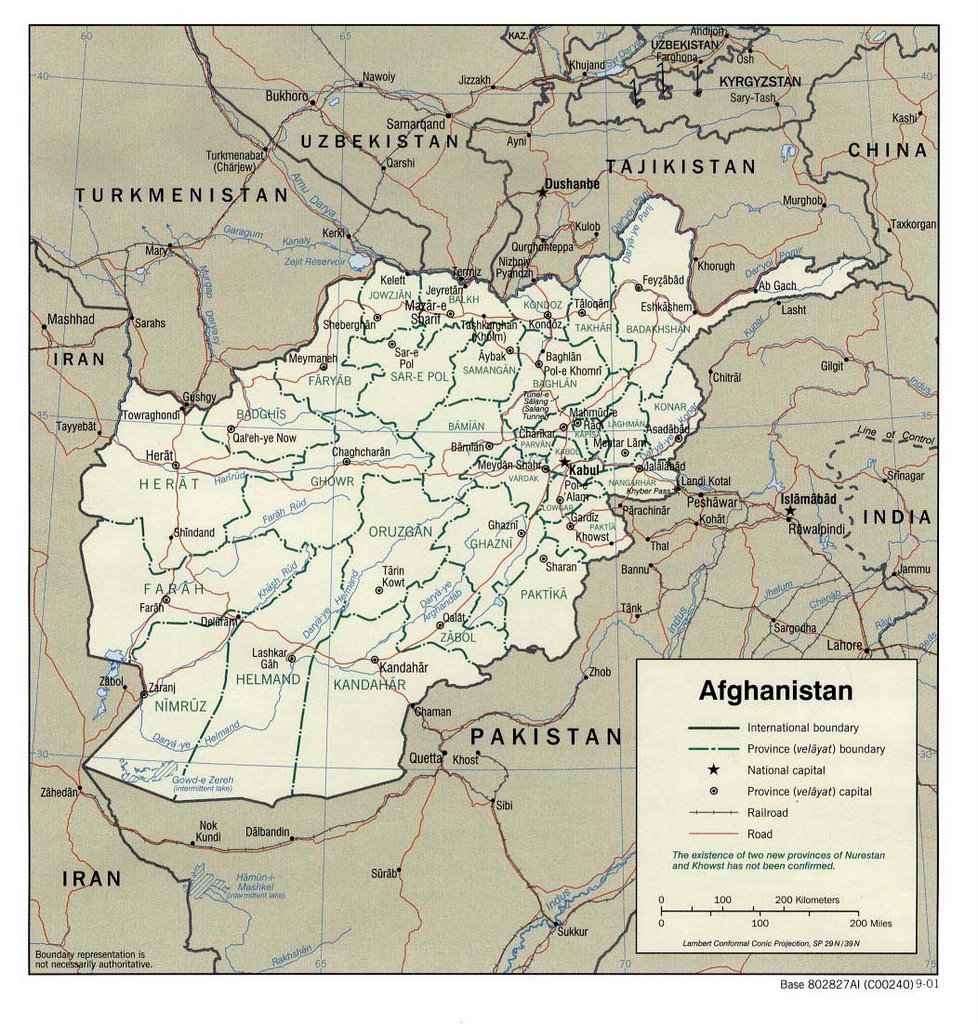
I drove a shiny new red VW van that I bought in Germany across Europe and Asia to Afghanistan in 1969. What a trip! And Afghanistan was nothing like anything I had ever seen or experienced before. I fell in love with the country. But it wasn't easy to get around. Well, there was a nice, well kept-up paved highway that circumnavigated the perimeter of the roundish-shaped country. I sort of remember that the stretch from Herat in the northwest to Kandahar down south and on to Kabul in the east (and to the Khyber Pass further east into Pakistan) was built by the U.S. and that the other half, from Kabul to Mazar-i-Sharif and the poppy and hash fields up north and on to Herat were built by the Russians. It worked for me-- except for the entire middle of the country which could only be traversed on rutted, mostly dirt, roads... well, barely roads. My van wasn't going anywhere. So I left it in Kabul and went with some friends for a nice ride in the country up to the Hindu Kush. It was supposed to be a 10 day jaunt. I fell off the horse, broken an ankle and spent six months in a "village" with two family compounds. No one had ever experienced electricity or heard of the U.S. and no one could read-- or even speak Farsi, the Afghan language I could get along in. The adventure of a lifetime... but I sure was thinking how nice it would have been if Afghanistan had had a railroad system. (I wasn't the only one thinking along those lines.)

But Afghanistan didn't want a railroad system. From the time of Alexander the Great until a couple years before I drove in with my VW van, few people visited Afghanistan unless they were riding in on horseback with an army. It mostly worked out poorly for everyone. But now, we learn, Afghanistan, who's beautiful highway system has been turned to rubble, like most of the country, is finally building a railroad. China and India are building it-- so they can extract, respectively, copper and iron ore.
More than a century ago, fearing that his country might be swallowed up in the Great Game rivalry between the British empire to the east and the Russian army to the north, an Afghan king made a radical decision: He banned railroads.

That edict effectively kept out foreign troops for a number of years. But it also left the Afghan economy, once a wealthy crossroads of the ancient Silk Road trading routes, largely cut off from the world at a time when trains were the engines of development.

Now, Afghanistan has just opened its first major railroad and is planning a half dozen more. The government is also inviting other countries to build tracks, part of plans for a "New Silk Route" that the U.S. hopes will help stabilize the region by promoting trading links.

China, Iran, Pakistan and India all have government or corporate plans for separate railroad projects across Afghanistan. Turkmenistan is completing its own plans for another line. And Uzbekistan has already built the first major rail link, a 47-mile (75-kilometer) line from the border town of Hairatan to Mazar-i-Sharif in Afghanistan's north.

One reason so many countries are helping Afghanistan belatedly join the rail age: They need trains if their companies hope to export the country's vast, untapped mineral wealth, estimated by U.S. surveys at nearly $1 trillion.

Both the railway projects and the prospects for future mining wealth will depend largely on whether the country can keep violence from escalating once the international military force withdraws most of its troops by the end of 2014. For investors, it's a question of whether the increased commerce is worth the risk and effort.

"Now there is genuine trade and traffic going on, especially in the north of Afghanistan, so it makes sense," says Andrew Grantham, an editor for Railway Gazette who runs a website chronicling the history of Afghanistan's failed railroad projects. "It's not just people drawing lines on maps and saying, "Wouldn't this be nice?"

Competing for contracts to mine deposits of copper, gold, iron and lithium is Afghanistan's modern Great Game, and one of the prices the government is extracting from eager companies is a promise to develop the railroads necessary to carry the heavy cargo.

"This will be critical to get anything to markets," says Juan Miranda, head of Central and West Asia Department of the Asian Development Bank, which funded the $165 million Uzbek-built railroad. The bank is also pushing a plan to link landlocked Afghanistan into the rail networks of all five of its neighbors.

For now, plans for Afghanistan's railroads are progressing bit by bit. As part of its agreement to develop a massive copper mine in Aynak, the China Metallurgical Group Corporation (MCC) is being asked to build a 575-mile (920-kilometer) railway from the mine southeast of Kabul. One branch would head to the Pakistani border, another in the opposite direction through the capital and connecting with the new Hairatan line in the north.

The Afghan government is also negotiating with the Indian-led consortium that won the contract for the equally huge iron deposits at Tajigak in central Afghanistan for the companies to fund a 560-mile (900-kilometer) railroad-- likely through Iran-- to bring out the heavy ore.

The story of how Afghanistan never got a major railroad pivots around Abdur Rahman Khan, the emir who ruled Afghanistan from 1880 to 1901. During his reign, Afghanistan was sandwiched between the British colonial rulers of India, which then encompassed modern-day Pakistan, and the Russian empire that extended into Caucasus areas of Central Asia.

Both sides were engaged in what was known as the Great Game to control the region. They were racing to build railroads in areas under their control as a way of quickly moving troops. By the 1880s, both the British and the Russians had built tracks that went right up to Afghanistan's border.

Rahman Khan responded with a decree that no railroad would be allowed to enter Afghan territory, reasoning that without them, it would be difficult for invading troops to cross the mountainous frontier, according to Grantham.

Afghanistan is "almost unique worldwide" in its history of actively working to stop railroads, Grantham says. "Most countries wanted railways."

In fact, the emir's gambit may have worked: Afghanistan never was annexed by either great power.
"It is one of the factors that probably kept the country together, but the price was Afghanistan became a complete backwater economically," says Fred Starr, chairman of the Central Asia-Caucasus Institute at Johns Hopkins University in Washington.

In the 1920s, Rahman Khan's modern-minded grandson, King Amanullah, planned a modern rail network in Afghanistan and even built 5-mile (8-kilometer) track with steam locomotives running between Kabul and his European-style palace of Darulaman. But his plans for a wider network met with opposition, and the line fell into disrepair after he was overthrown in 1929. The locomotives are now in a Kabul museum, next to Amanullah's bombed-out palace.

...The plan is to build a series of short, cross-border tracks to Uzbekistan, Turkmenistan, Tajikistan, Pakistan and Iran. The tracks would connect to each other inside the country's north by railways built by Iran from the west and China from the east.

"We would be able to import and export to Russia, Turkey, and even European countries," says Noor Gul Mangal, Afghanistan's deputy public works minister. Opening new transport gateways would also reduce Afghanistan's dependance on neighboring Pakistan as its only link to sea ports.

Only one line is finished and several of the rest are delayed or face funding problems. But already, the prospect of restoring Afghanistan's status as the crossroads for goods traveling from India, China and Europe has kindled enthusiasm.

Instead of silk, spices and tea, the New Silk Route would carry washing machines from India, heavy machinery from Europe and T-shirts from Pakistan over interconnecting railroads that are faster than container ships and cheaper than air freight.

Prediction: not in your lifetime, at least not a passenger service-- not with this kind of stuff making foreigners less and less welcome there... and rightfully so.
Western forces shot dead 16 civilians including nine children in southern Kandahar province on Sunday, Afghan officials said, in a rampage that witnesses said was carried out by American soldiers who were laughing and appeared drunk.

One Afghan father who said his children were killed in the shooting spree accused soldiers of later burning the bodies.

Witnesses told Reuters they saw a group of U.S. soldiers arrive at their village in Kandahar's Panjwayi district at around 2 am, enter homes and open fire.

Sunday, September 29, 2013

Kabul's Very Historic Garden Of Fidelity

2 paintings of Babur laying out the gardens

I was lucky I got to travel through Afghanistan when I did, in 1969 and again 1971. After that the whole thing blew up and today when Westerners think of Afghanistan, they think of off an ugly, dusty, crumbling, violent landscape. When I think of the "best" countries I ever visited, Afghanistan is always high on the list. And countries get on that list because of the people more than anything else. The Afs were always incredibly friendly and hospitable, even when I got thrown into jail for trying to smuggle 50 kilos of hash out of the country in my van.

Unfortunately, in the last decades Afghanistan hasn't been a place for foreign visitors. A Taliban spokesman a few months ago: “It is part of our war strategy to target any foreign citizen whose country has a military presence in Afghanistan and enters our country without permission from the Islamic Emirate of Afghanistan." A few tourists go anyway, maybe 100 a year, fewer than when I was first there in 1969. A Canadian couple disappeared and haven't been heard of since. Another two were a wealthy Russian couple, who hired an armored car and bodyguards at $1,500 a day, stayed in the $356-a-night Kabul Serena Hotel, toured the Panjshir Valley, and went home on schedule.
Like tourism industries anywhere, Afghan tourism does have its boosters. “The security situation is fairly stable, and tourists who visit are fairly comfortable and they are pleased when they see a hotel of this standard,” said Shahryar T. Khan, the general manager of the Kabul Serena Hotel, which has five stars and “world-class security measures.”

The 177-room hotel runs at 64 percent occupancy, Mr. Khan said, and tourists make up an increasing share of the guests. “Of course, from zero it’s gone up to 1 percent.” The Serena has twice been attacked by terrorists, and in 2008 Taliban insurgents killed six guests in an attack aimed at the hotel’s health spa.
Ghulam Nabi Farahi, the deputy minister of tourism says “Afghanistan is a country very suitable for attracting tourists. It’s a place where tourists can have all their wishes come true.” And he insists that there have been no recent cases of tourists attacked or kidnapped. The WikiTravel site for Afghanistan has a bold warning on top telling would be visitors that travel there "is extremely dangerous, and independent travel/sightseeing is emphatically discouraged."

But this week, a friend turned me on to a blog by Barbara Wells Sarudy who expresses a beautiful historical appreciation for Afghanistan-- or at least for the Afghanistan of the 1500s-- and from a unique perspective.
The Bagh-e Vafa (Garden of Fidelity) was Babur's first garden in what is now Afghanistan. He wrote in his memoirs, "In 1508-09, I had constructed a charbagh garden called Bagh-i-Wafa on a rise to the south of the Adianapur fortress. It overlooks the river, which flows between the fortress and the garden. It yields many oranges, citroens and pomegranates."

What is known about its design also comes from Babur's memoirs, "There oranges, citrons and pomegranates grow in abundance...I had plantains brought and planted there; they did vedry well. The year before I had had sugar cane planted there; it also did well...The garden lies high, has running water close at hand, and a mild winter climate. In the middle of it, a one-mill stream flows constantly past the little hill on which are the four garden plots. In the southwest part of it there is a reservoir ten by ten, round which are orange-trees and a few pomegranates, the whole encircled by a trefoil meadow. This is the best part of the garden, a most beautiful sight when the oranges take color."

This type of garden, called a charbagh, was described earlier in an account from Sir John Mandeville’s travels into the East, c. 1370, “And this Paradise is enclosed all about with a wall…and in the most high place of Paradise, even in the middle place, is a well that casteth out the four floods that run by divers lands. Of the which, the first is clept Pison, or Ganges, that is all one; and it runneth throughout Ind or Emlak, in the which river be many precious stones, and much of lignum aloes and much gravel of gold. And that other river is clept Nilus or Gison, that goeth by Ethiopia and after by Egypt. And that other is clept Tigris, that runneth by Assyria and by Armenia the great. And that other is clept Euphrates, that runneth also by Media and Armenia and by Persia. And men there beyond say, that all the sweet waters of the world, above and beneath, take their beginning of the well of Paradise, and out of that well all waters come and go.”

Charbagh is a Persian-style garden layout. The quadrilateral garden is divided by walkways or flowing water into four smaller parts. In Persian, "Char" means "four" and "bagh" means "garden." Chahrbagh originated from the time of Achaemenid Persia. Greek historians, such as Herodotus and Xenophon, give extensive accounts of Cyrus the Great's palatial city of Pasargadae and his four-gardens.

The Gardens of Babur, also called Bagh-e Babur, is today a historic park in Kabul, Afghanistan, and also the last resting-place of the first Mughal emperor Babur. The gardens are thought to have been developed in the early 1500s, when Babur gave orders for the construction of an "avenue garden" in Kabul, described in some detail in his memoirs, the Baburnama.  Today, many species chosen for replanting are specifically mentioned in the Baburnama, including walnut, cherry, quince, mulberry and apricot trees.

The Baburnama was the first autobiography in the Muslim world. It is the memoir of Zahir ud-Din Muhammad Babur (1483-1530), founder of the Mughal Empire & a great-great-great-grandson of Timur. It is an autobiographical work, originally written in the Chagatai language, known to Babur as "Turki" (Turkic), the spoken language of the Andijan-Timurids. Because of Babur's cultural origin, his prose is highly Persianized & contains many phrases & smaller poems in Persian. By 1590, the autobiography was completely translated to Persian by a Mughal courtier, Abdul Rahim, in AH (Hijri) 998 (1589-90). Babur & his successors introduced a level of Persian sophistication into Northern India, founding the last dynasty of India, the Mughal Dynasty.

Babur begins his story at age 12. His father had died, & he had inherited & lost a kingdom in the lush Ferghana Valley north of Afghanistan. As a teenager, Babur captured Samarkand, only to lose it. In his early 20s, Babur seemed to strategize more. He took to the forests, where he lived for 3 years, slowly building & training an army. He had an Empire to establish.

When he was ready, he crossed the Hindu Kush mountain range, & captured Kabul, a city he grew to love. In his autobiography, he described Kabul, “It is a pretty little province, completely surrounded by mountains. This province is a mercantile center. From India, caravans of 10, 15, 20 thousand pack animals brings slaves, textiles, sugar, & spices. Many Kabul merchants would not be satisfied with 300 or 400% profit! Goods from Iraq, Antonia, China, [& beyond] can be found in Kabul.”

While in Kabul, he designed a garden. Gardens were part of his homeland, which he missed. There, they tended to be walled enclosures with water channels which ran at regular intervals, cross-sections. And that’s what he recreated, a garden with terraces & running water. The water adds background noise & the fragrance from blossoms, as it cools. When he brought water to the dry, dusty landscape, it became fertile. Water transforms the land into an image of paradise. The Garden of Eden, the Promised Land.

Despite his adoration of Kabul & his garden, Babur was not ready to retire. He conquered Kandahar, another wealthy city along prosperous trade routes. He crossed the Oxus River & conquered his ancestral lands of the Ferghana Valley. He then set his sights on India. He used the newest technologies; & his battalion of 12,000 was able to defeat an army of 100,000. He sacked what is today Northern India. He & his descendants ruled the subcontinent for 3 centuries, instilling a legacy of Persian culture & Islamic faith.

"If there is a paradise on earth, it is this, it is this, it is this!" reads the inscription on Babur’s tomb in his Kabul Garden. Babur died in Northern India, but was later brought back to Kabul & was laid to rest in his beloved garden.
I don't recall ever seeing it. Now I want to go back to check it out!


Monday, September 21, 2015

A Dark Side Of "Gay Culture"-- In Traditional Afghanistan


How do you go into a relatively primitive traditional culture and demand it change because it doesn't meet our 21st Century standards? I can remember arguing with progressive congresswomen who wanted to keep U.S. troops in Afghanistan to help liberate Afghan women. We're talking about hundreds, if not thousands of years of ingrained behavior tied to religion, culture and the most intimate of social relations. Soldiers aren't going to make it happen; they're just going to kill people and be killed. My times in Afghanistan-- in 1969 and again in 1972-- were awesome... and a total culture shock. I mean TOTAL.

Over the weekend the NYTimes carried a story about bacha bazi, traditional Pashtun pedophilia that was supposedly banned under the Taliban but that is back in full swing now. It upsets American soldiers there.
“At night we can hear them screaming, but we’re not allowed to do anything about it,” the Marine’s father, Gregory Buckley Sr., recalled his son telling him before he was shot to death at the base in 2012. He urged his son to tell his superiors. “My son said that his officers told him to look the other way because it’s their culture.”

Rampant sexual abuse of children has long been a problem in Afghanistan, particularly among armed commanders who dominate much of the rural landscape and can bully the population. The practice is called bacha bazi, literally “boy play,” and American soldiers and Marines have been instructed not to intervene-- in some cases, not even when their Afghan allies have abused boys on military bases, according to interviews and court records.

The policy has endured as American forces have recruited and organized Afghan militias to help hold territory against the Taliban. But soldiers and Marines have been increasingly troubled that instead of weeding out pedophiles, the American military was arming them in some cases and placing them as the commanders of villages-- and doing little when they began abusing children.

“The reason we were here is because we heard the terrible things the Taliban were doing to people, how they were taking away human rights,” said Dan Quinn, a former Special Forces captain who beat up an American-backed militia commander for keeping a boy chained to his bed as a sex slave. “But we were putting people into power who would do things that were worse than the Taliban did-- that was something village elders voiced to me.”

The policy of instructing soldiers to ignore child sexual abuse by their Afghan allies is coming under new scrutiny, particularly as it emerges that service members like Captain Quinn have faced discipline, even career ruin, for disobeying it.

After the beating, the Army relieved Captain Quinn of his command and pulled him from Afghanistan. He has since left the military.

Four years later, the Army is also trying to forcibly retire Sgt. First Class Charles Martland, a Special Forces member who joined Captain Quinn in beating up the commander.

“The Army contends that Martland and others should have looked the other way (a contention that I believe is nonsense),” Representative Duncan Hunter, a California Republican who hopes to save Sergeant Martland’s career, wrote last week to the Pentagon’s inspector general.

In Sergeant Martland’s case, the Army said it could not comment because of the Privacy Act.

When asked about American military policy, the spokesman for the American command in Afghanistan, Col. Brian Tribus, wrote in an email: “Generally, allegations of child sexual abuse by Afghan military or police personnel would be a matter of domestic Afghan criminal law.” He added that “there would be no express requirement that U.S. military personnel in Afghanistan report it.” An exception, he said, is when rape is being used as a weapon of war.

The American policy of nonintervention is intended to maintain good relations with the Afghan police and militia units the United States has trained to fight the Taliban. It also reflects a reluctance to impose cultural values in a country where pederasty is rife, particularly among powerful men, for whom being surrounded by young teenagers can be a mark of social status.

Some soldiers believed that the policy made sense, even if they were personally distressed at the sexual predation they witnessed or heard about.

“The bigger picture was fighting the Taliban,” a former Marine lance corporal reflected. “It wasn’t to stop molestation.”
We looked at this 5 years ago on this blog when I wrote about my own experiences seeing it. When I first got to Afghanistan in 1969, having driven in my VW van from London, my strongest immediate thought-- other than how unbelievably strong the hash is-- was that no matter how far I had traveled in space I had traveled much further in time-- straight backward. I was thousands of miles from my parents' home in Brooklyn... and what felt like as many thousands of years back in time. I remember writing to a friend that I was feeling like I was living in the Bible (Old Testament).

Things have changed a little since then. I lived in a "village" (two family compounds off a barely demarcated dirt track) for a winter up in the Hindu Kush where no one had ever heard of the United States (and no one had ever experienced electricity). I'm not sure if they've experienced electricity some 4 decades later but I'd bet you they've heard of the United States.

When you travel to, let's say "exotic" places like Afghanistan, you're better off leaving your cultural judgments in check. There's no way to reasonably compare our cultural standards to the ones that govern their lives. I got used to the concept, for example, of two good cleanings a year-- one in the spring and one in the fall, something very different from the swim, jacuzzi, steam bath and shower I do in some combination everyday here in L.A. Better to just roll with the punches. However, there was something I experienced a couple times in Afghanistan that I just couldn't swing with. It was pretty horrifying. They call it Bacha Bazi and my experience of it came at two weddings, one in Ghazni southwest of Kabul, which I believe was the 4th biggest town in the country, and one up in the Hindu Kush, the land time forgot. Bachas are young dancing boys. We'll come back to this cultural artifact in a moment, but this is what Wikipedia says about it.

You don't ever see the womenfolk in Afghanistan. My closest friend got married while I was there and I lived in his house and spent virtually all of my time with him for several months. Everyone used to joke that we were brothers. I never saw the girl he married, not once. In the same house! Nor was she-- or his mother or sisters-- at the wedding. Well, that isn't exactly accurate. They had their own party in the women's part of the house. But it wasn't exactly separate-but-equal; just separate.


Big steaming platters of rice with meat and vegetables were brought out by male servants-- actually slaves but no one called them that-- and everyone dug in with their fingers, food rolling down everyone's beards back onto the platters. Yum, yum. When the men were done eating, the leftovers were fed to the servants and dogs, although I don't remember in what order, and then what was left from that was sent to the women. Meanwhile we had song and dance-- the young boys. There was a troupe of them from somewhere who are hired to entertain at parties. They looked like they were between 12 and 16 and they were wearing women's dancing clothes, more or less; they all had big heavy farmer boots on. And they all had their eyes smeared with kohl and some kind of rouge substitute. Everyone was hootin' and hollerin' when they were dancing, kind of alluringly, truth be told. No one was drunk but everyone-- every single person-- was high on hash. At one point the groom's grandfather suddenly jumped up-- apparently unable to restrain himself for another second-- grabbed the youngest, smallest bacha and dragged him behind a building and raped him.

It was gruesome to hear... but it didn't seem to put any kind of a damper on the party at all. The rest of the troupe kept dancing and everyone else just ignored the commotion and just enjoyed the festivities. It's part of their culture. Ten minutes later grandpa and the 12 year old came back from around the building, straightening their clothes. The bacha seemed to have felt his dignity was affronted but he jumped right back into the line and danced away the rest of the evening as though nothing had happened. I'm not sure what happened afterwards but from what I heard, all the boys were raped (more or less).

And although these people definitely have heard of America now, they still enjoy a little bacha bazi as part of their cultural heritage, especially the wealthy men, although wealth is a relative thing and whomever is exercising power gets himself a young bacha or two (or a half dozen) to keep as sex slaves. Frontline did a special on the phenomena by journalist Najibullah Qurasishi. You may find it difficult to watch but it will certainly give you an idea about a not uncommon aspect of Afghanistan, a country the U.S. military is occupying for no apparent purpose and with no apparent positive effect.


Tuesday, November 03, 2015

$43 Million Gas Station In A Remote Part Of Afghanistan-- Paid For With American Tax Dollars


I'm not in the least bit mechanically inclined. I came to terms with it before I even went to high school. Not too many years after high school, though, I was driving a brand new VW van down the Hippie Trail from Istanbul to Katmandu. A few days ago I mentioned how when my friends checked into the Kabul InterContinental just outside town-- I slept in the van nearby-- they were among the very first guests at the largely empty, just-completed, first luxury hotel in Afghanistan. Before we got there, though, there was, basically, the whole country to cross. There are no railroads in Afghanistan, with the exception of about 10 miles built in the early 1980s, connecting Mazar-i-Sharif to the small Uzbek city of Termez, last heard from when it was conquered by Alexander the Great in 329 BC. Before the Russians built a 2 lane paved highway from Kabul to Mazar to Herat (the northern part of the "ring road") and the U.S. built a 2 lane paved highway from Herat to Kandahar to Kabul (the southern part of the "ring road"), the only way people went to Afghanistan was on horseback, usually as part of an army. I was driving my nice new VW van along that just-built highway.


I had befriended a U.S. consul in Tehran-- a relatively lonely outpost-- and he gave me all kinds of useful tips about the trip east to Afghanistan, the two most important being that all water had it be boiled twice if one hopes to survive and that under no circumstances could a motor vehicle be on the road at night if one hopes to survive. The water thing is probably clear enough; the night-driving had to do with bandits, a quaint term that would be called "terrorists" in modern parlance. The gas stations in Afghanistan at the time were few and far between-- how far? Basically they were spaced so that you were just about to run out of gas as you pulled into one. Long story short, I didn't run out of gas between the station in Herat and the station in Kandahar... but my van broke down. I'm the mechanically dis-inclined American, but none the European or Canadian passengers knew any more about fixing a car than I did. An hour went by and no other vehicle passed. I could tell it would be dark soon. Dark = bandits = car-stripping murderers. So I taught myself how to fix the car, at least fix it enough to get to the next gas station as we were running out of gas. (The 1969 VW engine was incredibly simple and trial and error worked incredibly well in this instance.)

Eventually the decades of war destroyed the roads and they were rebuilt a few times, the most recent by the U.S.... or the U.S. taxpayers to be more precise. And that includes gas stations, one of which has come to the attention of the public as a huge waste of money. Short version: this gas station in Sheberghan, capital of Jowzjan province way up north in the Russian sphere of influence, west of Mazar-i-Sharif and Balkh, cost $43 million to build. NBC reported that the The Special Inspector General for Afghanistan Reconstruction (SIGAR) is flipping out because the Department of Defense can't or won't explain why it cost that much.
"Even considering security costs associated with construction and operation in Afghanistan, this level of expenditure appears gratuitous and extreme," SIGAR said in a report issued Monday.

The agency's top official went further.

"It's an outrageous waste of money that raises suspicions that there is something more there than just stupidity," John Sopko, the special inspector general, told NBC News. "There may be fraud. There may be corruption. But I cannot currently find out more about this because of the lack of cooperation."

...[A] contract for just under $3 million was awarded to a company called Central Asian Engineering in 2011. According to SIGAR, an economic impact assessment found the task force spent well beyond that-- $42,718,730-- between 2011 and 2014 to fund the station's construction and supervise its initial operation.

A CNG filling station "would have cost no more than $500,000 in neighboring Pakistan," the report noted, calculating the "exorbitant cost to U.S. taxpayers" at 140 times higher than it should have been.

Sopko told NBC News it appeared that "nobody was minding the store."

"This is one of the worst examples of poor planning and just sheer stupidity," Sopko told NBC News. "It's outrageous."

He called the cost "indicative of a real serious mismanagement" but said perhaps the "more serious" issue was how the Department of Defense had failed to offer documentation or records on the project.

"I'm suspicious when I see something that cost 140 times more than it did and I find people trying to withhold or not cooperate with me," Sopko said. "It raises my suspicions."
Thank God someone is suspicious. This is certainly part of the so-called "fog of war" and it may be inevitable, another reason to pull all U.S. forces out of that hellhole and to completely oppose expanding the U.S. Middle East wars into Syria. I asked Alan Grayson what he thought about it today and he replied that he never knew Shelley meant that those “vast and trunkless legs of stone” actually were a gas station. You a Breaking Bad fan?


Thursday, September 12, 2013

The Taliban Seems To Have Captured A U.S. Base Near Herat And Is Attacking The Consulate In Town Now


I can't imagine that many tourists go to Herat in western Afghanistan anymore. I don't know if they ever had that many tourists there. The first time I was there was in 1969. It was my first real glimpse of legendary Afghanistan after months of slow trudging through Eastern Europe, Turkey and Iran. I recall a lot desert wasteland in eastern Iran and the same over the border in Afghanistan until we got to Herat. And Herat is-- or at least was-- a garden city. I remember it as a kind of urban oasis, although the gardens were pretty much exclusively behind high walls. I think it was the third biggest city then, after Kabul and Kandahar. Kandahar has been so decimated-- while Herat was relatively immune from the nightmare that Afghanistan has been in the last few decades-- that I think Herat is now the second biggest city.

After spending several months in Afghanistan, I realized Herat was one of the richest cities in the country. Later I had a business partner, the postmaster of Kabul, who was the son of Herat's governor, a relative of the king. When I was arrested with 50 kilos of incredible Mazari hash built into the panels of my van a year or so later up near the Russian border, the postmaster's father got me out of prison in a few hours-- and got me back my van (with the hash) the following day.

The first time I got to use the really strong hallucinogenic-- hallucinogenic like an acid trip-- Mazari hash was my first day in Herat. My sparkling new red VW van rolled into town and every rich merchant in the city was all over me. I soon found myself sitting alone-- where were my friends?-- in a huge airy room with a dozen Herati merchants... smoking. Hours later I was not just still high, I was still getting higher! I loved Herat and I loved Afghanistan. I stayed a long time and started losing rack of who I was-- other than this stoned guy in a strange, strange world unlike anything I had ever experienced. So what brought Herat back to my mind tonight? Taliban insurgents attacked the U.S. consulate. The video up top, from earlier today, purports to show a U.S. base near Herat overrun by the Taliban. The attack on the consulate came later although details are still sketchy.
The Taliban told the BBC a suicide bomber had detonated explosives outside the building before dawn on Friday.

Other fighters then opened fire on the consulate. Several Afghan police are reported to have been killed and injured in the gun battle.

It is the latest in a series of attacks ahead of the withdrawal of foreign combat troops from Afghanistan in 2014.

An Afghan army spokesman told the BBC that the initial explosion had damaged outer defences of the US consulate, allowing the attackers to breach the perimeter and shoot at the consulate buildings.

Sunday, January 21, 2007

JESUS! PEOPLE ARE GOING TO KABUL AGAIN!


Sunday's New York Times did a story on "the next great adventure-travel destination": Kabul. "Even though much of Afghanistan remains dangerous, tourists are beginning to trickle back in, some lured by the thrill of the unknown, others by the pleasures offered by such new tourist spots as the Kabul Serena, an elegant $36.5-million hotel that claims a 'five-star ambiance' in the heart of the city. As many as 5,000 Western tourists visited Kabul last year, Jonathan Bean told me, most of them affluent Europeans and Americans who have traveled to '30 or 40' countries, including developing ones. 'Most our clients are experienced travelers,' Jonathan said. 'They’ve trekked in Nepal, gone on safari in East Africa. Some have returned after coming here in the 1960s and 1970s. They see Afghanistan as the next great adventure-travel destination.'"

I'd love to go back to Afghanistan some time. I'm sure I won't; too dangerous. I first went close to 40 years ago, right out of college. It was a major way station on the "hippie trail" from Istanbul to New Delhi. I was driving a 1969 red VW camper I had bought in Weisbaden and Afghanistan was far more than just a way station to me. Driving across Asia, by the time you get to Afghanistan you know for sure you're not in Kansas anymore, nor in Europe. It was the most foreign place I had ever been. So different from anything I had ever experienced. It felt as much as like traveling in time (backwards) as traveling in space.


There never were any railroads to Afghanistan so the only way to get there before the late 50s was as part of an army. Then the U.S. and the Soviet Union built a road around the country. The U.S. built one from Herat on the Iranian border south and east to Khandahar and up to Kabul and the Soviets built one from Kabul up to Mazar-i-Sharif and then on to Herat. Basically it was the only paved road in the country and now, from what I understand, it is mostly unpaved... destroyed by decades of war and civil neglect.

I drove my van from Meshed in Iran to Herat. It was love at first sight-- mostly with the cheap, powerful hash and the Afghan people who were all stoned all the time. It always boggles my mind now how the mainstream media reports on the wars in Afghanistan but never mentions that every Afghan is stoned-- really stoned-- all the time. It probably has a significant effect on their way of fighting. Herat was like this magical medieval city, completely outside my realm of experience. And the next stop, Khandahar was even more bizarre, most strange, more mysterious and foreign. I felt like I was in Biblical times. Before going up to Kabul I visited some college friends who were in the Peace Corps, stationed in Ghazni. So primitive! But wonderful, warm, friendly generous people. They shared whatever they had.

I spent a lot of time in Kabul. Two Canadians who I had driven across Asia settled in to the one western hotel in the city, the brand new Intercontinental. It was a luxury high-rise in the middle of a basically mud city that looked like it would take a week of strong rain to just wash away. I'll never forget the Kabul River, more like a series of trickles and puddles in the middle of town. I recall standing near the royal palace, one of the few substantial buildings in the city, and looking down at the river. Men were on the bank brushing their teeth, washing their clothes, bathing, going to the bathroom, washing a donkey...


The other new thing in this ancient city that year was the Kabul Zoo. It was a wonder for the Afs... a little rinky-dink for the foreigners. But everyone was stoned and everyone was enjoying everything. Except the Kabul Runs. No one enjoys that-- much worse than Montezuma's Revenge. Up and down Chicken Street there were European and Australian hippies staying in cheap flop houses and sick with the Kabul Runs. The music was great and the hash was the best and the food was fine and everything was so cheap. And you'd sit around and talk with people who had come back from Bamyan and the Hindu Kush and Mazar and the Khyber Pass and figure out where you wanted to go next. The king was still in charge and the Russians hadn't invaded yet. I remember seeing some mullahs, straight from the countryside, outraged that 2 young women got out of a car unaccompanied-- albeit covered head to toe (with just a little grill for the eyes) in a chadris (what they call a burqa everywhere else). They spat all over them. The scene has stuck with me for all these decades.


UPDATE: NOT SO FAST

I slept in my van the whole time I was in Kabul in 1969 and in 1972. But friends of mine stayed at the Intercontinental, the only western style hotel in the city country. Various rebel groups over the past 30 years have used it for target practice and blown it up pretty badly. Now foreigners stay at the Serena-- or at least they did 'til today. The NY Times just reported that some Taliban insurgents blew that up too. Yeah, probably a little early (or late) for Afghan tourism just now.

A thunderous explosion struck a 2-year-old Kabul luxury hotel frequented by foreigners on Monday, and the Taliban took responsibility, calling it a coordinated assault by four men armed with guns and suicide belts.

The Interior Ministry said at least six people were killed and at least six were wounded in the explosion at the Serena Hotel, including two foreign officials it did not identify... The Associated Press quoted an American who was exercising in the hotel gym as saying that she heard gunfire after the explosion, and saw a body and pools of blood in the lobby area and bullet marks in the gym area. She asked not to be identified for her safety. Ambulances and American troops in Humvees rushed to the hotel after attack, the A.P. reported.

Things are obviously deteriorating? You think so?

One Year On And Nothing's Any Better

This is a post from a western woman, a filmmaker, working in Kabul. It very much captures the Kabul I recall, only it's much worse. Is it a place you'd be interested in visiting? I recommend reading the whole thing at the link. Here are some excerpts:
Going out to dinner is always an interesting experience. Fully covered from head to toe and always paranoid about forgetting a headscarf (or having it slip off your head in the car) generally make the experience more worrisome than enjoyable. Add checkpoints and Afghan police to the mix, along with bone-shaking car rides (no paved roads) and you get the picture.

In New York and New Delhi, I savored going out; dressing up, wearing new jewelry, getting to try new restaurants before meeting friends at a local bar for a drink. I don’t miss these things in Afghanistan – I came here knowing full well that my social life would change drastically (after all, I could’ve just stayed in NYC or Delhi if that’s all I wanted). But what I didn’t expect to change was the very vocabulary of my behavior.

In other cities, I have never thought twice about the fact that I couldn’t enter places without ensuring that I wouldn’t mistakenly brush past a man, that I had to give all men the right of way, and that I wasn’t allowed to speak to strangers or look at other men in the face. In Kabul, I do.

My first weeks here were the most painful-- having to unlearn everything I had picked up in rambunctious, loud Delhi. In Kabul, I felt like as if I was a captive-- wrapped around the head with a scarf that acted as a leash that instructed me to behave in a certain way. My first week was a string of commands from my male, Afghan co-workers and crew, who for my sake taught me how to behave on the streets – “don’t laugh too loud,” “keep your hands hidden,” “don’t say things too loud,” “try and keep your chin down,” “stop walking like you own the street!” And the ever familiar, “wear your headscarf tighter, Anita-jaan, it is falling off!”

...Like all local women in the neighborhood, I can’t leave the house alone. People outside of Afghanistan are shocked to hear this – “but the Taliban have left, no?” Yes indeed, but the Taliban did not make these rules. Many of these rules were actually enforced and created during the time before the Taliban by warlords who, bloated with arms and cash from Pakistan and the US (in order to defeat the Russians), fractured the country.

After the Taliban were defeated, those same warlords were brought back into power by the US. The Karzai government resumes must read like a list charges at an international tribunal. The human rights’ violations are endless. And it is thanks to them (and not the Taliban) that I have to live in a capital city shuttered by extreme conservatism.

A male partner must accompany me at all times outside the house. This ranges from the chowkidor to my husband to friends. Sometimes my husband’s translator comes along, humming as he walks ahead expecting me to follow blindly. When I want to stop, I ask the shopkeeper a question-- usually the price of something – making sure I’m extra loud to ensure he has heard me, and will stop humming and hurry over to where I am.

He carries everything after I’m done shopping. Per his instructions, I shouldn’t carry anything since I’m a woman. By month three, I have learned to walk behind him, lift nothing and simply head home as quickly as I can. He is a Pashtun from the south and older than I am.

The same translator is puzzled when my husband asks me what I want for dinner or lunch. He looks at our exchanges quizzically. We look Indian to him, and yet behave so differently from the Indians he sees in the soap operas he and his family watch at home. In that world men and women are often just as conservative as the Afghans, with each gender culturally filling very different roles. The women are meant to be docile, devoted wives, while the female evildoers are the ones who break the mould and wreak havoc among the orderly. My husband and I don’t seem to even understand that we’re different genders. We speak as equals. This is clearly confusing.

In the end, we finish dinner and make our way home through the dark and quiet streets. We paid the bill in dollars. Price-wise it would amount to the same if I had dined out in New York City. “Restaurants for expats charge expat prices,” explained a friend when I first arrived, “make sure you always have enough cash.” On the way home, my housemate reminds me that we are paying for more than just plates of pasta – we pay for the experience of normalcy. Or the closest thing to normal at least. We both agree it wasn’t for the food at any rate. It wouldn’t survive a New Yorker or New Delhi-ite’s expectations of a good meal (for the price we paid). But tastes change once you’re living in Kabul.

The only meals I have coveted here have been home-cooked Afghan vegetarian dishes prepared by a friend’s mother. Seated on their living room floor, with huge slabs of naan to catch the oil and juices dripping from our fingers, I have devoured bowls of red kidney beans steamed with onions and tomatoes and spices with plates of eggplant slices sautéed with tomatoes and topped with a tangy yoghurt sauce.

Monday, November 08, 2010

Bacha Bazi-- Tales Of Afghanistan


When I first got to Afghanistan in 1969, having driven in my VW van from London, my strongest immediate thought-- other than how unbelievably strong the hash is-- was that no matter how far I had traveled in space I had traveled much further in time-- straight backward. I was thousands of miles from my parents' home in Brooklyn... and what felt like as many thousands of years back in time. I remember writing to a friend that I was feeling like I was living in the Bible (Old Testament).

Things have changed a little since then. I lived in a "village" (two family compounds off a barely demarcated dirt track) for a winter up in the Hindu Kush where no one had ever heard of the United States (and no one had ever experienced electricity). I'm not sure if they've experienced electricity some 4 decades later but I'd bet you they've heard of the United States.

When you travel to, let's say "exotic" places like Afghanistan, you're better off leaving your cultural judgments in check. There's no way to reasonably compare our cultural standards to the ones that govern their lives. I got used to the concept, for example, of two good cleanings a year-- one in the spring and one in the fall, something very different from the swim, jacuzzi, steam bath and shower I do in some combination everyday here in L.A. Better to just roll with the punches. However, there was something I experienced a couple times in Afghanistan that I just couldn't swing with. It was pretty horrifying. They call it Bacha Bazi and my experience of it came at two weddings, one in Ghazni southwest of Kabul, which I believe was the 4th biggest town in the country, and one up in the Hindu Kush, the land time forgot. Bachas are young dancing boys. We'll come back to this cultural artifact in a moment, but this is what Wikipedia says about it.

You don't ever see the womenfolk in Afghanistan. My closest friend got married while I was there and I lived in his house and spent virtually all of my time with him for several months. Everyone used to joke that we were brothers. I never saw the girl he married, not once. In the same house! Nor was she-- or his mother or sisters-- at the wedding. Well, that isn't exactly accurate. They had their own party in the women's part of the house. But it wasn't exactly separate-but-equal; just separate.

Big steaming platters of rice with meat and vegetables were brought out by male servants-- actually slaves but no one called them that-- and everyone dug in with their fingers, food rolling down everyone's beards back onto the platters. Yum, yum. When the men were done eating, the leftovers were fed to the servants and dogs, although I don't remember in what order, and then what was left from that was sent to the women. Meanwhile we had song and dance-- the young boys. There was a troupe of them from somewhere who are hired to entertain at parties. They looked like they were between 12 and 16 and they were wearing women's dancing clothes, more or less; they all had big heavy farmer boots on. And they all had their eyes smeared with kohl and some kind of rouge substitute. Everyone was hootin' and hollerin' when they were dancing, kind of alluringly, truth be told. No one was drunk but everyone-- every single person-- was high on hash. At one point the groom's grandfather suddenly jumped up-- apparently unable to restrain himself for another second-- grabbed the youngest, smallest bacha and dragged him behind a building and raped him.

It was gruesome to hear... but it didn't seem to put any kind of a damper on the party at all. The rest of the troupe kept dancing and everyone else just ignored the commotion and just enjoyed the festivities. It's part of their culture. Ten minutes later grandpa and the 12 year old came back from around the building, straightening their clothes. The bacha seemed to have felt his dignity was affronted but he jumped right back into the line and danced away the rest of the evening as though nothing had happened. I'm not sure what happened afterwards but from what I heard, all the boys were raped (more or less).

And although these people definitely have heard of America now, they still enjoy a little bacha bazi as part of their cultural heritage, especially the wealthy men, although wealth is a relative thing and whomever is exercising power gets himself a young bacha or two (or a half dozen) to keep as sex slaves. Frontline did a special on the phenomena by journalist Najibullah Qurasishi. You may find it difficult to watch but it will certainly give you an idea about a not uncommon aspect of Afghanistan, a country the U.S. military is occupying for no apparent purpose and with no apparent positive effect.

Monday, June 15, 2009

I'm Certain I'll Never See Afghainstan Again

I left home when I was very young and started traveling. When I was 13 I hitchhiked from NYC to Miami, a practice run for my Great Escape, a couple years later, to California (by thumb) in order to stow away on a boat to Tonga. (I got caught on the ship in San Pedro Harbor.) Eventually I made it over to Europe, bought a VW van and drove to India. I had an awesome 6-7 years. When anyone would ask me what country I liked most I would always say I would have to take pieces of Sri Lanka, Nepal and Afghanistan to find my ideal country. (Afghanistan was because of the people.) But since I visited, all three have been torn apart in brutal civil wars. I've been back to Sri Lanka and Nepal but I'm certain I'll never see Afghanistan again. Although... Lonely Planet actually has a new travel guide to Afghanistan out now!

Robert Greenwald-- brave, dedicated soul-- visited Afghanistan last month. This film he shot gives you an idea why it's not a place Americans can go any longer. It should also give you an idea about why DWT has been so adamant about defeating the $97 billion War Supplemental. What we were doing to the Afghan people was unspeakable when it was Cheney and Bush. It's no better now that it's Obama and Rahm Emanuel. It has to stop.

Sunday, January 23, 2011

Is Pakistan Safe For Tourists?


Are you kidding? Most travelers would rank Somalia, Afghanistan, Iraq, the Democratic Republic of Congo, Sudan, Sri Lanka, and Pakistan as the most dangerous places to visit on earth. The British government advises it's citizens to avoid all travel to parts of Pakistan because "[t]here is a high threat from terrorism and sectarian violence throughout Pakistan. Attacks could be indiscriminate including at places frequented by expatriates and foreign travelers." And they get very specific:
• 25 January 2011 marks Arba’een (Chehlum) which commemorates the martyrdom of Husayn bin Ali, the grandson of the Prophet Muhammad, at the battle of Karbala.  Shi’a Muslims observe the day by holding large processions to signify the end of the 40 day period of mourning.  In the past Sunni Islamic extremist elements have targeted these processions and it is anticipated that there may be an increase in terrorist attacks against minority communities in Pakistan over this period.  You should remain vigilant and avoid any processions, public gatherings and crowded areas.

• We advise against all travel to the Federally Administered Tribal Areas, and much of Khyber-Pakhtunkhwa, including the areas of Peshawar, Kohat, Tank, Bannu, Lakki and Dera Ismail Khan. We advise against travel to the city of Peshawar and districts south of the city. The Pakistani military is conducting ongoing operations against militants across Khyber-Pakhtunkhwa (K-P) and Federally Adminstered Tribal Areas (FATA) .

• We advise against all travel to Northern and Western Balochistan and advise against all but essential travel to Quetta and parts of Interior Sindh to the north of Nawabshah.

• We advise against all travel to Swat, Buner, and Lower Dir, including travel on the Peshawar to Chitral road via the Lowari Pass. In these areas there are ongoing reports of military or militant activity.  Localised curfews may be imposed at short notice.

• We advise against all but essential travel to the Kalesh Valley, the Bamoboret Valley and Arandu District to the south and west of Chitral in Khyber-Pakhtunkhwa. These areas have seen an increase in militant activity recently which has included abductions, violent armed robbery and murder.

• We advise against all but essential travel to Lahore, due to the recent increase in terrorist attacks in the city. Staff at the British High Commission in Islamabad and the British Deputy High Commission in Karachi are not allowed to travel to Lahore for recreational purposes.

• There is a high threat from terrorism and sectarian violence throughout Pakistan. See Safety and Security - Terrorism & Sectarian Violence.

• The Pakistani authorities are also concerned about the threat to foreigners of kidnapping.

• If you are intending to travel to Pakistan, even if you are a regular visitor with family links, you should follow the developing situation in the news media and consult FCO Travel Advice regularly. You should also register with the British High Commission and take out comprehensive travel and medical insurance before travelling.

The U.S. State Department put Pakistan on it's list of countries to avoid in July and emphasizes the presence of Al-Qaida, Taliban elements, and indigenous militant sectarian groups that pose a potential danger to U.S. citizens throughout Pakistan, especially in the western border regions of the country.
Terrorists and their sympathizers regularly attack civilian, government, and foreign targets, particularly in the Khyber Pakhtunkhwa (KPk) province. The Government of Pakistan has heightened security measures, particularly in the major cities. Threat reporting indicates terrorist groups continue to seek opportunities to attack locations where U.S. citizens and Westerners are known to congregate or visit, such as shopping areas, hotels, clubs and restaurants, places of worship, schools, or outdoor recreation events. In recent incidents, terrorists have disguised themselves as Pakistani security forces personnel to gain access to targeted areas. Some media reports have recently falsely identified U.S. diplomats-- and to a lesser extent U.S. journalists and NGO workers-- as being intelligence operatives or private security personnel.

I drove through the Khyber Pass from Afghanistan into Pakistan in 1969 and back the other way two years later. I didn't like the vibe and I couldn't wait to get to India so I drove through as fast as I could and saw very little of the country. Pakistan has been, for as long as I can remember, tourism's "next big thing." But I never really gave it a chance and I now consider that as a missed opportunity. Because I'm sure as hell not thinking about going back any time in this lifetime. Lonely Planet tries to paint an alluring picture without actually misleading anyone:
It’s a destination that has so much to offer visitors; drive the Karakoram Highway through the endless peaks of the Karakoram Mountains, or wander through the architectural glories of the former Mughal capital Lahore, the ancient bazaars of Quetta or the cosmopolitan streets of Karachi. But every time the country seems to be gearing up to refresh the palates of travellers jaded with last year’s hip destination, world media headlines send things off the rails – again. No matter the attractions, tourism in Pakistan has always been something of a hard sell. A glance at the map shows the country living in a pretty difficult region: always-unruly Afghanistan to one side, Iran to another, and a border with India running through the 60-year-old fault line of Kashmir. But since the events of 9/11, Western pundits have increasingly been wondering if Pakistan isn’t just living in a tough neighbourhood, it is the tough neighbourhood.

Yesterday I wrote at length about the similarities between the murder of Punjab Governor Salaam Taseer and the tragic massacre in Tucson around the attempted assassination of Arizona Congresswoman Gabby Giffords within days of each other. Both inspired by violent, primitive, extremist factional leaders, Qari Hanif Qureshi in Pakistan and Glenn Beck, Rush Limbaugh and Sarah Palin in the U.S.

The Global Peace Index ranks 149 countries in terms of safety from New Zealand, Iceland, Japan, Austria and Norway as the top 5 and Pakistan, Sudan, Afghanistan, Somalia and Iraq as the bottom five. Although Arizona isn't ranked, the U.S. overall is considered far safer than Pakistan at this point. The U.S. comes in at #85, less safe than Brazil, Egypt, Indonesia, Laos, Greece, Sierra Leone, Morocco, for example, but safer than Bangladesh, Uganda, Mexico, Nigeria, Ethiopia, Armenia, North Korea, Haiti or Serbia.


UPDATE: Now Isn't The Time To Visit Pakistan

Right after the U.S. operation in Abbottabad, the State Department put Pakistan on their Travel Advisory List, where it had already been anyway since February. There's likely to be a tremendous backlash against any American unfortunate enough to fall in fall into the hands of Islamist extremists. In fact, I'd just skip that whole part of the world entirely for a while.

Time For The Two Year Update

Short version: less safe than ever... if you're unlucky. And Saturday night 10 foreign tourists ran out of luck completely. The ten tourists-- three Ukrainians, two Slovakians, two Chinese, one Lithuanian, one Nepalese and an American-- plus their Pakistani guide were climbing Nanga Parbat, the world's 9th highest peak, in remote Gilgit-Baltistan when they were captured, robbed, beaten and eventually gunned down by 15 Taliban militants disguised as policemen.

The Taliban was looking for revenge for a dead comrade who died in a drone attack last month and their spokesperson said that "by killing foreigners, we wanted to give a message to the world to play their role in bringing an end to the drone attacks."
Pakistani Prime Minister Nawaz Sharif, who wants to pursue peace talks with militants threatening his country, has insisted the U.S. stop the drone strikes, saying they violate Pakistan's sovereignty and are counterproductive because they often kill innocent civilians and stoke anti-U.S. sentiment in this nation of 180 million people.

Sharif responded to the attack on the camp by vowing "such acts of cruelty and inhumanity would not be tolerated and every effort would be made to make Pakistan a safe place for tourists."

Officials expressed fear the attack would deal a serious blow to Pakistan's tourism industry, already struggling because of the high level of violence in the country.

The interior minister promised to take all measures to ensure the safety of tourists as he addressed the National Assembly, which passed a resolution condemning the attack.

"A lot of tourists come to this area in the summer, and our local people work to earn money from these people," said Syed Mehdi Shah, the chief minister of Gilgit-Baltistan. "This will not only affect our area, but will adversely affect all of Pakistan."

Sunday, October 03, 2010

Al Qaeda Terror Alert! I Wonder If I Can Pick Up Some Cheap Tickets... Hotel Rooms?


As you can hear in the report above, the U.S. State Department has issued a travel alert-- one step down from a travel warning-- for Americans traveling in Europe. They have some nonspecific intelligence that Al Qaeda is planning a series of attacks on "soft targets" in France, Germany and England. But even Sweden and Poland have taken precautions and the alert is for the entire continent. Soft targets would be non-military, civilian targets, like hotels, tourist attractions, shopping areas...
Intelligence officials in the U.S. and Europe have said an increase in activity in recent weeks suggests that a small cell of potential terrorists hiding in North Waziristan, a Pakistani tribal region, are preparing an attack that could be as spectacular as the 2008 raids in Mumbai, India, that killed 166 people.

Plotters could be planning to use "a variety of means and target both official and private interests," the State Department said, adding that Americans abroad should be careful riding on railways, subways and other transportation systems, and visiting hotels, restaurants and tourist spots.

...According to intelligence sources, the current threat apparently arose after the arrest and interrogation of a German man of Pakistani origin who was being held at the U.S. air base in Bagram, Afghanistan. He reportedly has provided information about the activities of half a dozen other men from Germany and England who were linked through Al Qaeda and allegedly talking to other operatives in several European cities about upcoming strikes.

At this point I'm happy to not be at the Commonwealth Games in Delhi-- and not just because of how dirty and confused it is or because of the wild monkeys.
Monkeys are a common sight in streets, parks and trees and are known to make cameo appearances scampering through hospitals and government offices. The problem with their presence is twofold. As Delhi's nearby forest cover shrinks, monkeys migrate into business and residential areas.

Their survival is boosted by the devout Hindu belief the animals are sacred. As a result, they are fed which means they frequent public places and can end up biting people while carrying diseases like rabies.

Cue the langur-- and the langur-wallah. Langurs' bigger size and fierce nature means your average monkey has limited opportunities for mischief in their presence. They don't kill their smaller relations but scare them away... The New Delhi council has put dozens of langurs on duty outside venues to guard against a potential riot if a troop of monkeys invades.

I have a feeling the al Qaeda operatives aren't afraid of the langurs. And Delhi is a lot easier to get to than London or Paris. We'll see... or not. In any case, it would be hard to imagine that there aren't thousands of Afghans who have lost love ones-- soft targets or... what do we call them... collateral damage. And that doesn't count the ones our troops just kill in cold blood for sport. They might be jonesin' for some revenge. This kind of report goes over poorly in Afghanistan:
According to an internal investigation, a squad of US soldiers based in Kandahar province, southern Afghanistan, formed a “kill team” that murdered unarmed civilians for sport, sometimes keeping body parts as souvenirs.

When reports of torture first emerged from Abu Ghraib, it was the images that shocked: naked Iraqi captives in a pile on the floor, leashed, like dogs, or standing hooded on a chair. There are known to be photographs in this case, too, showing American soldiers posing with the corpses of their victims and brandishing the severed fingers they kept as trophies. The army has so far managed to prevent them from being published.

As with Abu Ghraib, the key question is whether the accused men can be dismissed as a rogue unit-- a few bad apples-- or whether failures of command created an environment in which some soldiers felt they could kill with impunity.

The first to appear in court, Specialist Jeremy Morlock, is accused of taking part in three murders. At a pre-trial hearing, at Joint Base Lewis-McChord, in Washington State, prosecutors described him as an “eager participant” who killed for kicks.

Sunday, November 01, 2009

Is Yemen A Safe Place To Visit-- Or Live?


The drive from Sanga in Mali's Dogan country to Timbuktu is not for the faint of heart-- and not even possible without a solid 4 wheel drive, off road vehicle. When we did it a couple years ago, we got lost in trackless wastes-- with an experienced guide-- and broke down several times. But half way between driving over boulders in Dogan and the rutted track through the Sahara there's a stretch of paved road around a town called Douentza. There's not much to the town at all, but there's a roadside cafe where truckers and travelers can stop for a plate of slop and a cold drink and a chance to stretch and possibly realign one's spine. Ahhh... good old Douentza. I decided to fast but Roland had some kind of spaghetti lunch that took an hour or so to prepare. While waiting we met a Spanish architect, his wife and two daughters going in the other direction. We swapped road tips. And, as travelers do, we also swapped travel stories. They'd been traveling the world's forgotten places as long as I had. I told them about Afghanistan and Ceylon. They told us about Ethiopia and Yemen.

Yemen, in fact, was their greatest adventure. It was before the daughters had been born and the two Spanish students had been kidnapped by Yemenite bandits. It was strictly a business affair, no brutality or violence or anything like that. They were treated as guests and a month or so after being detained the ransom was paid and they were released... with the story of a lifetime.

Saturday night, for no particular reason, I tweeted a NY Times story by Robert Worth on how the Yemeni addiction to qat (khat)-- a very thirsty plant that is mildly narcotic-- is making the barely habitable country completely uninhabitable due to the depletion of the aquifers. It's a story of desolation and ruin... and danger. It still isn't a safe place for tourists to visit. On the other hand, it isn't a safe place for anyone, including the Yemenis.

The first time I ever really thought much about Yemenis was when I was general manager of Sire Records. Legendary music man, Seymour Stein, had signed an Israeli-Yemenite single, Ofra Haza (one of her songs is below) and told me how big she was in Europe, how much he loved her and hated her manager and asked me to try to break her in the U.S. We put out several albums and singles by Ofra and she had some success but, while she may have been "the Madonna for the Middle East," her music was more popular in gay dance clubs than on Top 40 radio. I always thought it odd, though, that when I visited Arab countries-- especially Morocco and Egypt-- people were wildly enthusiastic about her. No one minded that she was Israeli, let alone Jewish.

With album titles like Yemenite Songs, Yemenite Love, and Desert Love and with songs "Im Nin' Alu," "Galbi", and "Daw Da Hiya" it would be hard for all but the most casual of listeners to not wonder about the relationship between Israel, Jews and Yemen, an ostensibly hostile, backward, fundamentalist Arab country-- the place, in fact, Osama bin-Laden's family moved to Saudi Arabia from. Saturday's Wall Street Journal fills in some gaps about Yemen and Jews with a fascinating story, Secret Mission Rescues Yemen's Jews by Miriam Jordan. She confirms the country's backwardness and hostility and goes into the ongoing operation of how the Obama Administration is rescuing the few remaining Yemenite Jews and settling them suburban Rockland County, New York in the hamlet of Monsey. (Monsey has around 15,000 people, 112 synagogues and 45 yeshivas and less than half the people there speak English at home.)

The secret evacuation of the Yemeni Jews-- considered by historians to be one of the oldest of the Jewish diaspora communities-- is a sign of America's growing concern about this Arabian Peninsula land of 23 million.

The operation followed a year of mounting harassment, and was plotted with Jewish relief groups while Washington was signaling alarm about Yemen. In July, Gen. David Petraeus was dispatched to Yemen to encourage President Ali Abdullah Saleh to be more aggressive against al-Qaeda terrorists in the country. Last month, President Barack Obama wrote in a letter to President Saleh that Yemen's security is vital to the region and the U.S.

Yemen was overshadowed in recent years by bigger trouble spots such as Afghanistan. But it has re-emerged on Washington's radar as a potential source of regional instability and a haven for terrorists.

The impoverished nation is struggling with a Shiite revolt in the north, a secessionist movement in the south, and growing militancy among al-Qaeda sympathizers, raising concern about the government's ability to control its territory. Analysts believe al-Qaeda operatives are making alliances with local tribes that could enable it to establish a stronghold in Yemen, as it did in Afghanistan prior to the Sept. 11, 2001 attacks.

...Jews are believed to have reached what is now Yemen more than 2,500 years ago as traders for King Solomon. They survived-- and at times thrived-- over centuries of change, including the spread of Islam across the Arabian Peninsula.

"They were one of the oldest exiled groups out of Israel," says Hayim Tawil, a Yeshiva University professor who is an expert on Yemeni Jewry. "This is the end of the Jewish Diaspora of Yemen. That's it."

Centuries of near total isolation make Yemeni Jews a living link with the ancient world.

Many can recite passages of the Torah by heart and read Hebrew, but can't read their native tongue of Arabic. They live in stone houses, often without running water or electricity. One Yemeni woman showed up at the airport expecting to board her flight with a live chicken.

Through the centuries, the Jews earned a living as merchants, craftsmen and silversmiths known for designing djanbias, traditional daggers that only Muslims are allowed to carry. Jewish musical compositions became part of Yemeni culture, played at Muslim weddings and festivals.

"Yemeni Jews have always been a part of Yemeni society and have lived side by side in peace with their Muslim brothers and sisters," said a spokeswoman for the Embassy of Yemen in Washington.
In 1947, on the eve of the birth of the state of Israel, protests in the port city of Aden resulted in the death of dozens of Jews and the destruction of their homes and shops. In 1949 and 1950 about 49,000 people-- the majority of Yemen's Jewish community-- were airlifted to Israel in "Operation Magic Carpet."

About 2,000 Jews stayed in Yemen. Some trickled out until 1962, when civil war erupted. After that, they were stuck there. "For three decades, there were no telephone calls, no letters, no traveling overseas. The fact there were Jews in Yemen was barely known outside Israel," says Prof. Tawil.

After alienating the West by backing Iraq during the first Gulf War, Yemen sought a rapprochement with Washington. In 1991, it declared freedom of travel for Jews. An effort led by Prof. Tawil and brokered by the U.S. government culminated in the departure of about 1,200 Jews, mainly to Israel, in the early 1990s. Arthur Hughes, American ambassador to Yemen at the time, recalls that those who chose to remain insisted: "This is where we have been for centuries, we are okay; we're not going anywhere."

The few hundred Jews who stayed behind were concentrated in two enclaves: Saada, a remote area in Yemen's northern highlands, and Raida to the south.

In 2004, unrest erupted in Saada. The government says at least 50,000 people have been displaced by fighting between its troops and the Houthis, a Shiite rebel group.

Animosity against Jews intensified. Notes nailed to the homes of Jews accused them of working for Israel and corrupting Muslim morals. "Jews were specifically targeted by Houthi rebels," says a spokeswoman for the Yemeni embassy in Washington.

In January 2007, Houthi leaders threatened Jewish families in Saada. "We warn you to leave the area immediately... [W]e give you a period of 10 days, or you will regret it," read a letter signed by a Houthi representative cited in a Reuters article.

Virtually the entire Jewish community in the area, about 60 people, fled to the capital. Since then, they have been receiving food stipends and cash assistance from the government while living in state-owned apartments in a guarded enclave, says the Yemeni embassy in Washington... Raida became the last redoubt of Yemeni Jews, who continued to lead a simple life there alongside Muslims.

Ancient stone homes dot the town. Electricity is erratic; oil lamps are common. Water arrives via truck. Most homes lack a TV or a refrigerator. The cell phone is the only common modern device. Some families receive financial aid from Hasidic Jewish groups in Brooklyn and London, which has enabled them to buy cars.

Typically, the Jewish men are blacksmiths, shoe repairmen or carpenters. They sometimes barter, trading milk and cow dung for grass to feed their livestock. In public, the men stand out for their long side curls, customarily worn by observant Jewish men. Jewish women, who often marry by 16, rarely leave home. When they do, like Muslim women, only their eyes are exposed.

For fun, children play with pebbles and chase family chickens around the house. At Jewish religious schools, they sit at wooden tables to study Torah and Hebrew. They aren't taught subjects like science, or to read and write in Arabic, Yemen's official language.


Here's an original Ofra Haza version of "Im Nin' Alu," although the remix may sound more familiar to you.


UPDATE: Cruise Missiles Could Be Nonsectarian

With the Saudi air force and U.S. cruise missiles sending remote terror into the northern part of the country, there's another good reason to consider postponing that long dreamed about trip to Yemen you've been planning. And, of course, there's always the up-close-and-personal non-remote terror, of a homegrown variety to worry about.